




Data
The hepatitis A surveillance system established by Santé publique France makes it possible to study the epidemiological trends of the infection.
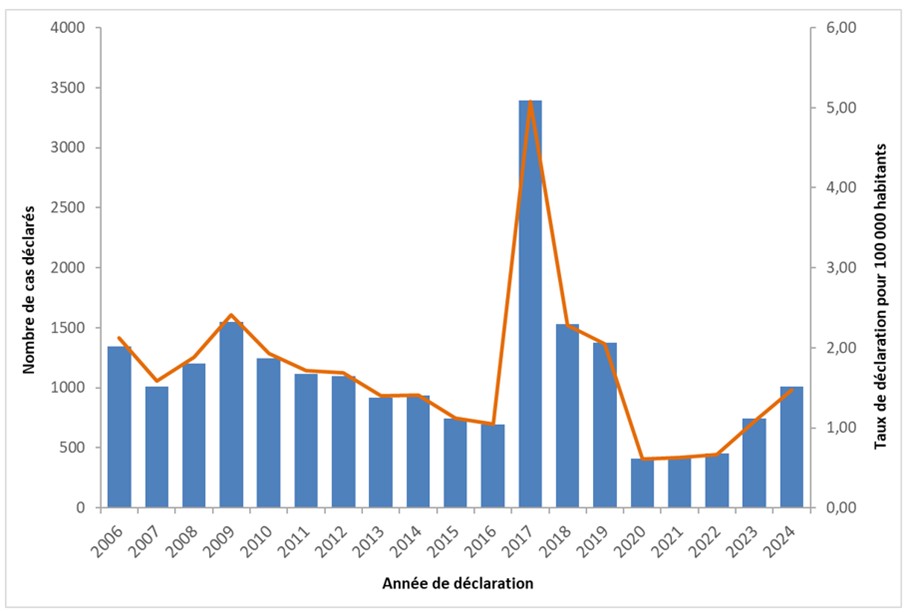
In France, an average of 1,200 cases has been reported each year since 2006, when mandatory reporting was introduced, with a minimum of 423 cases reported in 2021 and a maximum of 3,391 cases reported in 2017. There has been a decrease in the incidence rate between 2019 and 2022, due to the indirect effects of the COVID-19 pandemic.
Number of cases and annual incidence rate per 100,000 inhabitants, acute hepatitis A, France, 2006–2024
The male-to-female ratio is generally close to 1 under normal conditions of viral circulation, outside of any epidemic affecting a specific population. The age group most affected is children aged 6 to 15.
A peak in cases occurs in September and October
A peak in cases is observed every year between September and October. This is mainly due to cases imported from areas with higher endemicity, where people become infected during summer vacations in July and August.
Thus, approximately 40% of cases reported each year have traveled outside mainland France in the 2 to 6 weeks preceding the onset of symptoms.
About 40% of cases reported each year report another case among their contacts.
An outbreak in Europe in 2017
Notably, in 2017, a Europe-wide outbreak of acute hepatitis A occurred, primarily affecting MSM. That year, 3,391 cases were reported in France, with a peak in reporting in July (500 cases). For this reason, the sex ratio increased from 1.09 in 2016 to 3.63 in 2017.
The age group most affected was 26 to 45 years old, and the proportion of imported cases decreased from 46% in 2016 to 26.8% in 2017. Vaccination efforts were hampered by supply shortages of the hepatitis A vaccine. Nevertheless, public information campaigns, the organization of vaccination sessions, and preventive measures implemented around confirmed cases contributed to the gradual containment of the outbreak.
In relation to

Vaccination
thematic dossier
Contagious diseases most often affect children at a very young age. Because children are particularly vulnerable, they are a priority target for vaccination programs.

Outbreaks of foodborne illness
thematic dossier
A foodborne illness outbreak is defined as the occurrence of at least two cases with similar symptoms—typically gastrointestinal—that can be traced to a single food source. In France, such...











