Hepatitis A in France. Epidemiological data for 2019.
Access the summary of hepatitis A surveillance data in France for 2019.

Hepatitis A
thematic dossier
The hepatitis A virus is most commonly spread through hand-to-hand contact or by ingesting food or water contaminated with feces. Prevention relies on good hygiene and vaccination.
Key Figures for 2019
In 2019, 1,378 cases of acute hepatitis A were reported, including 1,277 in mainland France. The annual case notification rate for acute hepatitis A across all of France was 2.1 per 100,000 inhabitants (see Figure 1). The incidence rate remained stable between 2018 and 2019.
The distribution of cases by sex and age eventually returned to the levels seen in the years prior to the 2016–2018 epidemic, particularly affecting men who have sex with men (MSM). In 2019, incidence rates were 1.8 per 100,000 population among women and 2.3 per 100,000 population among men. The sex ratio was 1.1 (compared to an average of 1.3 between 2006 and 2016). In total, 45% of cases in 2019 were women (see Figure 2). The average age of reported cases was 30 years (ranging from 0 to 95 years). The highest incidence in 2019 was again found among those aged 6 to 15, as in the years prior to 2017 (see Figure 3). Half of the cases were under 26 years of age.
As in previous years, jaundice was reported in more than three-quarters of the cases reported in 2019. Among the reported cases, 55% were hospitalized.
Hepatitis A in Metropolitan France and the Overseas Territories
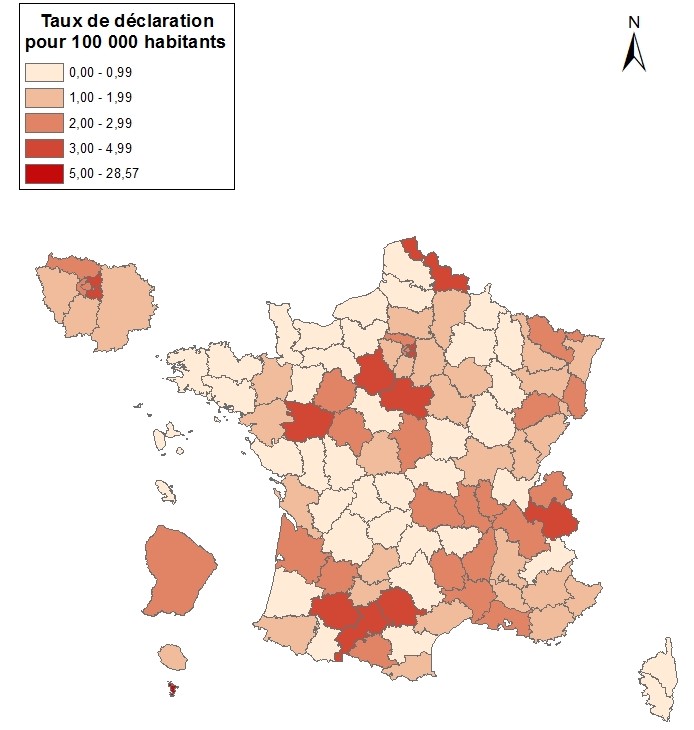
Geographically, the highest reporting rate was 28.6 per 100,000, again in the overseas department of Mayotte, the only department where the reporting rate exceeded 5 per 100,000 in 2019.
In the rest of the country, reported rates ranged from 4.9 per 100,000 inhabitants (Eure-et-Loir) to 0 in the departments of Hautes-Alpes, Haute-Corse, Haute-Loire, Haute-Marne, and Meuse, where no cases were reported in 2019 (see map).
Among the main risk exposures in the 2 to 6 weeks prior to the onset of symptoms, three types of exposure were identified (see Figures 4 and 5):
a trip outside mainland France (47% of cases);
the presence of hepatitis A cases among close contacts (33% of cases, 78% of which were within the family);
living in the household of a child under 3 years of age (22% of cases).
Hepatitis A Outside Metropolitan France
Among cases involving travel outside mainland France, the distribution of countries visited was similar to that of 2018, with 61% of cases having traveled to a Maghreb country (50% on average between 2006 and 2019) and 11% having traveled to a European country (13% between 2006 and 2019).
In 2018, an increase in the number of cases upon return from Morocco was observed as early as April, with the circulation of a HAV strain also found in travelers to Morocco from other European countries. These events were likely linked to an ongoing outbreak in Morocco. In 2019, the proportion of acute hepatitis A cases among travelers returning from Morocco decreased slightly but remained high compared to previous years. During the usual peak in hepatitis A cases in September and October, cases imported from Morocco accounted for 42% of all cases. In total, 35% of reported imported cases had traveled to that country in 2019 (42% in 2018).
Profile of people affected by hepatitis A
Data on sexual practices are not collected as part of the mandatory reporting of acute hepatitis A cases (see the form here).
During the 2016–2018 outbreak, a body of evidence indicated that the most affected individuals were primarily men who have sex with men (MSM), as evidenced by:
a significant shift in the sex ratio (see Figure 2),
investigations of cluster cases involving MSM,
sequencing of the strains,
the observation of similar phenomena in various European countries.
Learn more: Hepatitis A Outbreak in France and Europe - Status Update as of November 13, 2017.
In 2019, the sex ratio (1.1) had returned to below the annual average for the period preceding the outbreak (1.3). However, in June 2019, a temporary increase in the male-to-female sex ratio to 2.1 was observed in France (see Figure 2), associated with the circulation of a new genotype 1B strain found predominantly in men and during clusters of cases among MSM. The M/F sex ratio returned to its usual level as of July 2019 (1.1).
The epidemiology of acute hepatitis A in France in 2019 continues to justify the implementation of vaccination recommendations advocating vaccination for men who have sex with men, as well as for family members of a confirmed case and for individuals traveling to an endemic area.

magazines/revues
6 July 2026
Weekly Epidemiological Bulletin, May 19, 2020, Special Issue: Health Recommendations for Travelers, 2020 (for healthcare professionals)
Figure 1 - Number of cases and annual incidence rate per 100,000 population, acute hepatitis A, France, 2006–2019
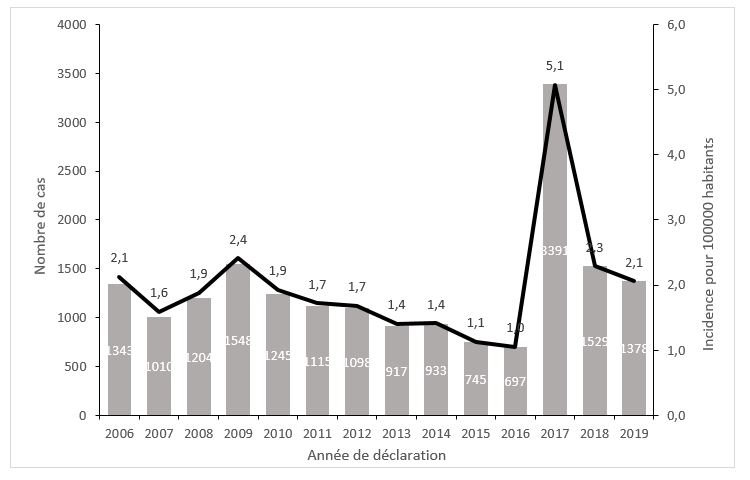
Figure 2 - Male-to-female sex ratio of reported cases of acute hepatitis A, France, 2016–2019
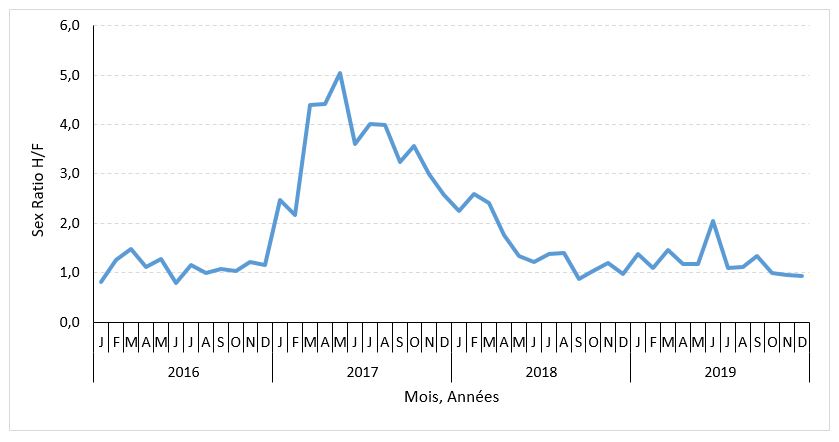
Figure 3 - Estimated incidence of acute hepatitis A by age group and sex, France as a whole, 2019
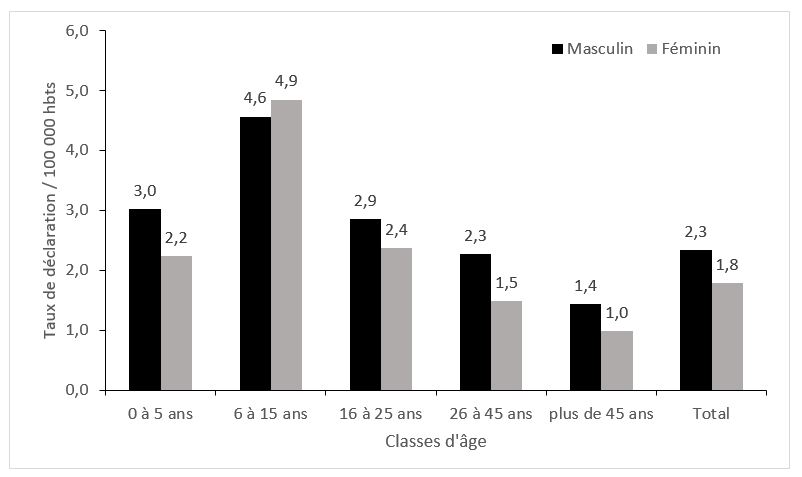
Figure 4 - Number of reported cases of acute hepatitis A by month of diagnosis and by history of travel outside mainland France, mainland France, 2019
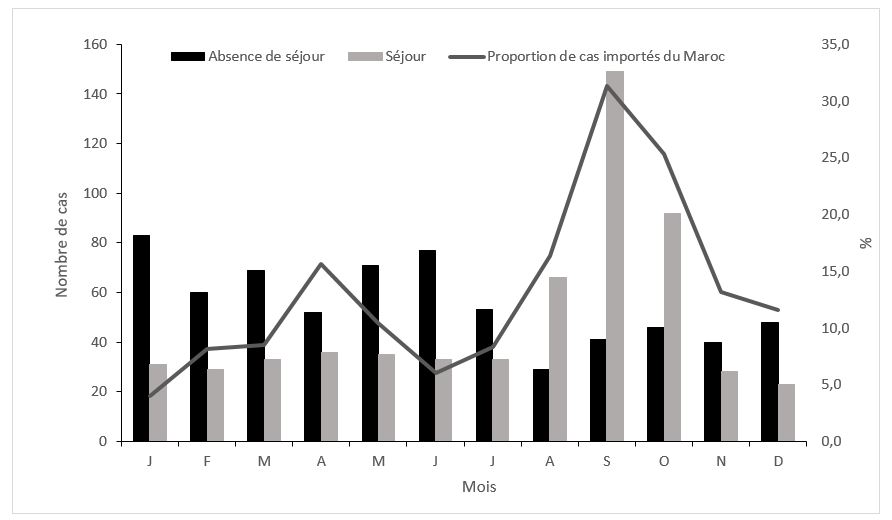
Figure 5 - Characteristics and risk exposures of reported cases of acute hepatitis A by age group, France, 2019.
| 0–5 years | 6–15 years | 16–25 years | 26–45 years | > 45 years | Total | |
| Characteristics and risk exposures1 | N=118 | N=351 | N=185 | N=281 | N=334 | N=1,378 |
| % | % | % | % | % | % | |
| Clinical | ||||||
| Jaundice (alone or associated with other nonspecific symptoms2) | 69 | 84 | 73 | 73 | 67 | 74 |
| Symptoms2 (without jaundice) | 27 | 12 | 25 | 26 | 26 | 22 |
| No jaundice or symptoms | 7 | 5 | 1 | 2 | 5 | 3 |
| Hospitalization | 42 | 44 | 65 | 64 | 58 | 55 |
| Exposure to risk | ||||||
| Cases in the immediate circle | 63 | 47 | 29 | 29 | 15 | 33 |
| Stay outside mainland France | 56 | 62 | 49 | 42 | 31 | 47 |
| Child under 3 years old at home | 51 | 31 | 16 | 27 | 4 | 22 |
| Seafood consumption | 3 | 11 | 16 | 24 | 29 | 19 |
| Work / attendance: | ||||||
| - facilities for people with disabilities | 2 | 1 | 1 | 1 | 2 | 1 |
| - daycare | 5 | 0 | 0 | 2 | 1 | 1 |
| Included in an "identified" cluster of cases | 27 | 22 | 11 | 11 | 7 | 14 |
1 Percentages calculated for reported cases.
2 Asthenia, anorexia, fever, vomiting, abdominal pain, diarrhea.
Map - Incidence rate (per 100,000 inhabitants) of acute hepatitis A by department, France, 2019