




Data
Screening services
Reimbursed screenings in the private and public sectors, excluding public hospitalizations (SNDS)
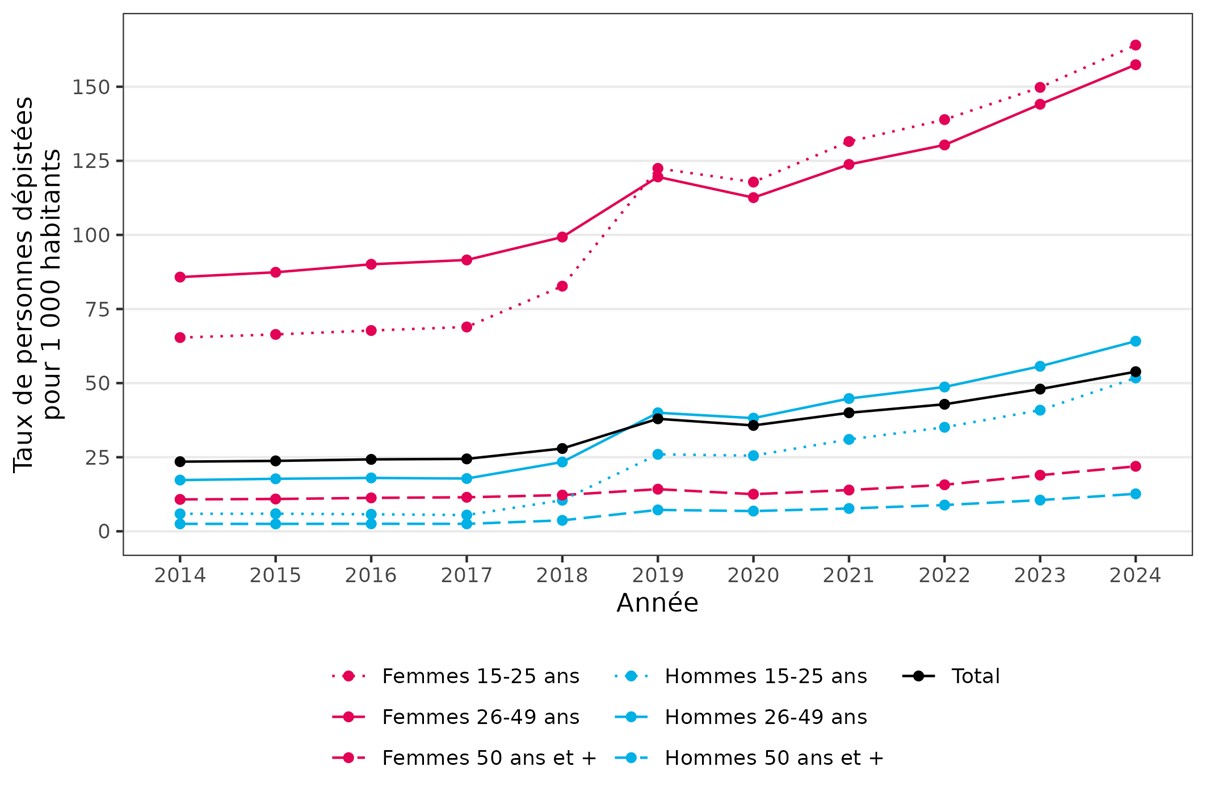
In 2024, 3.7 million people were screened at least once for gonorrhea, representing a national screening rate of 54 per 1,000 inhabitants (Figure 1).
Nearly three-quarters of those screened were women, with a screening rate nearly 2.5 times higher among women (75 per 1,000) than among men (31 per 1,000). The screening rate was even higher among women aged 15 to 25 (164 per 1,000). This screening rate is close to that of women aged 26 to 49 (157 per 1,000).
Between 2017 and 2024, the rate of people tested at least once a year for gonorrhea rose sharply (+121%), more markedly among men than among women. Between 2022 and 2024, a 26% increase in this rate was observed (37% among men and 22% among women). This increase is greater among men aged 15 to 25 (+47%) and those aged 50 and older (+43%). This increase is also very pronounced among women aged 15–25 (+42%).
Among young people aged 15 to 25, those aged 15–17 are screened less frequently than those aged 18–25 (23 vs. 140 per 1,000). However, their screening rate also tripled between 2017 and 2024 (+26% between 2022 and 2024).
Figure 1 - Screening rates* for gonococcal infections by sex and age group, France, 2014–2024
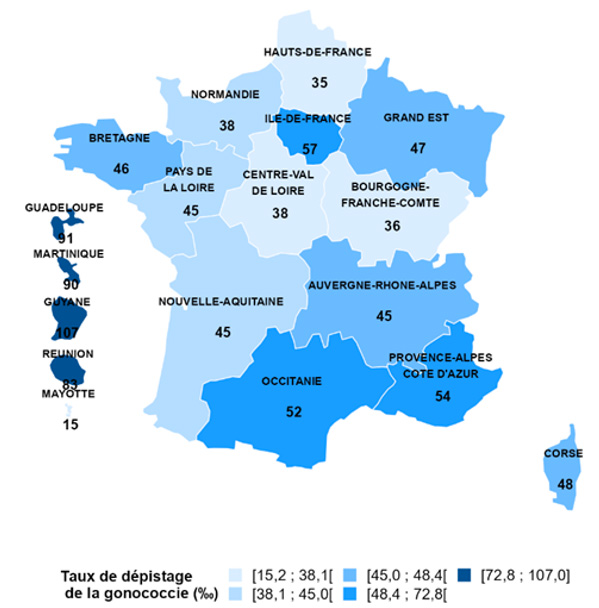
In 2024, the gonorrhea screening rate was higher in the French overseas departments and regions (116 per 1,000 in French Guiana, 104 per 1,000 in Guadeloupe, 102 per 1,000 in Réunion, and 100 per 1,000 in Martinique). In mainland France, this rate was highest in Île-de-France (64 per 1,000), in PACA (61 per 1,000), and in Occitanie (58 per 1,000) (Figure 2).
Figure 2 - Screening rates for gonococcal infections by region of residence, France, 2024
Screenings at CeGIDDs (SurCeGIDD)
Approximately 305,000 free gonorrhea screenings were conducted by CeGIDDs in 2024. Two-thirds of those screened were cisgender men (65.4%), 34.2% were cisgender women, and 0.4% were transgender individuals.
Trends in the number of cases, incidence rates, and positivity rates
STI Prevalence Study (PrévIST) in 2023
Only one case of gonorrhea was confirmed among the 4,871 participants (aged 18 to 59) in the study in mainland France, which did not allow for an estimate of the infection’s prevalence in this population.
Infections diagnosed in the private sector and treated (SNDS)
The number of people diagnosed and treated for gonococcal infection at least once a year in the private sector has steadily increased since 2014. In 2024, this number was estimated at approximately 25,800, representing a 36% increase compared to 2022.
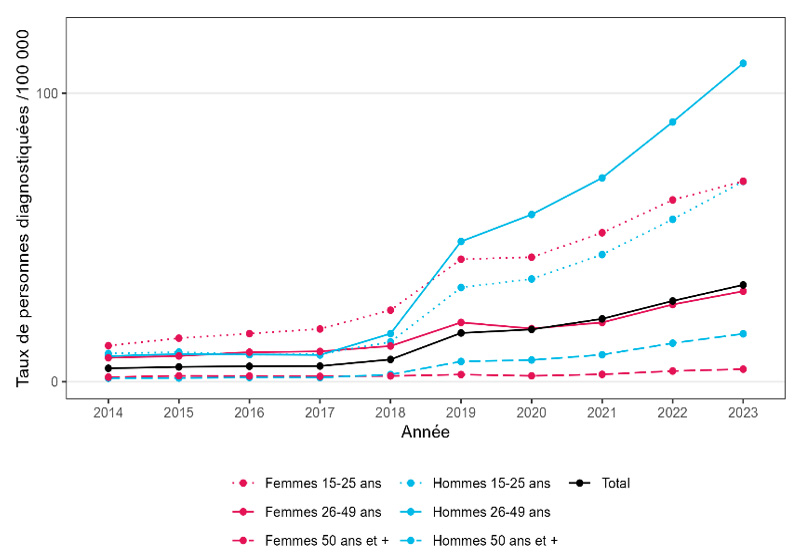
In 2024, the incidence rate of diagnosed and treated gonococcal infections was 38 per 100,000, higher among men than among women (55 vs. 21). As in previous years, this rate was much higher among men aged 26 to 49 (122 per 100,000) (Figure 3). Among women, those aged 15 to 25 had the highest rate (79 per 100,000), close to that of men of the same age (85 per 100,000).
The incidence rate increased by 35% between 2022 and 2024. This increase was more pronounced among men (+40%) than among women (+25%), particularly among those aged 15 to 25 (+51%).
Among these young people aged 15 to 25, those aged 15–17 had an incidence rate 11 times lower than those aged 18–25 (10 vs. 111 per 100,000). This rate increased by 15% between 2022 and 2024.
Figure 3 - Incidence rate* of gonococcal infection diagnoses in the private sector by sex and age group, France, 2014–2024
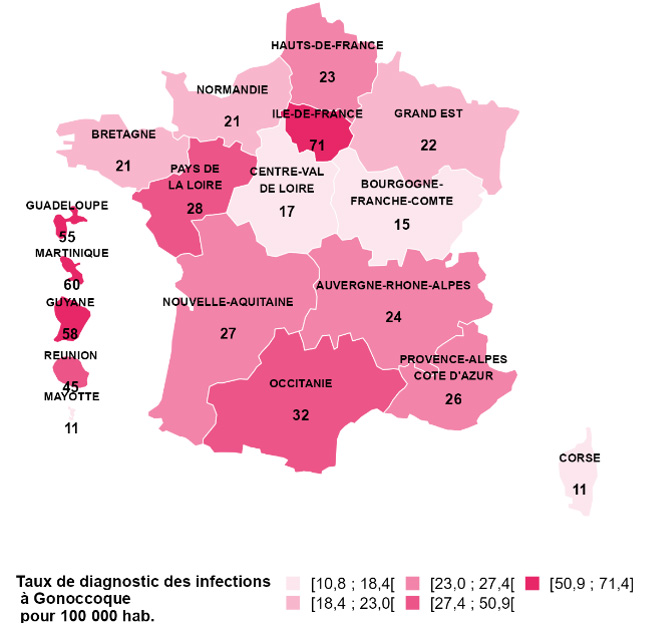
The incidence rate in 2024, as in 2023, was highest in Île-de-France (83 per 100,000). This rate was also high in the overseas departments and regions (between 50 and 58 per 100,000) (Figure 4).
Figure 4 - Incidence rate* of gonococcal infection diagnoses in the private sector by region of residence, France, 2024
Infections diagnosed at CeGIDD (SurCeGIDD)
In 2024, the number of gonococcal infections reported by CeGIDDs was approximately 13,500.
Among those diagnosed, 84.9% were cisgender men, 14.2% were cisgender women, and 0.9% were transgender individuals (Table 1). The median age of those diagnosed with this STI was 28 years, with cisgender women being younger (median age of 22 years) compared to transgender individuals (30 years) and cisgender men (29 years). Among those for whom information was available, 23% were born abroad. MSM accounted for 56% of cases, heterosexual men for 21%, heterosexual women for 14%, and FSWs for 2%, while 6% of cases reported no sexual intercourse in the past 12 months. The vast majority of cases (89%) had had at least two sexual partners in the 12 months prior to diagnosis. At the time of consultation, clinical signs of STIs were identified in 31% of cases.
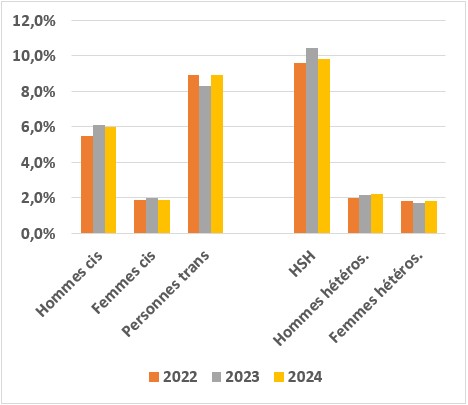
In 2024, the test positivity rate at CeGIDD was 4.6% (8.9% among transgender individuals, 6.0% among cisgender men, and 1.9% among cisgender women). This rate increased compared to 2022 (4.2%), due to an increase among cisgender men. Among individuals whose sexual practices were known, the positivity rate was particularly high among MSM (9.8%) compared to heterosexual men (2.2%), FSF (2.2%), or heterosexual women (1.8%). Compared to 2022, the increase in the positivity rate among cisgender men was observed among both MSM and heterosexual men (Figure 5).
Figure 5 - Positive rate (%) of gonorrhea tests at CeGIDD by gender of patients and sexual practices, France, 2022–2024
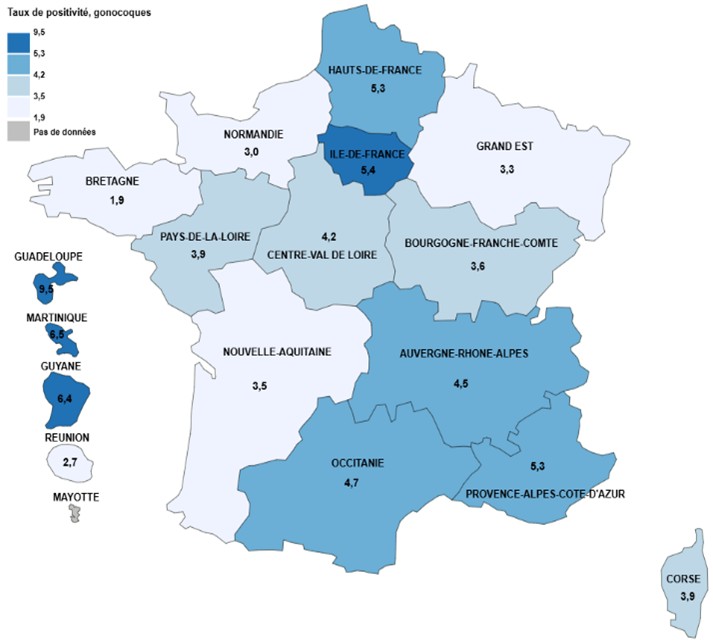
The highest positivity rates were observed in Guadeloupe (9.5%), Martinique (6.5%), French Guiana (6.4%), and Île-de-France (5.4%) (Figure 6) (data not available for Mayotte).
Figure 6 - Positivity rate (%) of gonococcal infection tests at CeGIDDs, by CeGIDD region, France, 2024
Infections diagnosed in primary care (Sentinelles network)
In 2024, within the Sentinelles network, 141 cases of gonococcal infection were reported in primary care. The majority of cases were men (79%), particularly MSM (60%). Most cases (82%) reported having had at least two sexual partners in the past 12 months. People born abroad accounted for 15% of cases, and the median age of cases was 33 years.
In the year prior to diagnosis, a history of STIs was found in 31% of cases. Symptoms prompted the test to be ordered in 51% of patients.
Trends in gonococcal resistance
In 2024, the ENGON survey (707 strains analyzed) showed that gonococcal strains circulating in mainland France were highly susceptible to the first-line treatment, ceftriaxone (0.1% resistance), and to cefixime (0.3% resistance), although 20.9% of strains exhibited reduced susceptibility to the latter antibiotic. The frequency of resistance to azithromycin (6.9%) was stable compared to 2023 (7.0%) and lower than in 2022 (11.6%) and 2021 (9.7%). This macrolide has been used less frequently since 2023 following recommendations for the treatment of gonorrhea with ceftriaxone monotherapy. Gonococcal resistance to fluoroquinolones (66.5%) and tetracycline (93.6%) remained very high in 2024.
Between November 2022 and August 2023, four strains with extended drug resistance (XDR: resistant to ceftriaxone and highly resistant to azithromycin) were identified or confirmed by the National Reference Center for Bacterial STIs as part of its expert assessment activities. Three additional XDR strains have since been identified: one in December 2024, another in January 2025, and the last in September 2025. In addition to these XDR strains, there are three other strains resistant to ceftriaxone, bringing the total to six ceftriaxone-resistant strains in less than a year. They were identified in patients with a history of sexual contact during travel abroad or with a person returning from such a trip. These strains belonged to different clones, suggesting the existence of multiple reservoirs.
In the ANRS 174 DOXYVAC study, DoxyPEP (doxycycline taken post-exposure) had no observable impact on the sensitivity of Neisseria gonorrhoeae to ceftriaxone, ciprofloxacin, and azithromycin.
In relation to

Antibiotic resistance
thematic dossier
Antibiotic resistance renders one or more antibiotics ineffective against a bacterial infection. This phenomenon can make it difficult, or even impossible, to treat certain infections.

Sexual health
thematic dossier
Santé publique France focuses in particular on four areas of sexual health: sexually transmitted infections, including HIV; contraception; combating discrimination; and violence.

HIV/AIDS
thematic dossier
HIV, or Human Immunodeficiency Virus, is a sexually transmitted human retrovirus. It weakens the immune system, and if left untreated, leads to AIDS.











