


COVID-19 Epidemiological Update for February 25, 2021. Rising infection rates and the prevalence of variants: signs of a possible worsening of the epidemic
CP_pe_covid_250221_v2.pdf
Download (PDF - 272.77 KB)
Press Contacts
Santé publique France
presse@santepubliquefrance.fr
Stéphanie Champion: 01 41 79 67 48
Marie Delibéros: 01 41 79 69 61
Camille Le Hyaric: 01 41 79 68 64
Published weekly, the epidemiological update on COVID-19 surveillance provides a detailed analysis of the indicators established by Santé publique France and its network of partners to track the progression of the epidemic and guide public policy decisions.
In week 07, an 8% increase in infections was observed after two weeks of decline, with 138,771 new confirmed cases. Against a backdrop of persistent strain on hospitals and the prevalence of more transmissible variants, a worsening of the epidemic is anticipated in the coming weeks. At the same time, the vaccination rollout continues and is now open to people aged 50–64 with underlying health conditions, while more French people say they are ready to get vaccinated. Its initial effects are becoming apparent with a decrease in epidemiological indicators among those over 75 and residents of long-term care facilities. The systematic adoption of preventive measures, immediate isolation, and testing in the event of symptoms suggestive of COVID-19 remain essential.
Increased viral circulation with high transmission rates in several regions
In Week 07 (February 15–21, 2021), 138,771 new cases of COVID-19 were confirmed, compared to 128,662 in Week 06. The incidence of SARS-CoV-2 is rising again (+8%) after two weeks of improvement, with an average of 19,824 confirmed cases per day. The incidence rate is rising across all age groups between 15 and 74 years old. The initial effects of vaccination are becoming apparent, with an improvement in epidemiological indicators for the third consecutive week among those over 75 and nursing home residents (-6%), while vaccination coverage reached 80% (for the first dose) among the latter as of February 23.
In Week 07, while new hospitalizations decreased (-6%, with 9,360 new hospitalizations versus 9,921 in Week 06) and new ICU admissions stabilized (1,807 in Week 07 versus 1,763 in Week 06, or +2%), hospital strain persists. As of February 23, the number of hospitalized patients remained very high at 25,705, including 3,445 in intensive care. While still high, the weekly number of COVID-19-related deaths occurring in hospitals and social and medical-social care facilities showed a slight decrease in week 06.
Regionally, Provence-Alpes-Côte d’Azur, Hauts-de-France, and Île-de-France have the highest incidence rates (above 200 per 100,000 inhabitants) and some of the highest hospitalization rates in mainland France. There is also significant variation between departments: the incidence rate exceeds 300 per 100,000 inhabitants in 10 departments in mainland France.
Variants: 20I/501Y.V1 (UK) is on track to account for more than half of circulating viruses
Analysis of screening test results indicating suspected infections with variants of interest shows that in week 07:
49% of positive screening tests correspond to a suspected 20I/501Y.V1 (UK) variant,
6% corresponded to a suspected 20H/501Y.V2 (ZA) or 20J/501Y.V3 (BR) variant.
These variants were detected in all metropolitan regions, with significant disparities across departments: 70 departments had a proportion exceeding 30% of suspected 20I/501Y.V1 (UK) variants among screened tests, and 11 had a proportion exceeding 10% of suspected 20H/501Y.V2 (ZA) or 20J/501Y.V3 (BR).
All of this data indicates that these variants, which are more transmissible and are becoming predominant in France, pose a threat of worsening the situation in the coming weeks.
Maps showing the circulation of these variants across the country are being published starting today on the Agency’s website, ahead of the release of the complete data as open data on the Géodes platform in early March.
Vaccination: Initial Effects Are Emerging
According to data from Vaccin Covid, as of February 23, 2021, 2,656,447 people have received at least one dose of the COVID-19 vaccine, and 1,318,292 people have been fully vaccinated with two doses. In nursing homes (Ehpad) or long-term care facilities (USLD), 501,465 residents and 180,263 staff members working in these facilities have received at least one dose of the COVID-19 vaccine in France. The initial effects of vaccination are becoming apparent, with a decrease in the number of reported cases among those over 75 and nursing home residents, while vaccination coverage has reached 80% (for the first dose) among the latter.
As vaccination expands to new groups (people aged 50–64 with comorbidities), the increase in the population’s willingness to be vaccinated is confirmed. Wave 21 of the CoviPrev survey (February 15–17, 2021) shows that more than half of respondents (57%) said they definitely or probably intended to get vaccinated against COVID-19 as soon as it became available to them. This figure is higher than in Wave 20 (January 18–20, 2021).
Vaccination monitoring indicators are updated daily; they now include information on the type of vaccine administered and are available on Géodes.
Pandemic: Impact on the Mental Health of the French Population
Wave 21 of the CoviPrev survey shows an increase in anxiety (+4 points) and depression (+3 points) compared to the previous wave, particularly among people in precarious situations (employment, finances, housing) and those with a history of psychological disorders. Fear, worry (about one’s health or economic situation), frustration, anger, and feelings of loneliness and isolation are associated with poorer mental health, regardless of the sociodemographic characteristics and living conditions of those surveyed.
For more information on mental health and available resources:
The epidemic persists, variants are emerging…: Prevention is everyone’s ally
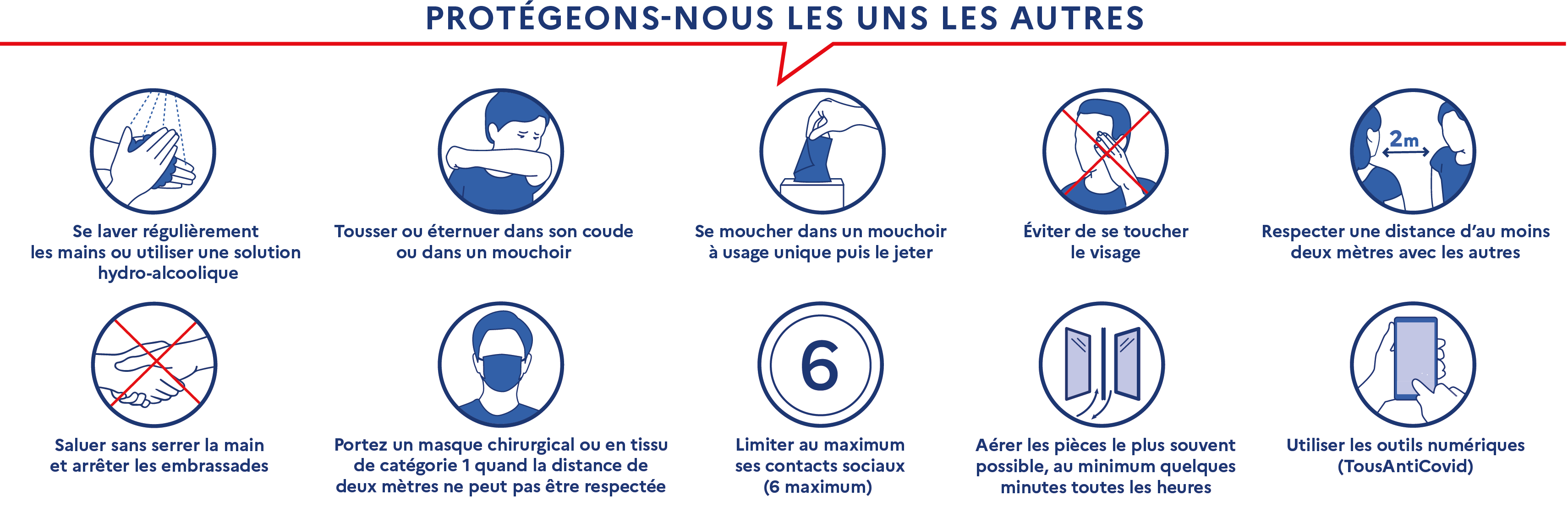
The adoption of preventive measures and contact restrictions for everyone, including those who have been vaccinated, must be reinforced; and if symptoms develop, immediate isolation and testing as soon as possible are essential.
See also

bulletin national
25 February 2021
COVID-19: Epidemiological Update for February 25, 2021
Stay informed about the COVID-19 pandemic in France and around the world
Updates, Q&As, expert interviews... everything you need to know about the novel coronavirus (SARS-CoV-2) and COVID-19 in France and around the world
Our latest news

news
Shamonda Virus: First Human Case Detected in France—What Do We Know?

news
Call for Nominations for the Renewal of the Scientific Advisory Board of the...

news












