




Are all people equally affected by heat?
Anyone can suffer from the heat. However, some people are at greater risk.
These include:
older adults
infants
workers exposed to heat, either outdoors or in a hot indoor environment
pregnant women
people with chronic health conditions
people taking certain medications
people with disabilities
isolated, dependent, or frail individuals
people in precarious situations
In fact, several risk factors can come into play during heat waves, exacerbating inequality.
Underestimation of risk
People, including the elderly, have a very low perception of the risk to themselves and are therefore unlikely to take the necessary preventive measures
Physiological factors
The body activates mechanisms to protect itself from heat (sweating, vasodilation). These mechanisms function less effectively in older adults and very young children
Certain medications limit the body’s ability to protect itself and pose an additional risk to older adults or those with chronic conditions: diuretics, beta-blockers, anticholinergics, neuroleptics, etc.
Extreme heat increases the risk of premature birth.
Individual and social factors
People with physical or cognitive disabilities, those who are ill, dependent older adults, very young children, and people in precarious situations are also at greater risk because they have difficulty protecting themselves from the heat on their own
Homeless people are highly vulnerable because they cannot easily protect themselves from the heat or access water; they are very isolated and in poor health
Outdoor athletes may underestimate the risk and expose themselves recklessly
Prisoners are vulnerable because they are confined in an environment that may be dilapidated and poorly insulated against heat, poorly ventilated, and they cannot easily access ways to cool off (showers, misters, fans, etc.).
Occupational factors
Workers exposed to heat indoors or outdoors are also at greater risk. In addition to the direct effects of heat, fatigue caused by both heat and work can lead to decreased alertness and workplace accidents.
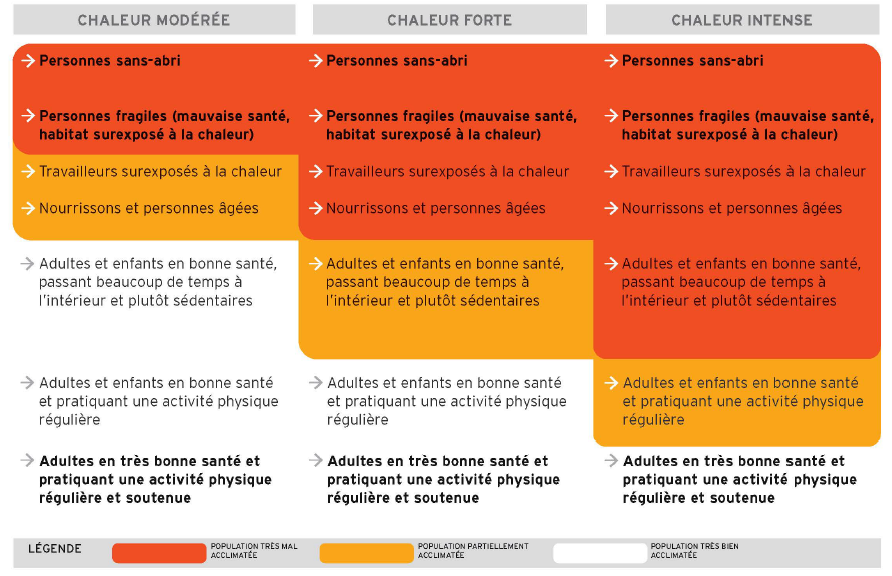
Increase in the at-risk population based on heat intensity
In relation to
Climate change
thematic dossier
Climate change is rapidly and profoundly altering the environment. The health impacts of climate change are numerous and varied.
UV
thematic dossier
Ultraviolet radiation, which is everywhere, is emitted naturally by the sun or by artificial sources. It is responsible for various health conditions, including certain types of skin cancer.
Extreme cold
thematic dossier
Cold weather increases the risk of cardiovascular and respiratory conditions and can lead to hospitalizations and death. This impact is observed within 3 to 21 days of exposure to the cold.











