


OSCOUR® Network
The OSCOUR® network (Organization for Coordinated Emergency Surveillance) is one of the four sources of the SurSaUD® health surveillance system for emergencies and deaths.
The OSCOUR® network in the SurSaUD® surveillance system
A system based on mandatory data reporting since 2013
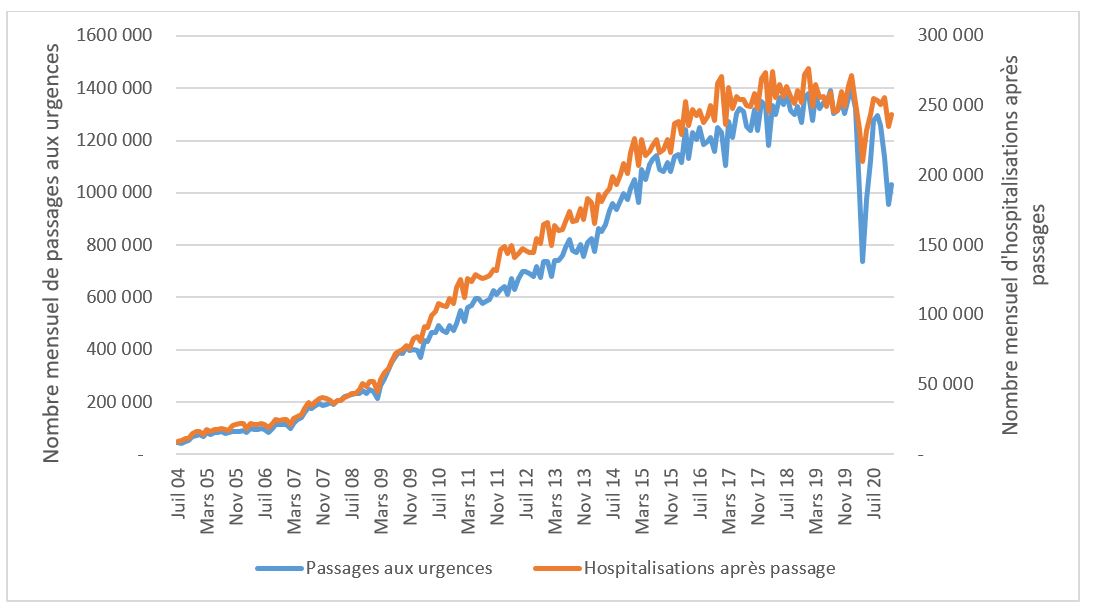
Launched in 2004 with 23 emergency departments, the system expanded based on voluntary participation in the OSCOUR network until 2013, when the decree of July 24 made it mandatory to transmit Emergency Department Visit Summary (RPU) data to Santé publique France for public health monitoring and epidemiological surveillance purposes.
On this occasion, the format of the RPU, defined in 2006 through collaborative efforts between the Ministry of Health, Santé publique France, and the Midi-Pyrénées Regional Emergency Observatory, was established by the decree.
Coverage and Participation in the OSCOUR Network
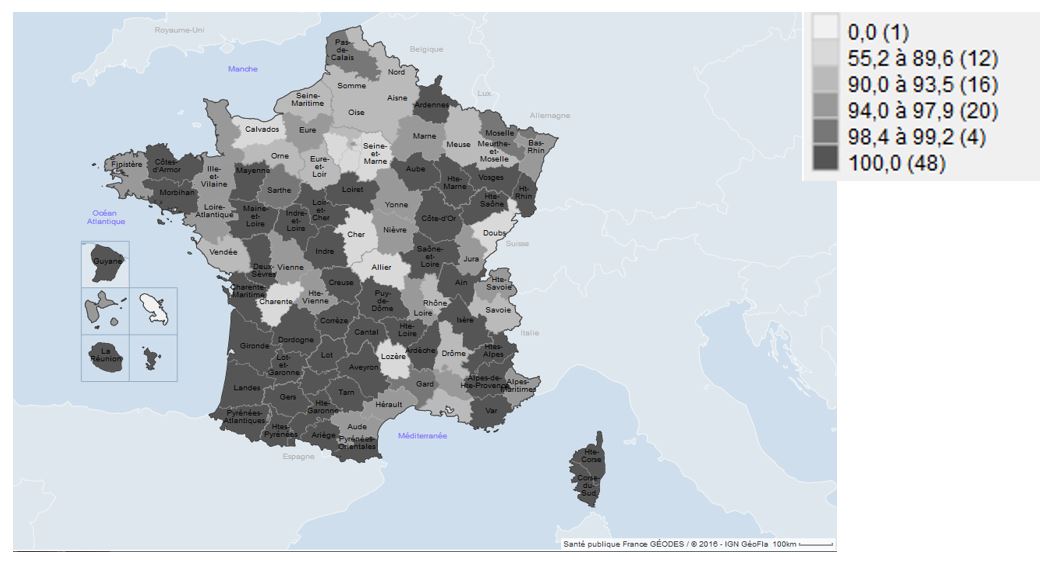
In 2021, nearly all emergency departments in France participate in the surveillance network, covering 93.3% of emergency department visits nationwide. The OSCOUR® network includes at least one emergency department for every French department (including the DROMs) with the exception of Martinique, which is not yet covered (Figures 1 and 2).
Among the 13 metropolitan regions, 12 have coverage of 92% or higher, and only the Île-de-France region falls below the 90% mark (85.6%). Among the 5 overseas regions, 3 have 100% coverage (Réunion, Mayotte, and French Guiana). At the departmental level, 48 of the 103 departments (46.6%) have 100% coverage in 2021.
Figure 1 – Percentage of emergency department visits recorded by the OSCOUR® network out of all visits reported by the Annual Statistics of Healthcare Facilities (SAE) in 2019, by region, France
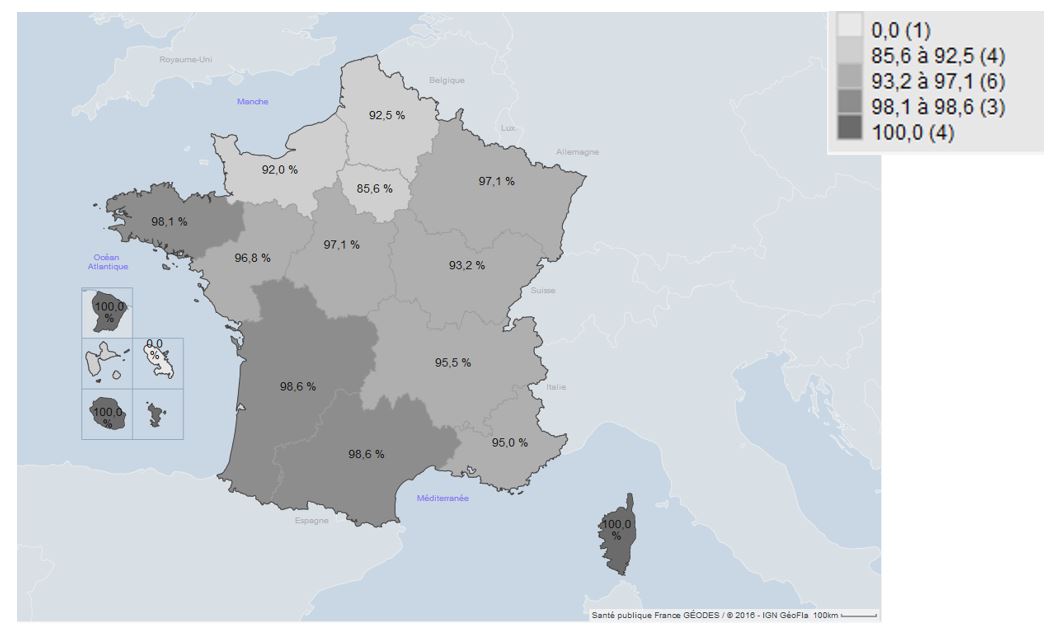
Figure 2 - Proportion of emergency department visits recorded by the OSCOUR® network out of all visits reported by the Annual Statistics of Healthcare Facilities (SAE) in 2019, by department, France
Collection of Emergency Department Data
The collection of emergency department data relies on the automated extraction of anonymized information from the RPU, derived from the patient’s electronic medical record created during their visit to the emergency department.
This collection does not create additional workload for emergency department staff, provided the department is equipped with specialized software that enables, in particular, the coding of diagnoses.
The data collected includes demographic information (gender, age), administrative details (dates and times of admission and discharge, facility’s FINESS code, residential ZIP code, etc.), and medical information (primary diagnosis and associated diagnoses coded according to the International Classification of Diseases (ICD-10), hospitalization following the visit, etc.).
Automated data transmission
Every morning, individual data on visits recorded in the emergency department the previous day up to 11:59 PM are automatically sent from the emergency department to Santé publique France via regional hubs (Regional Emergency Observatories or similar structures).
Once integrated into the Santé publique France database, this data is aggregated according to different time intervals, for various geographic areas, age groups, and syndrome categories, with the aim of automatically generating daily epidemiological indicators.
What Are Syndrome Groups?
Syndromic clusters are groups of medical diagnoses created for the purposes of surveillance by Santé publique France. They can be:
specific to a well-identified condition (influenza, acute gastroenteritis, bronchiolitis),
non-specific and based on clinical symptoms (isolated fever, malaise, dyspnea, etc.)
or broad, grouping families of diagnoses (acute lower respiratory infections, trauma, etc.).
New groupings may also be created in response to emerging needs (e.g., emergency department visits for suspected COVID-19). Nearly 90 syndromic groupings covering all areas of emergency medicine are available, and approximately 50 of them are subject to daily surveillance by Santé publique France.
Objectives of surveillance
Detect, investigate, inform
This system plays a key role in Santé publique France’s health surveillance and alert missions. Indeed, any unusual variation in the data constitutes a signal that is investigated in collaboration with regional units, through both in-depth data analysis and communication with emergency physicians and partners in the OSCOUR® network. Depending on the situation, if the signal is validated, it may be reported to health authorities.
In the event of a health alert, surveillance is immediately implemented, based on the daily analysis of relevant syndrome clusters, defined according to the situation (e.g., the Lubrizol factory fire, an outbreak of gastroenteritis and collective foodborne illnesses linked to the consumption of shellfish, the COVID-19 pandemic, extreme weather events, etc.).
Analyzing the data and publishing it in a weekly epidemiological bulletin
In addition to daily surveillance for monitoring and alert purposes, data from the OSCOUR® network undergoes a formal weekly analysis through an epidemiological bulletin intended for health authorities, network partners, and the general public, published weekly on our website.
This bulletin describes, for different age groups, the overall activity of the previous week in terms of emergency department visits and hospitalizations following such visits, the 10 most frequently recorded conditions, and activity associated with seasonal indicators and non-specific indicators monitored year-round.
Ten indicators developed at the regional and departmental levels are posted online on Geodes, the cartographic observatory of Santé publique France, and are updated weekly. These include the rate of emergency department visits and the rate of hospitalizations following emergency department visits for bronchiolitis, allergies, asthma, acute bronchitis, acute gastroenteritis, influenza, ENT conditions, pneumonia, trauma, and suspected COVID-19 (per 10,000 visits).
Figure 3 - Monthly number of visits for all coded causes and hospitalizations following a visit recorded by emergency departments in the OSCOUR® network since 2004 – all ages – France
Methodological notes on the production of indicators based on data from the OSCOUR® network
Data on emergency department visits are transmitted on D+1 of the visit and updated daily through D+7. In theory, they can therefore be consolidated for 7 days following the visit. This consolidation applies to the number of visits reported and the diagnostic coding of these visits. On average, 92% of visits are transmitted on Day 1, 99% on Day 2, and 100% on Day 3. The diagnostic coding rate averages 81% after full consolidation and averages 75% on Day 1, 79% on Day 2, and 80% on Day 3. We can therefore consider the data to be virtually consolidated as of Day 2.
The analyses underlying the graphs and tables presented in the monitoring reports (unless otherwise noted) are based on a constant sample of institutions over the study period. This allows, when interpreting the results, for the exclusion of any day-to-day data gaps that may occur in the event of occasional and temporary interruptions in data transmission from one or more institutions (primarily due to technical issues). The number of establishments comprising the constant sample may vary from one analysis period to another, resulting in a slight discrepancy in the figures presented in successive bulletins.
Partners
French Society of Emergency Medicine (SFMU) - https://www.sfmu.org/fr/
Federation of Regional Emergency Observatories (FEDORU) – http://www.fedoru.fr/
Regional Emergency Observatories (ORU):
Sant& Numérique – Hauts-de-France: https://www.esante-hdf.fr
Est-Rescue: https://www.est-rescue.fr/
GCS Burgundy-Franche-Comté Emergency Network – RUBFC: https://www.e-rub.fr
ORU Centre-Val de Loire: no website available at this time
ORU Pays de la Loire: https://www.oru-paysdelaloire.fr
Réseau Bretagne Urgences: https://www.rbu.bzh
ORU Auvergne-Rhône-Alpes: https://www.reulian.fr
ORU Nouvelle Aquitaine: https://www.oruna.fr/
ORU Occitanie: https://www.oruoccitanie.fr/
GIP ieSS: https://www.ies-sud.fr/
ORU Corsica: no website available at this time
ORU SNP Île-de-France: no website available at this time
ORU Normandy: no website available at this time
French Group for Pediatric Intensive Care and Emergency Medicine (GFRUP) - http://gfrup.sfpediatrie.com/
French Society of Pediatrics (SFP) - https://www.sfpediatrie.com/












