



Data
The system for monitoring mental distress and burnout makes it possible to track trends in this issue.
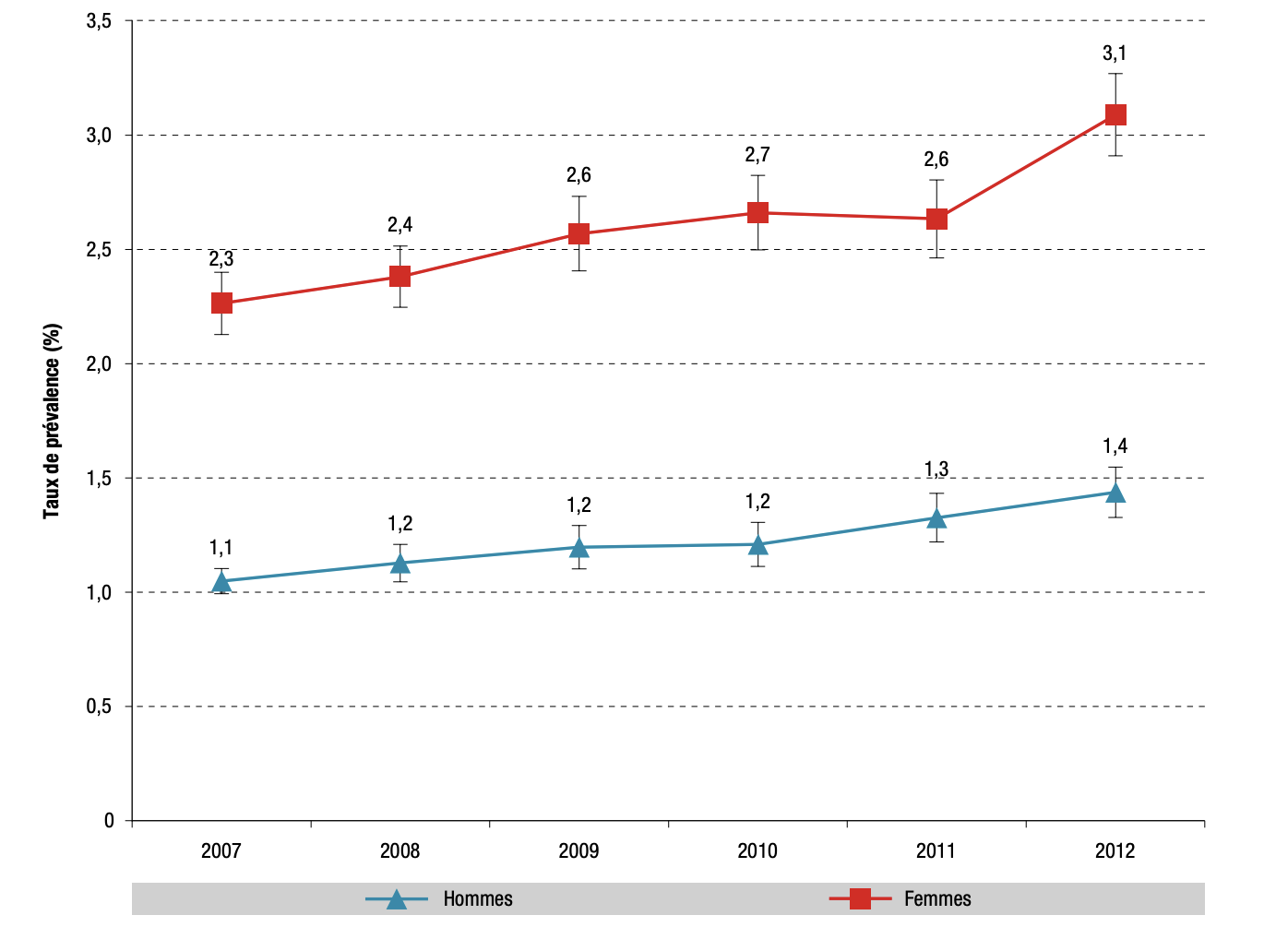
The prevalence of work-related mental distress among employees was 3.1% for women and 1.4% for men in 2012
The prevalence of diagnosed depressive episodes over the past 12 months among the working population was approximately 8% (2017 Health Barometer survey).
The prevalence rate of suicidal thoughts over the past 12 months among employed workers was 3.8%. Women had a higher rate than men (4.5% vs. 3.1%) (2017 Health Barometer Survey).
The prevalence of depressive symptoms among employees affiliated with the MSA was 14.7% among men and 21.2% among women; among farm operators, it was 15.3% among men and 18.4% among women (Coset MSA pilot phase, 2010).
Male farm operators had a higher suicide mortality rate compared to the general male population between 2008 and 2010. Agricultural employees, on the other hand, had a lower suicide mortality rate compared to the general population between 2007 and 2013.
Data from the Cosmop program have been analyzed twice in the context of suicide, once based on annual social data reports and once on data from the permanent demographic sample.
The study based on annual social data reports aimed to describe suicide mortality and its trends over time among the male employed population, by economic sector.
Over the period 1976–2002, the age-standardized suicide mortality rate was estimated at 25.1 per 100,000 (in the general population, this rate is 33.4 per 100,000, using the same standardization). No significant trend over time was identified.
Mortality rates varied significantly by economic sector. The health and social services sector had the highest suicide mortality rate (34.3 per 100,000). This was followed by the public administration sector (excluding the federal civil service) (29.8 per 100,000), construction (27.3 per 100,000), and real estate (26.7 per 100,000). Analysis by socio-occupational group showed mortality rates nearly three times higher among employees and especially among manual workers compared to managers.
Farmers represented the social category with the highest risk of suicide compared to that of managers. Among employees, a social gradient in suicide mortality was observed regardless of gender, with managers being the least affected and manual workers the most affected.
The MCP program (occupational diseases) has shown that the prevalence rate of work-related mental distress among employees was:
twice as high among women as among men, regardless of the year (3.1% among women versus 1.4% among men in 2012).
This rate increased over the 2007–2012 period for both women and men. Age and socioeconomic status were strongly associated with work-related psychological distress, unlike the industry sector.
The increase in the prevalence rates of work-related psychological distress over the 2007–2012 period coincided with a deterioration in working conditions and growing media coverage of this issue. Economic sectors appear to be affected by psychological distress through their sociodemographic profiles.
Trends in the prevalence rates of work-related psychological distress among employees seen during medical visits from 2007 to 2012, occupational disease surveillance program in France
Learn more
Khireddine I, Lemaître A, Homère J, Plaine J, Garras L, Riol MC, et al; MCP Group 2012. Work-related psychological distress among active employees in France between 2007 and 2012, based on the MCP program. Bull Epidémiol Hebd. 2015;(23):431-8
Excess mortality by suicide among male farm owners and lower mortality among agricultural workers compared to the general population:
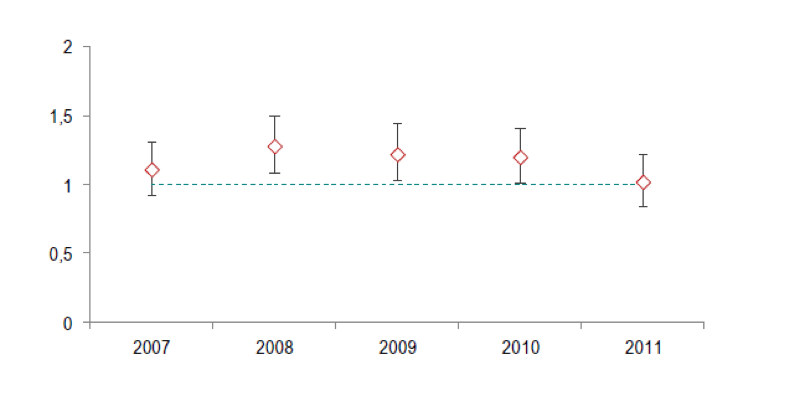
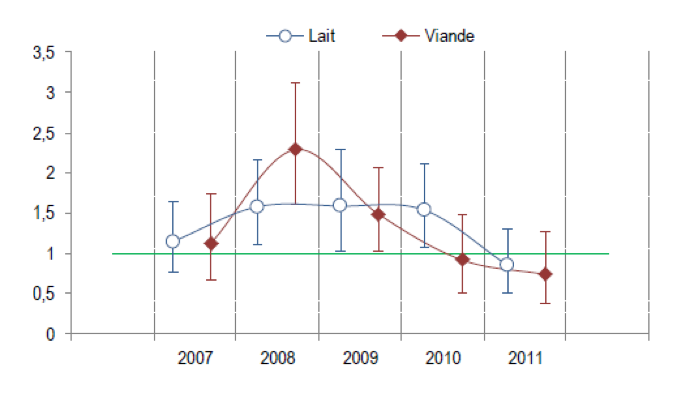
Excess mortality by suicide observed among male farm owners between 2008 and 2010 (+28% in 2008, +22% in 2009, and +20% in 2010), particularly pronounced among cattle farmers (dairy and beef) and among farmers aged 45–54 and 55–64
Trends in Standardized Mortality Ratios (SMR) for suicide among male farmers between 2007 and 2011
Trends in SMR for suicide among dairy and beef cattle farmers between 2007 and 2011
Learn more
Khireddine-Medouni I, Breuillard É, Bossard C. Surveillance of suicide mortality among active farmers. Situation in 2010–2011 and trends from 2007 to 2011. Saint-Maurice: Santé publique France; 2016.
In relation to

Suicides and suicide attempts
thematic dossier
France has one of the highest suicide rates in Europe. Suicide is preventable, and its prevention must be a priority. Effective prevention measures are available.












