Antibiotic Use and Antibiotic Resistance in France in 2019

To mark World Antimicrobial Awareness Week and European Antibiotic Awareness Day, Santé publique France and its partners are releasing the 2019 data on antibiotic use and resistance.

Résistance aux antibiotiques

Antibiotic resistance

thematic dossier

Antibiotic resistance renders one or more antibiotics ineffective against a bacterial infection. This phenomenon can make it difficult, or even impossible, to treat certain infections.

Antibiotic resistance: a major public health challenge

Antibiotic resistance is identified by the World Health Organization as one of the most serious threats to public health, requiring a “One Health” approach that recognizes the interconnectedness of human health, animal health, and ecosystem health. Over time, the use of antibiotics leads to increased bacterial resistance, ultimately threatening the effectiveness of these treatments. This resistance spreads among living organisms and throughout the environment.

Two pillars for effectively combating antibiotic resistance

  1. Prevent infections and limit the transmission of bacteria and resistance genes

  2. Use antibiotics wisely (the right ones, when needed)

Since 2016 in France, an interministerial roadmap for combating antibiotic resistance has coordinated efforts in human health, animal health, and the environment under the "One Health" approach. Each year, a summary of updated data is published by Santé publique France and its partners to mark European Antibiotic Awareness Day on November 18.

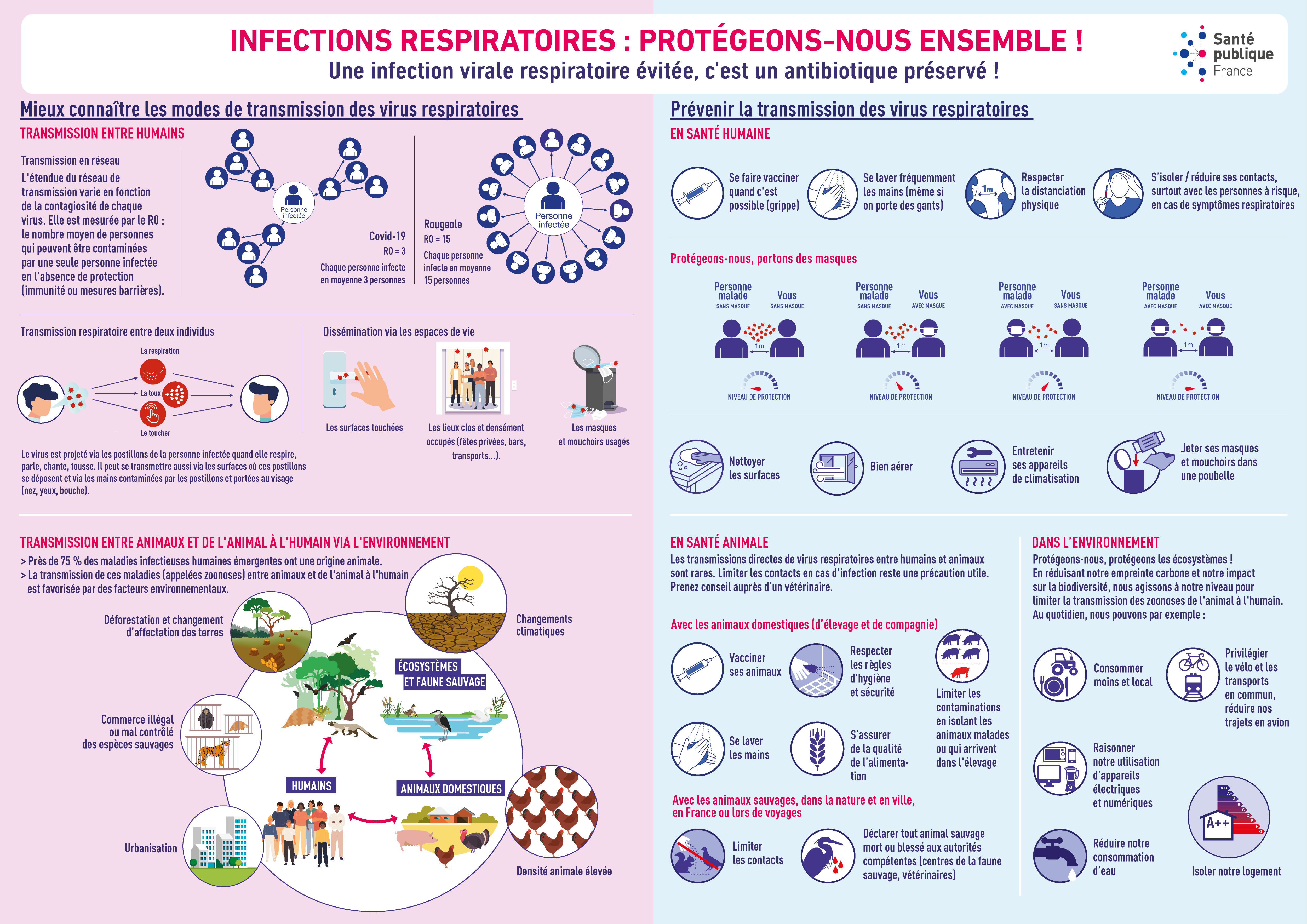
This year, the publication of this summary comes amid the COVID-19 pandemic: although viruses are not susceptible to antibiotics, respiratory viral infections are often treated with antibiotics—most of which are unnecessary—and this contributes to the selection pressure for resistant bacteria. Preventing respiratory viral infections helps control antibiotic resistance, just as preventing all infections does.

Preventing a respiratory viral infection means saving an antibiotic!

Infections respiratoires : protégeons-nous ensemble

Efforts must continue to ensure that recent downward trends are sustained

In the area of human health, the data published by Santé publique France covers the three healthcare sectors (healthcare facilities, medical-social facilities, and outpatient care).

This year, the work of the Spares and Primo initiatives is expanding. Participation in surveillance networks is growing, strengthening the scope of the 2019 results.

  • For the Spares initiative, 991 healthcare facilities (compared to 441 in 2018) participated in bacterial resistance surveillance, representing 50% of hospital beds in France.

  • For the Primo initiative, 13 regions were covered (compared to 11 in 2018) by this community-based surveillance (1,016 clinical laboratories and 231 nursing homes affiliated with a healthcare facility in 2019, compared to 742 clinical laboratories in 2018).

  • Surveillance of antibiotic use in healthcare facilities (Spares) covered 1,734 healthcare facilities (compared to 1,630 in 2018), representing 80% of hospital bed-days in France in 2019.

Overall antibiotic consumption is beginning to decline slowly

In healthcare facilities, overall antibiotic consumption, expressed in defined daily doses (DDD), was 285 in 2019. It shows a cumulative decrease of 9.6% between 2015 and 2019.

Changes in consumption by drug class over the 2012–2019 period show a reduction in the use of fluoroquinolones (-34.9%) and the amoxicillin-clavulanic acid combination (-16.9%). Conversely, it shows an increase in the consumption of carbapenems (+9.4%), third-generation cephalosporins (10.7%), and amoxicillin (8.7%).

Encouraging results are also observed in the outpatient sector: overall antibiotic consumption, expressed in defined daily doses (DDD), remains stable but has recently begun to decline. Expressed in terms of the number of prescriptions, it decreased by 18% from 2009 to 2019.

Resistance to third-generation cephalosporins is decreasing in Enterobacteriaceae

In terms of antibiotic resistance, the most common resistance mechanism to third-generation cephalosporins (approximately 80% of cases) is the production of extended-spectrum beta-lactamase (ESBL).

In healthcare facilities, 8.5% of Enterobacteriaceae strains were ESBL-producing (ESBL-positive) in 2019. The incidence rate of ESBL-producing Enterobacteriaceae infections is 0.53 per 1,000 hospital days (HD), which is three times higher than that of methicillin-resistant Staphylococcus aureus (MRSA) infections (0.17 per 1,000 HD). It varies by Enterobacteriaceae species: 0.25 per 1,000 HD for Escherichia coli, 0.17 for Klebsiella pneumoniae, and 0.07 for Enterobacter cloacae complex, which are the three most commonly isolated EBLSE species.

In the outpatient sector, regarding Escherichia coli—the bacterium most frequently isolated in outpatient laboratories—a decrease in resistance to third-generation cephalosporins is observed among strains isolated from urine samples: both in outpatient care and in nursing homes.


Key Figures for 2019

  • In human healthcare, 93% of antibiotics are dispensed in private practice and 7% in healthcare facilities; of those dispensed in private practice, 15% are based on a hospital prescription.

  • Antibiotic consumption is beginning to decline slowly in healthcare facilities (-9.6% since 2015, expressed in DDD). It fell by 18% from 2009 to 2019 in the outpatient sector when expressed in terms of the number of prescriptions.

  • Antibiotic consumption levels in human healthcare in France remain 30% above the European average (ECDC data). It is therefore essential to continue promoting and expanding initiatives to ensure the proper use of antibiotics among all stakeholders: citizens, patients, human and animal healthcare professionals, and policymakers.

  • Bacterial resistance in Enterobacteriaceae, particularly in Escherichia coli, is also beginning to decline in urban areas and healthcare facilities. This trend needs to be sustained over the long term.

Track trends in antibiotic resistance indicators with our Géodes observatory

Indicators on antibiotic consumption and antibiotic resistance in community settings and healthcare facilities are available via our Géodes platform (https://geodes.santepubliquefrance.fr/). They enable better monitoring and understanding of trends in antibiotic resistance indicators in France through interactive, region-specific visualizations.

Indicators available on Géodes

For antibiotic consumption in the community, the two indicators published since November 2018 by Santé publique France (DDJ and prescriptions) are now available for each year from 2009 to 2019. They are broken down by antibiotic class, by region (region and department), and by age group (8 in total).

For bacterial resistance in the community setting, the three indicators concern Escherichia coli bacteria isolated from urine samples: production of extended-spectrum beta-lactamase, resistance to third-generation cephalosporins, and resistance to fluoroquinolones. They are broken down by patients living at home and those living in nursing homes.

Access our indicators

Learn more

Combating and Preventing Antibiotic Resistance in Europe and Around the World

World Health Organization – Global Antimicrobial Stewardship Week:

The 2020 slogan chosen by the WHO is: “United to prevent resistance”

Visit the WHO website to view the 2020 illustrations on the proper use of antibiotics (taking the full course of treatment) and on hygiene to prevent infections: https://www.who.int/fr/campaigns/world-antimicrobial-awareness-week/2020/campaign-materials

Topics for daily communication are suggested (antibiotics on Day 1, general hygiene on November 19, which is also World Toilet Day…).

World Antimicrobial Awareness Week 2020

European Centre for Disease Prevention and Control - European Antibiotic Awareness Day:

European Antibiotic Awareness-Keep antibiotics working
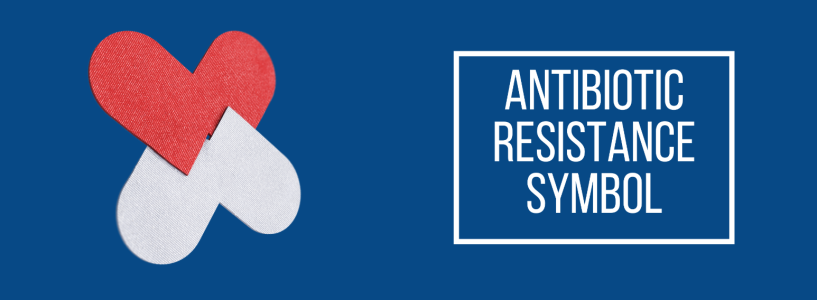
  • The EU-JAMRAI consortium, coordinated by France, announced on Tuesday, November 10, the results of the contest organized to create a symbol for the prevention of antibiotic resistance. Learn more about the winning symbol: https://eu-jamrai.eu/antibiotic-resistance-symbol/

Antibiotic resistance Symbol