


Monitoring of Antibiotic Use and Bacterial Resistance in Healthcare Facilities. Spares Project. Preliminary Results 2019
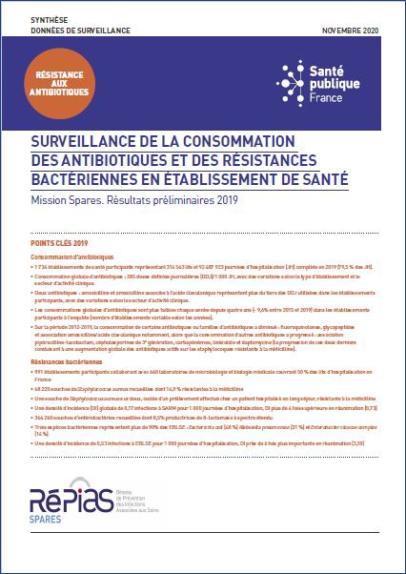
Key findings for 2019 regarding antibiotic use: 1,734 participating healthcare facilities representing 314,563 beds and 92,487,923 full hospital days (FHD) in 2019 (79.5% of FHD); Overall antibiotic consumption: 285 defined daily doses (DDD)/1,000 HD, with variations depending on the type of facility and clinical sector; Two antibiotics—amoxicillin and amoxicillin combined with clavulanic acid—account for more than one-third of the DDDs used in participating facilities, with variations depending on the clinical specialty; Overall antibiotic consumption has been declining annually over the past four years (-9.6% between 2015 and 2019) in the facilities participating in the survey (the number of facilities varies by year); Over the 2012–2019 period, the consumption of certain antibiotics or classes of antibiotics decreased: particularly fluoroquinolones, glycopeptides, and the amoxicillin/clavulanic acid combination in particular, while the use of other antibiotics has increased: the piperacillin-tazobactam combination, third-generation cephalosporins, carbapenems, linezolid, and daptomycin (the increase in the latter two leading to an overall rise in antibiotics active against methicillin-resistant staphylococci). Key points for 2019 regarding bacterial resistance: 991 participating institutions collaborating with 660 microbiology and clinical laboratory facilities covering 50% of hospital beds in France; 68,220 Staphylococcus aureus isolates collected, of which 14.9% were methicillin-resistant; One in two Staphylococcus aureus strains, isolated from a specimen taken from a long-term hospitalized patient, was methicillin-resistant; An overall incidence rate (IR) of 0.17 MRSA infections per 1,000 hospital days, with an IR more than four times higher in intensive care (0.73); 364,260 Enterobacteriaceae strains collected, of which 8.5% were extended-spectrum beta-lactamase (ESBL) producers; Three bacterial species accounted for more than 90% of ESBL-producing Enterobacteriaceae: Escherichia coli (48%), Klebsiella pneumoniae (31%), and Enterobacter cloacae complex (14%); An incidence rate of 0.53 ESBL-producing E. coli infections per 1,000 hospital days, with an incidence rate nearly six times higher in the ICU (3.10).
Publishing year: 2020
Pages: 7 p.
Collection: Monitoring data
In relation to
Our latest news

news
Shamonda Virus: First Human Case Detected in France—What Do We Know?

news
Call for Nominations for the Renewal of the Scientific Advisory Board of the...

news












