


The Health Reserve in the Context of COVID-19
The Health Reserve was heavily mobilized during this unprecedented health crisis. How was it organized? What were the staffing needs? How was the recruitment process carried out?
The Mobilization of the Reserve in Numbers
The Medical Reserve is fully mobilized in the fight against the COVID-19 pandemic, with more than 145,476 mission days (days/reserve member) dedicated to this exceptional health crisis.
The mobilization of medical reservists for Covid-19-related missions is unprecedented in the history of the Medical Reserve, with:
More than 300 alerts issued (calls for mobilization)
More than 11,000 mobilizations of medical reservists
More than twenty different professions mobilized
20 regions/territories reinforced
145,476 cumulative mission days
With the coronavirus, we are clearly facing an exceptional public health situation in which standard local resources are insufficient to cope with the crisis.
Throughout the crisis, the Health Reserve has enabled health authorities to quickly access healthcare professionals when local resources and other existing backup mechanisms were insufficient to mobilize all the necessary healthcare professionals.
These health reservists were deployed at the request of the relevant Regional Health Agencies, in consultation with the Ministry of Solidarity and Health. These agencies determine the professions and the number of reservists they need based on their assessment of the situation in their region (for example: 10 intensive care nurses, 3 anesthesiologists-intensivists over a two-week period).
The strength of the Health Reserve lies in having a pool of volunteer, committed healthcare professionals who can be mobilized very quickly, analyze situations, and adapt to uncertainty.
The Health Reserve was mobilized at the start of the COVID-19 pandemic and remains so to this day to bolster local teams both in mainland France and in the overseas territories.
Reinforcements at Roissy Charles de Gaulle Airport
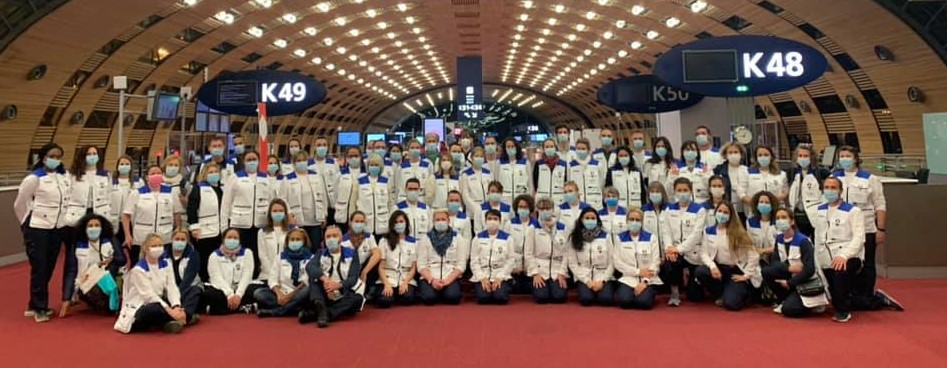
The Health Reserve’s first missions began in late January 2020 when 60 health reservists were mobilized at Roissy Charles de Gaulle Airport. These reservists were tasked with informing passengers arriving from high-risk areas as they disembarked, distributing informational materials on safety protocols and masks for adults and children, taking temperatures, and, when necessary, directing suspected cases to appropriate care.
Support for nationals returning from China
In February, 115 medical reservists provided support and round-the-clock medical monitoring for citizens at the three accommodation centers set up for those returning from China (Carry-le-Rouet, ENSOSP in Aix-en-Provence, Branville).
Reinforcing local teams in mainland France
In March 2020, medical reservists were mobilized, at the request of the relevant Regional Health Agencies, to reinforce local teams responding to COVID-19 across several types of missions:
reinforcing intensive care units;
reinforcing departments impacted by COVID-19 (radiology, obstetrics, etc.);
reinforcing the SAMU dispatch center;
reinforcing healthcare facilities (such as long-term care hospitals);
reinforcing call centers;
reinforcement in nursing homes and post-acute care and rehabilitation facilities;
support for Regional Health Agency teams (epidemiological, logistical, and administrative support, etc.).
In April 2020, healthcare reservists were also mobilized in certain overseas territories to reinforce local teams, specifically:
in Guadeloupe, to strengthen healthcare services in the territory (Guadeloupe, Saint Martin, Saint Barthélemy);
in Mayotte, to reinforce the Regional Health Agency, the Mayotte Hospital Center, and local healthcare facilities (clinics, etc.);
in French Guiana, to reinforce healthcare facilities, participate in mass screening operations, and strengthen the monitoring of clusters in various municipalities, including the most isolated ones.
Reinforcement of mobile investigation and testing teams
In addition to missions to reinforce local teams, healthcare reservists were mobilized, particularly during the summer, to support local teams in their screening and cluster investigation efforts (contact tracing).
Reinforcing local teams in mainland France and overseas territories
Since September 2020, healthcare reservists have continued to be mobilized, at the request of Regional Health Agencies, to reinforce local teams tackling COVID-19 through missions to:
reinforcing hospitals, particularly intensive care units or COVID-19 wards;
reinforcing medical and social care facilities;
supporting teams from Regional Health Agencies or local authorities.
In 2021 and 2022, healthcare reservists are also being mobilized to participate in vaccination campaigns in overseas territories, in addition to various ad hoc hospital reinforcement missions in the event of COVID-19-related pressures in mainland France and overseas territories.
A regularly updated list of current missions is available at the top of this page.
Reservists mobilized in March 2021 in Wallis and Futuna as part of the COVID-19 response (photo © Ministry of Overseas Territories).
In response to this unprecedented health crisis, the Health Reserve mobilized healthcare professionals with a variety of specializations; some of them had already been registered with the Health Reserve prior to the COVID-19 pandemic, while others joined at that time to bolster local teams.
The healthcare professionals called upon by the authorities for reinforcement were primarily:
general practitioners, intensive care physicians, and emergency physicians;
ICU nurses/anesthesia nurse practitioners, emergency room nurses, and general care nurses;
nursing assistants and intensive care nursing assistants.
On an ad hoc basis, other professions have also been or are being mobilized:
medical dispatchers;
biologists;
epidemiologists;
hygienists;
nurses with experience in public health or health surveillance and safety;
pediatric nurses;
logistics specialists;
radiology technicians;
physical therapists;
public health physicians;
pharmacists;
pulmonologists;
pharmacy technicians;
psychologists;
laboratory technicians.
The Health Reserve does not take action on its own initiative. It is the Regional Health Agencies, in consultation with the Ministry of Solidarity and Health, that assess and determine the reinforcements needed in their region when local resources are insufficient to handle the situation. They then submit a mobilization request to the Health Reserve, specifying the professions, the number of reservists, and the duration of the reinforcement.
When the Health Reserve receives a mobilization request, an urgent call for applications (an “alert”) is sent by Santé publique France via email to all reservists in the profession(s) sought. This call for applications clearly outlines the mission, the scheduled departure date(s), the professional skills required, and any eligibility requirements (e.g., being immunized against measles if the mission takes place in a measles outbreak).
Reservists who are interested and able to make themselves available respond to the call for applications. Santé publique France selects candidates very quickly.
Specifically for COVID-19 missions, reservists available for extended periods were prioritized to avoid overly frequent rotations, which place a burden on local teams. Whenever possible, teams are balanced between new and veteran reservists, women and men, and young professionals and experienced professionals.
In practice, the mobilization of reservists proceeds as follows:
Receipt of the request
Drafting and sending a call for mobilization (an “alert”)
Selection based on criteria requested by the authorities
Verification of their administrative records
Notification of selected reservists
Arrangement of mission logistics (transportation, lodging)
Briefing the entire team before departure
Mission monitoring
Debriefing of the entire team upon return from the mission
On average, reservists depart for 15-day missions, which may be extended depending on conditions on the ground.
See also
An Update on the Health Reserve: Debunking Misconceptions During the COVID-19 Crisis
Catherine Lemorton, head of the Health Reserve, discusses how the Health Reserve operates and clarifies some misconceptions circulating during the COVID-19 crisis.
Read the article












