




Data
Testing: Continued growth in 2024
Laboratory testing: approximately 8.5 million HIV tests in 2024
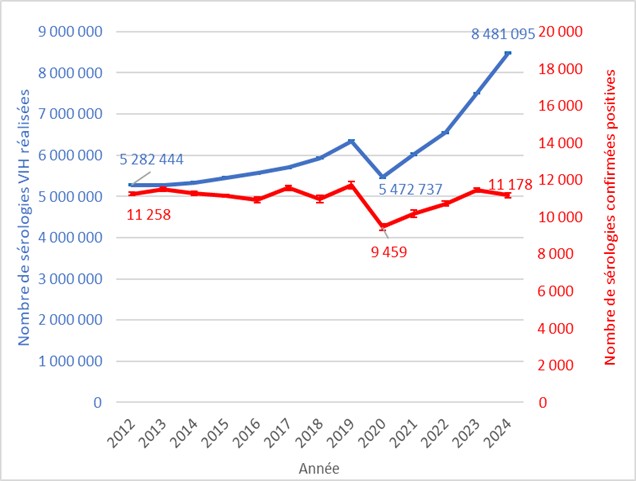
In 2024, 8.48 million [95% CI: 8.46–8.50] HIV serology tests were performed, representing 124 per 1,000 inhabitants. The number of serology tests increased by 13% compared to 2023 and by 41% compared to 2021.
The number of serological tests confirmed positive in 2024 was estimated at 11,178 [95% CI: 11,042–11,314]. This figure is slightly lower (-2%) than in 2023, but represents a 10% increase compared to 2021. The HIV serology positivity rate continues to decline; in 2024, it was 1.3 per 1,000 serology tests performed.
Number of HIV serology tests performed and laboratory-confirmed positive results. France, 2012–2024
Increased testing across all age groups, with the fastest growth among those aged 50 and older
Health insurance data is another source of information on HIV testing. Its scope is limited to tests eligible for individual reimbursement (thus excluding tests performed during hospitalizations in the public sector and free tests at CEGIDD, PMI, PASS, etc.). However, these data have the advantage of being broken down by sex and age.
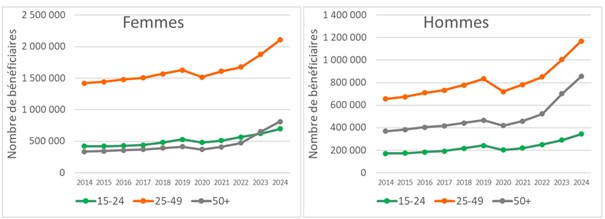
The number of beneficiaries who received at least one reimbursement for an HIV serology test in 2024 was 6.0 million, 60% of whom were women. The majority (55%) of beneficiaries were aged 25 to 49, 28% were 50 and older, and 17% were young people aged 15 to 24. The number of beneficiaries aged 50 and older continues to grow faster than in other age groups.
Number of people receiving at least one reimbursement for HIV testing per year, France, 2014–December 2024
Over-the-counter laboratory tests: HIV test / My STI test
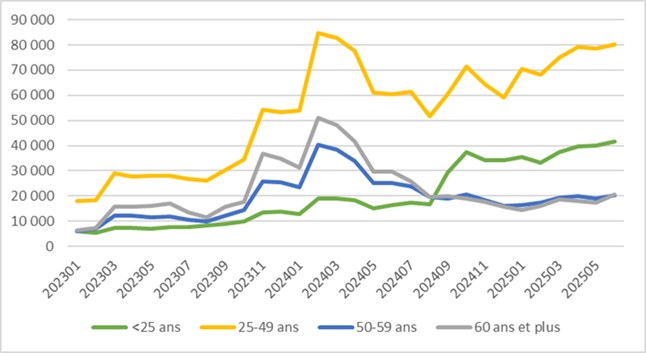
The “HIV Test” program, which has been available nationwide since January 2022, allows individuals with health insurance to undergo a serological test in a laboratory without a doctor’s prescription and without paying upfront. Since September 2024, it has been expanded to cover four other STIs under the name “My STI Test.” For HIV, costs remain 100% covered by health insurance regardless of age. For other STIs, health insurance coverage is 100% for those under 26 and 60% for older individuals. In 2024, 1.71 million HIV serology tests were performed under these programs, representing 20% of all HIV serology tests, an increase of 103% compared to 2023. The age distribution of beneficiaries of these programs varied throughout the year, with a marked increase in those under 25 in September 2024 following the launch of Mon test IST.
Number of HIV serology tests performed without a prescription, by age of the recipient and month of testing, France, Jan. 2023–Sept. 2025
Sales of HIV self-tests and community-based rapid diagnostic tests
Testing services also include the sale of HIV self-tests by pharmacies, including online sales (nearly 48,000, down 12% from 2023), and rapid diagnostic tests (RDTs) conducted in community settings. In 2024, approximately 50,000 HIV RDTs were conducted in this setting, with a higher positivity rate (8.7 per thousand tests) than in the general population.
HIV and AIDS Diagnoses: Stabilization in 2024 Following an Increase Between 2020 and 2023
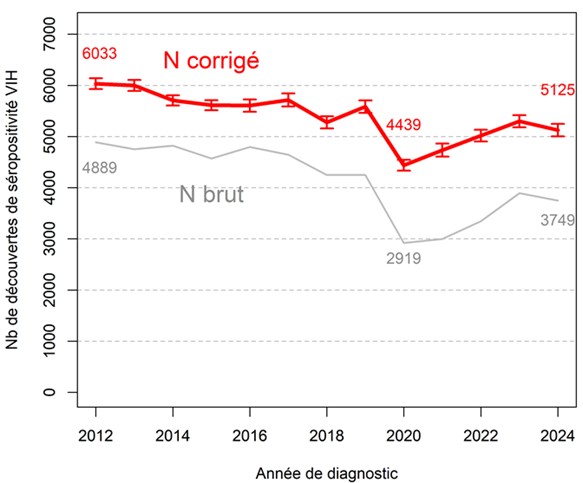
The number of newly diagnosed HIV-positive cases is derived from mandatory reporting of HIV infection. Estimates are adjusted to account for underreporting, reporting delays, and missing data.
Approximately 5,100 people were diagnosed with HIV in 2024
Approximately 5,100 [95% CI: 5,003–5,247] people were diagnosed with HIV in 2024. Between 2012 and 2024, the number of new HIV diagnoses decreased by 15%. The resurgence in the number of new diagnoses observed between 2020 and 2023 came to a halt, with the trend stabilizing in 2024.
Number of new HIV diagnoses by year of diagnosis, France, 2012–2024
New HIV Diagnoses by Population
Cisgender men accounted for 68% of new HIV diagnoses in 2024, cisgender women for 30%, and transgender people for 2%. People who learned of their HIV-positive status in 2024 had a median age of 36. The primary modes of transmission among people who learned of their HIV-positive status in 2024 were heterosexual intercourse (53%) and sex between men (42%).
More than half of the cases identified in 2024 (56%) involved people born abroad. Of these, it is estimated that 47% contracted HIV after arriving in France.
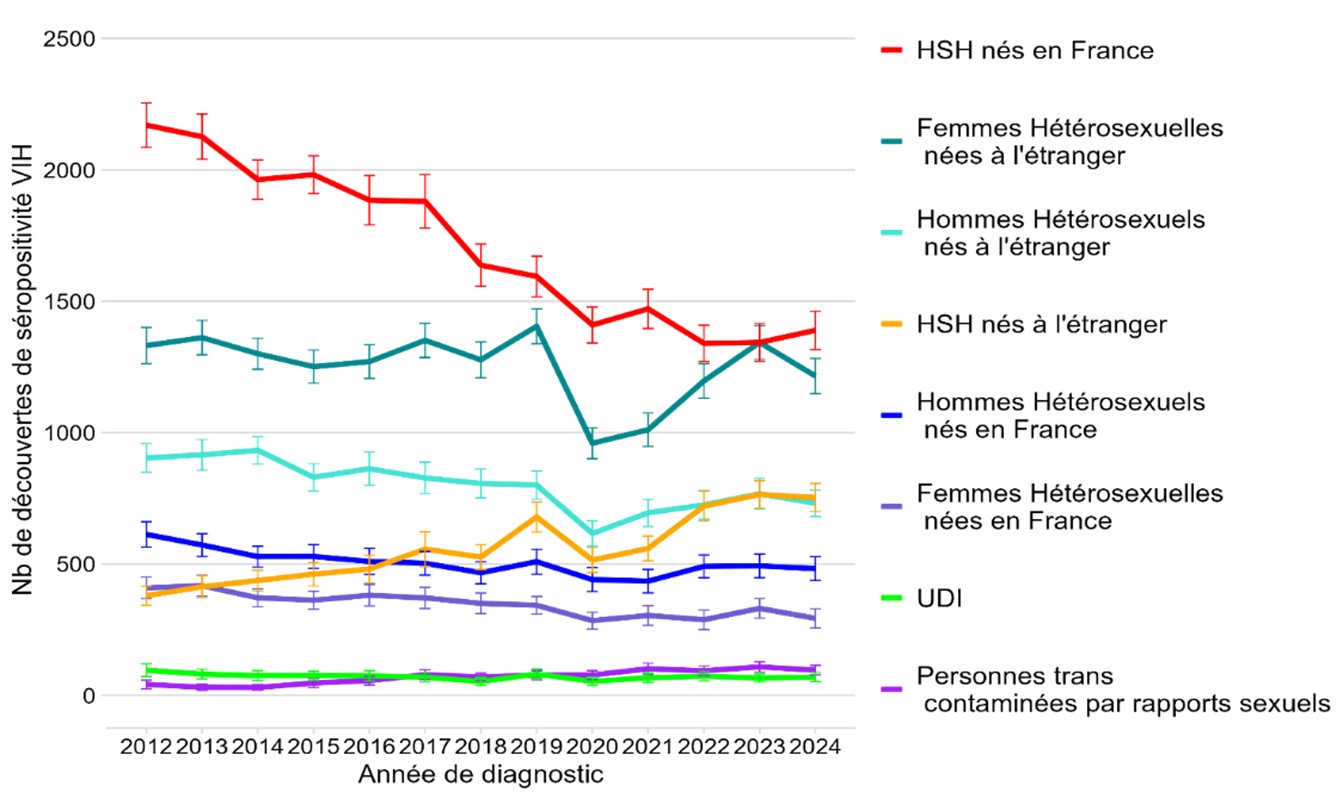
The trend in the number of new HIV diagnoses varies by population group.
Among people born in France, this number declined until 2020, then stabilized.
Among people born in another country, this number dropped between 2019 and 2020 (-27%) and then rose again through 2023 (+37%). This decrease and the subsequent rise were much more pronounced among people who had arrived in France less than a year earlier than among those who had been residing in France for longer.
Among MSM born in France, there has been no further decrease since 2022, marking a break from the previous 10 years. The number of new cases has also stabilized among MSM born abroad since 2022, following an upward trend. Among heterosexuals born in France, the number of new cases has stabilized since 2020.
Number of new HIV diagnoses by population* and year of diagnosis, France, 2012–2024
Early or late diagnosis
Early diagnoses reflect both current testing and HIV incidence in the year of diagnosis, whereas late diagnoses reflect current testing and incidence from previous years.
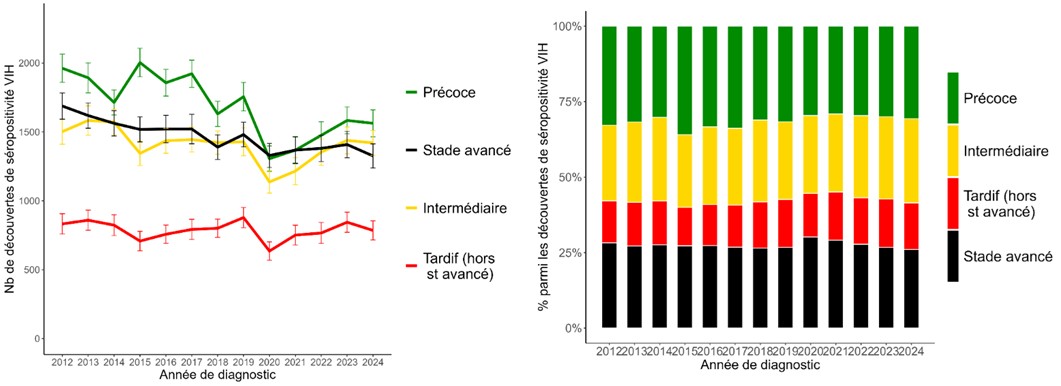
In 2024, 31% of diagnoses were early (clinical stage of primary infection, negative HIV test within 6 months or positive test for recent infection), and 41% were late (26% at an advanced stage, i.e., at the AIDS stage or with <200 CD4/mm³, and 15% with CD4 counts between 200 and 350/mm³).
Between 2020 and 2024 among adults, the number of diagnoses at the advanced stage of infection remained stable, while the number of early, intermediate, or late diagnoses (excluding the advanced stage) increased. Consequently, the proportion of diagnoses at the advanced stage decreased slightly, from 30% in 2020 to 26% in 2024.
Number and distribution of new HIV diagnoses among adults by whether the diagnosis was made at an early or late stage (advanced or non-advanced), France, 2012–2024
People diagnosed in France in the year of their arrival, but who were already aware of their HIV-positive status
In 2024, 725 [95% CI: 673–777] people who were aware of their infection before arriving in France tested positive within the year following their arrival. Their number, which had fallen in 2020, then rose through 2023 but declined again in 2024. Including them brings the total number of HIV diagnoses in France in 2024 to 5,850 [95% CI: 5,736–5,964].
AIDS Diagnoses
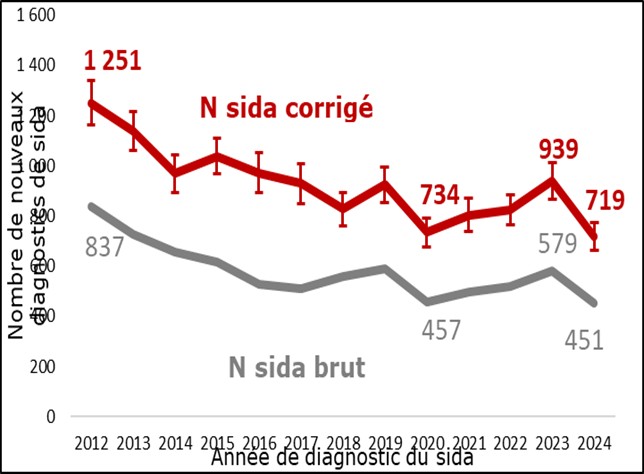
The number of AIDS diagnoses in 2024 was estimated at 719 [95% CI: 662–775]. This number, which had increased between 2020 and 2023, decreased in 2024 and returned to the 2020 level.
People diagnosed with AIDS in 2023 had a median age of 45. The majority (68%) were unaware of their HIV status and therefore had not been able to receive antiretroviral (ARV) treatment before developing AIDS, and 13% knew their HIV status but had not been treated with ARVs. Only 19% had received ARVs for at least 3 months.
Number of AIDS diagnoses (unadjusted and adjusted figures), France 2012–2024
Estimates of HIV incidence (number of new infections) and other key indicators
HIV incidence in France
HIV infection is diagnosed at a time that varies greatly from one person to another after exposure, depending on whether they undergo testing. The number of diagnoses (new cases) is therefore not equivalent to the number of infections (incidence).
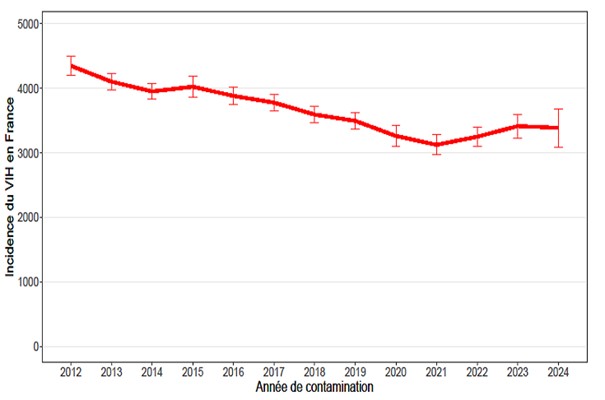
The estimate of incidence in France includes all infections occurring within the country. It is estimated at approximately 3,400 [95% CI: 3,089–3,681] infections in 2024, representing an incidence rate of 4.9 per 100,000 inhabitants.
Between 2012 and 2021, the incidence in France decreased, linked to a marked reduction among MSM born in France and despite an increase among MSM born abroad over the same period. Since 2021, the incidence has stabilized, particularly among MSM born in France.
Estimated Number of New HIV Infections in France, 2012–2024
Number of undiagnosed people living with HIV
The number of people living with HIV (PLHIV) who are unaware of their HIV status was estimated at 9,675 [95% CI: 9,254–10,097] at the end of 2024. The majority of them (59%) were infected through heterosexual intercourse, and 37% through sex between men.
Number of undiagnosed people living with HIV by population, France, end of 2024
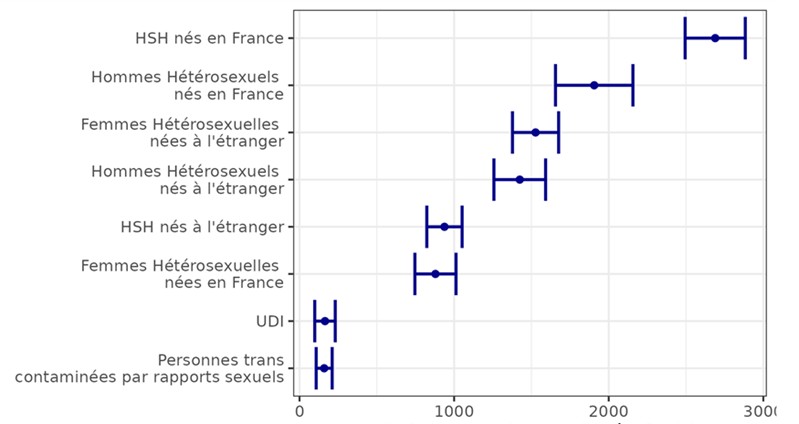
The number of undiagnosed people living with HIV decreased by 10% between the end of 2023 and the end of 2024.
Time from infection to diagnosis
The median time (25th and 75th percentiles) between infection and diagnosis was 1.7 years (0.5–4.5) for all individuals who learned of their HIV status in 2024, regardless of where they were infected (France or another country).
This median time was shortest for MSM born in France (0.9 years in 2024), transgender individuals (1.1 years), and MSM born abroad (1.1 years). The longest median delay was observed among heterosexual men (2.9 years) and women (2.7 years) born abroad and among people who inject drugs (2.6 years).
Care Cascade in 2023
The objectives of the 2017–2020 Sexual Health Strategy are to ensure that 95% of all PLHIV are diagnosed, that 95% of those diagnosed receive treatment, and that 95% of those receiving treatment have an undetectable viral load by 2030. Estimates of this treatment cascade show that the first objective had not yet been achieved by 2023, while the next two had been met.
Among PLHIV aged 15 and older living in France in 2023—approximately 181,000 people—about 94% were diagnosed, and 96% of those diagnosed were receiving antiretroviral treatment. Among those receiving treatment, the proportion with an undetectable viral load was approximately 97% for a threshold < 200/mm³, and 94% for a threshold < 50/mm³.
The proportion of diagnosed PLHIV varies by population. The lowest proportion was observed among heterosexual men born in France: 88%. It was also lower than the overall proportion among transgender people infected through sexual contact: 91%, MSM born abroad: 92%, and heterosexual men born abroad: 92%.
In contrast, the proportion of people receiving treatment among those diagnosed shows no significant difference across populations.
In conclusion
Available data show significant progress in the fight against HIV infection, with increased testing and a care cascade close to the set targets (94% of PLHIV diagnosed, of whom 96% are on antiretroviral therapy, and 97% of whom have an undetectable viral load). However, the incidence of new infections nationwide has stopped declining, with 3,400 cases per year since 2023, and approximately 9,700 people living with HIV remain undiagnosed.
Strengthening prevention efforts—including regular testing and the use of all available tools (condoms; pre- and post-exposure prophylaxis; early treatment; and long-term retention in care)—remains essential to achieving the goals of HIV elimination.

magazines/revues
12 February 2026
Weekly Epidemiological Bulletin, November 25, 2025, No. 19-20: Screening, Prevention, and Treatment of HIV and Sexually Transmitted Infections: Challenges and Determinants

In relation to

Hepatitis C
thematic dossier
Hepatitis C is a viral infection primarily transmitted through blood. Screening for the disease is crucial to ensuring that infected individuals receive the treatments that can now lead to a cure.

Sexual health
thematic dossier
Santé publique France focuses in particular on four areas of sexual health: sexually transmitted infections, including HIV; contraception; combating discrimination; and violence.

Blood donation
thematic dossier
Santé publique France coordinates the epidemiological surveillance of blood donors and helps assess the risk that a blood donation may be infected with a pathogen transmissible through transfusion.











