


Sex education
If you work in the public education system, in the healthcare field, or interact closely with young people in your daily work, you’ll find information and resources here to support you in your work.
Let's express ourselves
First experiences, puberty, romantic relationships, and safe sex—the Onsexprime website is dedicated to young people’s sexuality and everything related to it, offering educational...
Sex education
Data from the scientific literature show that:
sex education does not increase sexual activity, risky sexual behaviors, or rates of STI/HIV infection;
programs that promote abstinence as the only option are not effective in delaying sexual debut, reducing the frequency of sexual intercourse, or reducing the number of sexual partners;
programs that address gender issues are substantially more effective than those that do not;
The impact of sexuality education is greatest when school-based programs are complemented by the involvement of parents and teachers, training institutions, and youth-focused services.
For more information, please see the WHO article on sexuality education.
Enacted into law in 2001, sex education in schools is provided both through dedicated courses and through specific sessions. These lessons are now guided by a national program called EVAR/EVARS (for preschool and elementary school: education in emotional and relational life; for middle and high school: education in emotional, relational, and sexual life), which takes into account the psychosocial skills of children and adolescents. In addition to training for teaching staff, the Ministry of National Education offers resources on the Educscol website to help understand the challenges of sex education, as well as information on training opportunities and resources to prepare sex education sessions.
Scientific frameworks exist for designing sex education interventions, whether they take place in school or outside of school. The primary resource is UNESCO’s “International Guidelines on Sexuality Education.” These guidelines define the knowledge, attitudes, and skills to be developed in students according to their age group.
Using this framework ensures that topics appropriate to students’ developmental stages are addressed, while equipping them to take care of their health as they transition into adulthood.
What is Santé publique France’s OnSEXprime initiative?
OnSEXprime is Santé publique France’s social marketing initiative on sexual health aimed at adolescents.
Its goal is to promote a positive start to sexual activity in order to maintain good sexual health throughout life.
It consists of:
An online component:
A “print” component providing teenagers with informational brochures, also distributed by our partners such as the French Ministry of Education, the Ministry of Youth and Sports, and organizations working in schools such as CRIPS or Planned Parenthood; at sexual health centers such as sexual health clinics (formerly CPEF) and, finally, at general youth centers (BIJ, CRIJ, etc.).
A “campaigns” component: several annual campaigns complement this initiative by promoting key messages on sexual health to this target audience, such as the #GênantOupas, Réso Tuto, Sexo Tuto, Askip, and Ok/Pas OK campaigns.
A program rooted in a national public health framework
The rollout of the OnSEXprime program is part of several national action plans:
The national health strategy emphasizes the importance of promoting sexual health through a comprehensive and positive approach, particularly among young people, as one of its priorities.
The national sexual health strategy sets the following objectives:
to improve knowledge and acceptance of prevention among young people becoming sexually active,
to promote equality between men and women, self-respect and respect for others, the fight against sex- and gender-based discrimination, the fight against violence, and the prevention of STIs (including HIV) and unintended pregnancies,
to continue promoting contraceptive choices tailored to each individual’s situation.
The 30 Measures Against Violence Against Women (Secretariat for Women’s Rights) emphasizes education on non-violence and the promotion of gender equality.
The National Action Plan for Equal Rights and Against Anti-LGBT+ Hate and Discrimination 2020–2023 highlights the importance of raising awareness among young people about homophobic and transphobic violence and harassment (particularly through Action 18).
Content based on scientific literature
The program’s content is tailored to the concerns and level of maturity of adolescents. Its design is based on UNESCO’s International Guidelines on Sexuality Education. Drawing on recent scientific data and international best practices in sexuality education, this framework defines the knowledge, skills, and attitudes to be acquired by age group
Key resources to support your work
Used as resources for discussions with young people or distributed directly in settings such as sex education classes or consultations, these documents are available for download and can be ordered.
Brochure: Teen Questions

This sexual health brochure is intended for adolescents aged 11 to 14. The brochure was developed based on questions raised by adolescents. It aims to inform and empower middle school students to adopt preventive behaviors regarding their emotional, relational, and sexual lives.
The “Questions d’Ados” brochure was fully updated in 2025: both the text and the graphic design were revised. The original brochure has been split into two versions: one tailored for 11- to 14-year-olds and another for 15- to 18-year-olds (to be released in 2026). Development
process:
“Questions d’ados 11-14 ans” underwent field testing. Professionals in daily contact with adolescents reported on the information needs expressed by adolescents. This input served as the basis for rethinking the content.
The brochure was written by Santé publique France, drawing on both internal and external expertise. The multidisciplinary team (sociologists, epidemiologists, communications officers) was supported by a committee of experts in the field of sexual health: a psychologist, midwife, gynecologist, school nurse, lawyers, a local public health physician, a sexologist, a marriage and family counselor, and representatives from community organizations. It also benefited from a review by the French Ministry of National Education.
The brochure “Questions from Teens Aged 11–14” was designed in accordance with French recommendations on sexuality education and is based on UNESCO guidelines, which outline the skills and knowledge to be acquired in sexuality education according to age.
Brochure: Contraception
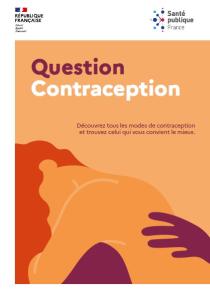
Condoms, implants, IUDs, ... This brochure presents various methods of contraception to help you choose the one best suited to your needs. It also provides practical information on where, how, and at what cost to obtain them.
Download the brochure
Brochure: Sexually Transmitted Infections
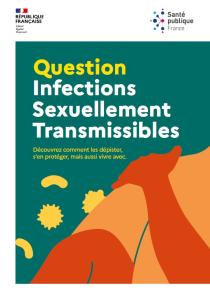
This brochure provides an overview of various STIs: symptoms, treatment, prevention, screening, and advice. The last page lists where to get information and where to get tested.
Download the brochure
Brochure: The First Gynecological Visit

A 20-page illustrated brochure designed to help teenagers feel more at ease during this visit and encourage open communication with healthcare professionals. The brochure is aimed at girls aged 14 to 20 and answers their main questions about what to expect during a gynecological visit.
Brochure: Helping to Express and Hear Consent

This resource offers “ready-to-use” sessions to raise awareness about the concept of sexual consent, helping professionals working with adolescents to implement these sessions. It provides both theoretical insights and practical advice to support the implementation of these interventions. It is a resource for preventing sexual violence, designed for use by emotional health educators, teachers, educators, psychologists, youth workers, and other adults, in institutional or community settings.
Catalog of Resources on Sexual Health and Sex Education for Youth
Other initiatives to promote sexual health
Through websites, informational materials distributed throughout the region, and support tools, their goal is to improve everyone’s sexual health.
Learn more about these resources:
Question Sexualité Website
For adults
Sexosafe website
For men who have sex with men

Scientific publications
Here you will find the latest scientific publications related to the studies and research conducted by Santé publique France in the field of sexual health.












