



Data
Characteristics of mesothelioma cases since 1998 (PNSM)
Between 1998 and 2017, 5,625 cases of mesothelioma were collected and included in the PNSM based on pathological and/or clinical criteria.
Significant changes in the main characteristics of cases between 1998–2002 and 2013–2017:
Increase in the proportion of women from 20% to 25%
Increase in age at diagnosis from 70 to over 75 years, among both men and women
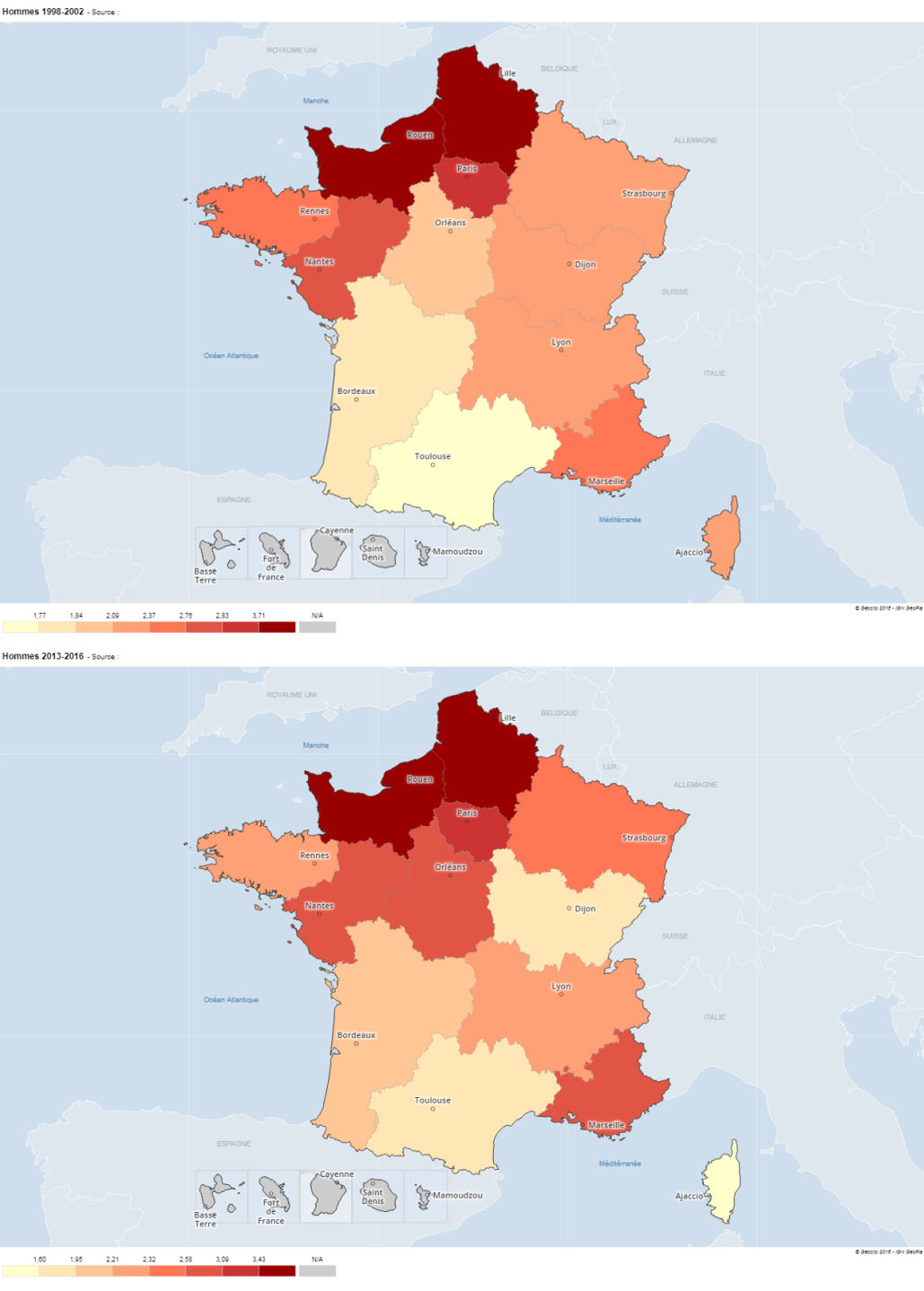
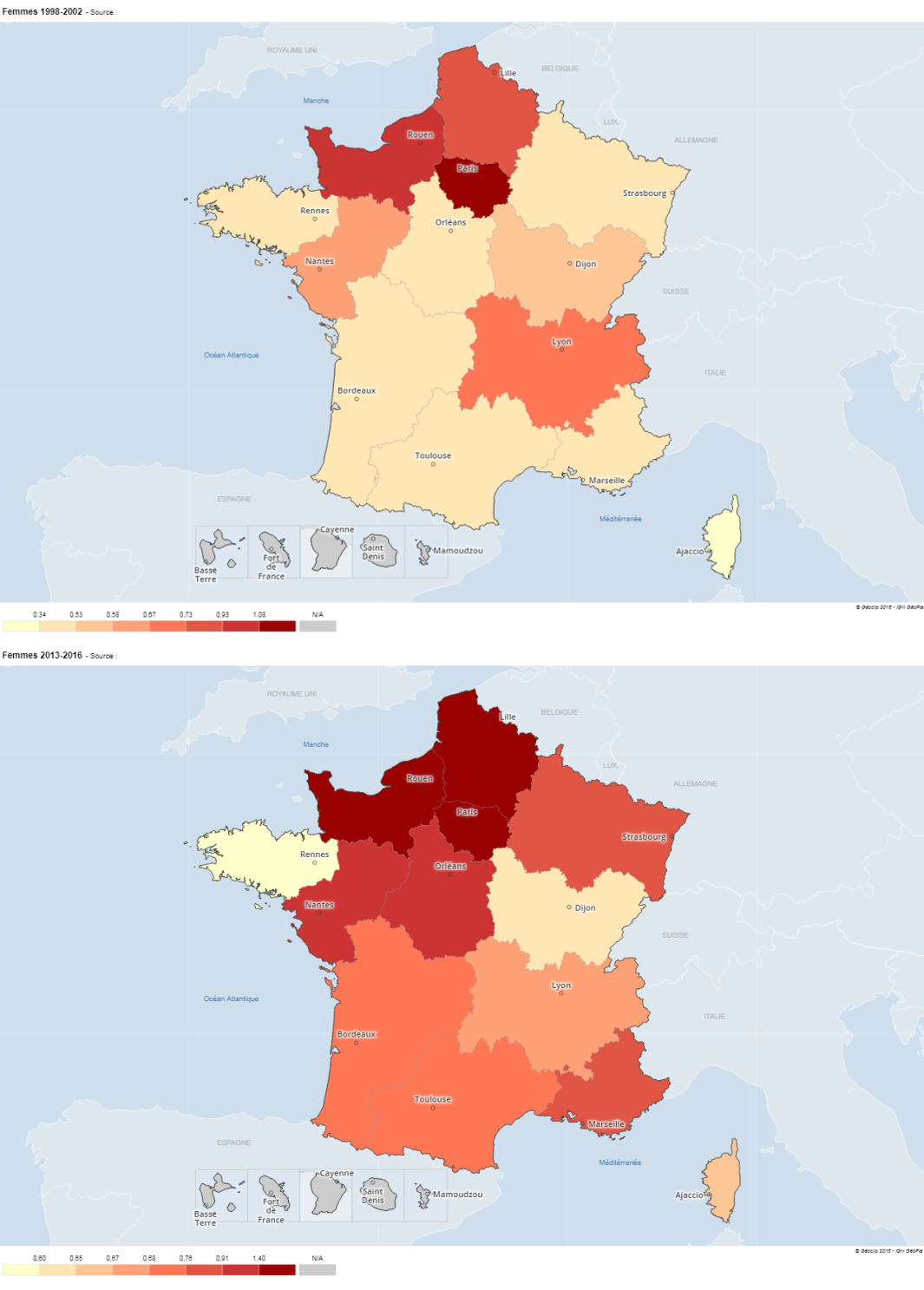
Increase in crude incidence rates from 2.1 to 3 per 100,000 among men and from 0.5 to 0.9 per 100,000 among women
Decrease in the proportion of “young” cases (under 60 years of age) from 16% to 6%
Very significant geographic disparities, depending on the department of residence at the time of diagnosis, over the entire 1998–2017 period
Sex ratio: 1.9 to 5.1 male cases for every female case
Age at diagnosis: 66 to over 77 years among women and 69 to 76 years among men
Crude incidence rates: from 1.2 to 5.1 per 100,000 among men and from 0.3 to 1.6 per 100,000 among women
Proportion of young cases: 0 to 20% among men and 0 to 40% among women
Estimate of the national incidence of pleural mesothelioma (PNSM)
Estimated annual national incidence of pleural mesothelioma for the period 2015–2016:
801 cases in men (age-standardized rate of 2.46 cases per 100,000)
302 to 311 female cases (age-standardized rate of 0.89 to 0.92 cases per 100,000)
Very sharp increase in incidence among women since 1998:
Doubling of the annual number of cases
Increase of more than 50% excluding demographic effects (population growth and aging)
A marked increase in crude age-specific rates for the oldest age groups: 70 years and older for women and 75 years and older for men
Estimates of regional incidence rates: significant geographic variation
Estimated age-standardized incidence rates among men by region and period: 1998–2002 and 2013–2016
Estimated age-standardized incidence rates among women by region and period: 1998–2002 and 2013–2016
Very low survival rates for patients with pleural mesothelioma
According to the PNSM:
An average survival of 12 months for men and 13 months for women
Better survival for epithelioid mesotheliomas (14 months)
Improved survival for cases diagnosed after 2002 (13 months vs. 11 months), which may be due to:
earlier detection, particularly with the implementation of post-occupational follow-up
improved therapeutic management
|
N |
Median |
1-year survival [95% CI] |
2-year survival [95% CI] |
5-year survival [95% CI] |
|
|---|---|---|---|---|---|
|
Sex |
|||||
|
Male |
2512 |
12 months |
51% [49–53] |
21% [19–23] |
4% [3–5] |
|
Women |
775 |
13 months |
52% [48–56] |
25% [22–28] |
7% [5–9] |
|
Diagnosis period |
|||||
|
1998–2002 |
751 |
11 months |
44% [40–48] |
18% [15–21] |
4% [3–5] |
|
2003–2007 |
2,639 |
13 months |
53% [50–56] |
24% [21–26] |
5% [4–6] |
|
2008–2012 |
284 |
13 months |
53% [50–56] |
23% [20–25] |
5% [4–6] |
|
Histology |
|||||
|
Epithelioid mesothelioma (EMM) |
2,639 |
14 months |
57% [55–59] |
26% [24–28] |
6% [5–7] |
|
Biphasic mesothelioma (BMM) |
364 |
8 months |
35% [30–40] |
7% [4–9] |
0% [0–1] |
|
Sarcomatoid or desmoplastic mesothelioma (MMF) |
284 |
5 months |
16% [12–21] |
4% [3–6] |
0% [0–1] |
Furthermore, estimates based on data from metropolitan cancer registries (Francim) corroborate the PNSM data. They show:
A 1-year standardized net survival rate of 58% and a 5-year rate of 10% for individuals diagnosed between 2010 and 2015;
An improvement in the 1-year standardized net survival rate between 1990 and 2015; it rose from 36% in 1990 to 60% in 2015;
Little change in the 5-year standardized net survival between 1990 and 2015 (4% in 1990 and 10% in 2015).
Net survival: this is the survival rate that would be observed if the only possible cause of death were the cancer under study. It therefore has the advantage of being free from the influence of other causes of death. It is the only indicator that allows for international and temporal comparisons.
DOWNLOAD - Survival Rates for People with Cancer in Metropolitan France, 1989–2018

enquêtes/études
23 August 2021
Survival Rates for People with Cancer in Metropolitan France, 1989–2018 – Pleural Mesothelioma
DOWNLOAD - Survival Rates for People with Cancer in Metropolitan France, 1989–2018
enquêtes/études
20 October 2021
Survival Rates for People with Cancer in Metropolitan France, 1989–2018 – Pleural Mesothelioma
DOWNLOAD - Survival Rates for People with Cancer in Metropolitan France, 1989–2018
enquêtes/études
14 October 2021
Survival Rates for People with Cancer in Metropolitan France, 1989–2018 – Pleural Mesothelioma
Various sources of asbestos exposure
According to the PNSM (a case-control study conducted between 1998 and 2002), the proportion of pleural mesotheliomas attributable to occupational exposure to asbestos ranges from:
75% to 92% among men
But only 25% to 58% in women Thus, many questions remain regarding exposure factors, particularly among women and individuals with mesothelioma located outside the pleura (not covered by the PNSM).
A pilot study was conducted as part of the Mesothelioma DO between 2013 and 2015 across nine French regions. To target subjects for whom exposure was considered less well understood, three subpopulations were selected: men under 50 and women (of any age) with pleural mesothelioma, and all subjects with extrapleural mesothelioma. Subjects for whom probable or very probable occupational exposure to asbestos was identified were excluded from these analyses. An initial analysis of exposures was published in 2017. An update of these results with a more detailed analysis is currently underway. The initial results show that:
The assessment did not identify confirmed occupational exposure to asbestos in 75% of the cases investigated (Table 2). Among the cases without confirmed occupational exposure to asbestos:
Non-occupational exposure to asbestos and mineral wool was found in nearly 65% and 20% of subjects, respectively.
These exposures included: DIY activities, para-occupational exposure (related to living with a relative exposed to asbestos and mineral wool in the workplace), and domestic exposure to asbestos.
Exposure to medical ionizing radiation was identified in 10% of cases.
For about half of the cases, at least one industrial site that potentially emitted asbestos was identified within a 2,000-meter radius of a place of residence.
|
Men |
Women |
Total |
|
|---|---|---|---|
|
Unconfirmed occupational exposure |
|||
|
Not found |
7 |
54 |
61 |
|
Possible |
4 |
13 |
17 |
|
Confirmed occupational exposure |
|||
|
Probable |
1 |
4 |
5 |
|
Very likely |
11 |
9 |
20 |
|
Total |
23 |
80 |
103 |
Insufficient claims for compensation (occupational diseases and FIVA) (PNSM)
Overall for the period 2005–2016
Cases under the General Social Security Scheme (RGSS):
58% of mesothelioma cases covered by the RGSS filed a claim for recognition as an occupational disease
58% of patients submitted a claim for compensation to FIVA
27% took no action
Fiva and/or DMP claims by sex, age, and social security coverage. Cases in the RGSS with a confirmed diagnosis of pleural mesothelioma, 2005–2016.
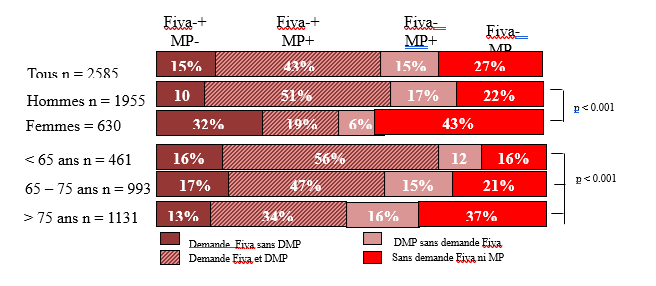
Cases Not Covered by the RGSS: Only 43% of cases filed a claim with Fiva
Significant geographical disparities depending on the cases’ place of residence
Factors associated with seeking compensation vary depending on the claim:
DMP: age, blue-collar worker status*, living with a partner*, and identified occupational exposure to asbestos (*only among men)
Fiva: age, living with a partner, identified occupational exposure to asbestos, and membership in the RGSS
No significant decrease in compensation claims filed with Fiva for pleural mesothelioma
In conclusion, the use of compensation schemes for pleural mesothelioma remains insufficient (occupational diseases and the Asbestos Victims Compensation Fund), justifying, in particular, the strengthening of information on these schemes and the criteria for recognizing occupational diseases:
medical and paramedical professionals, to raise their awareness of the medical and social issues related to pleural mesothelioma and the importance of informing and guiding these patients, if possible, based on the nature of their exposure.
patients regarding their rights to compensation (DMP and Fiva).
Data from the mandatory reporting of mesotheliomas
3,992 cases of mesothelioma diagnosed between 2012 and 2017 had been reported as of August 15, 2018. These cases are primarily located in the pleura (90%) or the peritoneum (8%).
More than half of the cases were reported by a pathologist alone (54%), nearly a quarter by a pathologist and a clinician (23%), and nearly a quarter by a clinician alone (23%).
The completeness rate of the mesothelioma database (calculated using data from the National Pleural Mesothelioma Surveillance Program covering 21 departments as a reference) increased significantly between the 2012–2014 and 2015–2016 periods (44% and 65%, respectively). It declined sharply in 2017 (47%) and remains highly variable across regions.
In relation to
thematic dossier
Reportable diseases
The surveillance system for reportable diseases relies on the transmission of data by physicians and laboratory professionals (both in private practice and in hospitals) to the relevant staff at...
Asbestos
thematic dossier
Asbestos can cause various diseases, including cancers (bronchopulmonary cancer, mesothelioma). Widely used until it was banned in France in 1997, it is still very common in buildings.












