




The disease
Cardiovascular Complications of Pregnancy
Pregnancy is a physiological condition that requires significant adaptation of the female cardiovascular system (blood volume, cardiac output, renal filtration, vasodilation). Certain complications during this period can jeopardize the health of both mother and child and increase long-term cardiovascular risk. Pregnancy, childbirth, and the postpartum period are times of increased risk for acute cardiovascular events.
Cardiovascular complications of pregnancy include:
Hypertensive disorders of pregnancy
These disorders encompass three conditions that share the common feature of hypertension (HTN) during pregnancy, defined as a systolic blood pressure ≥140 mmHg and/or a diastolic blood pressure ≥90 mmHg:
chronic hypertension present before pregnancy;
gestational hypertension, which occurs during pregnancy after 20 weeks of amenorrhea, in the absence of proteinuria and laboratory abnormalities;
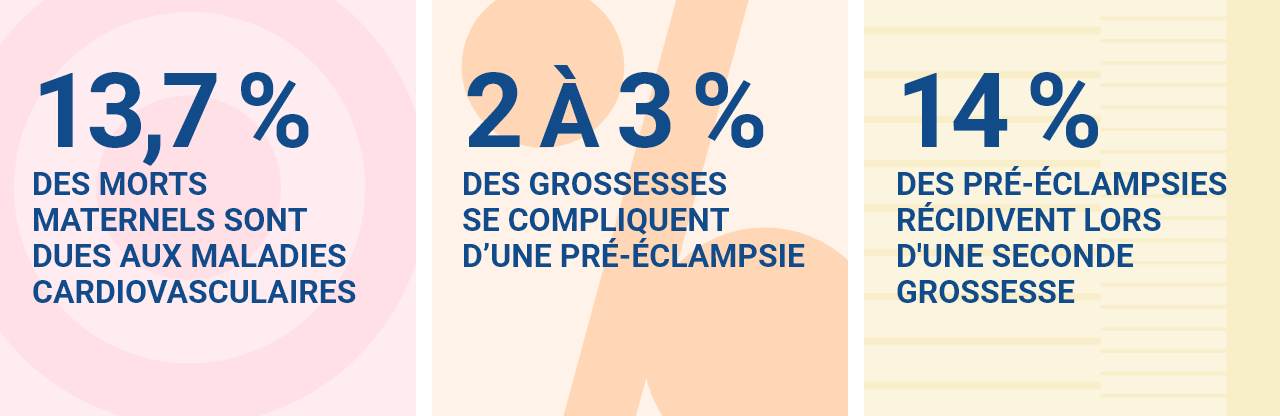
preeclampsia, a complex syndrome of placental origin that combines gestational hypertension and proteinuria. It leads to dysfunction in numerous organs, which can endanger the lives of both the mother and the child. Maternal complications include eclampsia—a severe convulsive seizure indicating hypertensive-induced brain damage—and HELLP syndrome, which involves red blood cell destruction, depletion of clotting factors, and liver damage.
Venous thromboembolic disease
In pregnant women, hypercoagulability protects against hemorrhage during childbirth but poses a risk of venous thromboembolic complications during pregnancy. This risk increases as pregnancy progresses and is even higher in the postpartum period and likely extends beyond the conventionally accepted six-week mark.
Acute coronary syndrome
Acute coronary syndrome refers to damage to the heart muscle resulting from a reduction or interruption in oxygen supply via the coronary arteries. During pregnancy, the risk remains rare, estimated at 1 event per 23,000 pregnancies. It generally occurs during childbirth or in the postpartum period.
Coronary dissection—a tear in the wall of a heart artery that blocks blood flow—accounts for 40% of acute coronary syndromes in pregnant women.
Stroke
The occurrence of a stroke remains a rare event during pregnancy, estimated in France at 1 case per 5,000 pregnancies. As with acute coronary syndrome, the risk of stroke is higher during pregnancy and the postpartum period. All types of stroke can occur: ischemic, hemorrhagic, or mixed. The risk of cerebral venous thrombosis is also higher. Hemorrhagic strokes are the most common in pregnant women.
Heart Failure
Heart failure occurs when the heart can no longer maintain sufficient blood flow to meet the body’s needs. During pregnancy, physiological changes can exacerbate or reveal pre-existing heart disease. Postpartum cardiomyopathy can also develop without a prior history, during the last month of pregnancy or within the first 5 months following childbirth. Only 1 in 2,800 pregnancies is complicated by heart failure.
Key statistics on vascular diseases during pregnancy
Risk Factors and the Need for Vigilance
With the rise in maternal age at first childbirth, obesity, and chronic conditions among pregnant women, vigilance is essential regarding the risk of cardiovascular and cerebrovascular diseases during and after pregnancy. Blood pressure and proteinuria are routinely monitored during prenatal visits. A preconception consultation is recommended for women with hypertension or chronic conditions before becoming pregnant.
A Lifelong Impact
Obstetric complications such as pregnancy-induced hypertension or gestational diabetes affect both the mother and the child during pregnancy and the postpartum period. They can increase cardiovascular risk for several years after childbirth. Thus, women who have developed a hypertensive disorder are at higher risk of chronic hypertension, diabetes, kidney or heart failure, stroke, and acute coronary syndrome.
Affected women should be informed of these risks after childbirth and receive personalized follow-up care:
Screening for hypertension, diabetes, and kidney failure.
Lifestyle adjustments (quitting smoking, physical activity, balanced diet).
Information on the risk of recurrence of hypertensive disorders and the importance of planning future pregnancies (taking aspirin to prevent preeclampsia).
In relation to

High blood pressure
thematic dossier
High blood pressure (HBP), defined as blood pressure that is too high, is the most common chronic condition in France and a major risk factor for cardiovascular and cerebrovascular diseases.

Stroke
thematic dossier
A stroke is a serious condition that causes neurological deficits resulting from vascular brain damage. Strokes can be ischemic or hemorrhagic.

Venous thromboembolism
thematic dossier
Venous thromboembolism involves the formation of a blood clot that can block blood flow and, in some cases, travel to the lungs and cause a pulmonary embolism.











