




The disease
Venous thromboembolism: the condition
Venous thromboembolic disease: a thrombus obstructing blood flow
Venous thromboembolism (VTE) encompasses venous thrombosis (VT) and its immediate complication, pulmonary embolism (PE). Venous thrombosis results from localized activation of the coagulation system, leading to the formation of a thrombus within the venous system. The thrombus can cause partial or total occlusion, thereby obstructing blood flow. Venous thrombosis can affect any part of the venous system, but the most common manifestations occur at sites of low blood flow in the deep venous network of the lower extremities.
Once formed, the thrombus can detach or fragment, migrate through the bloodstream—particularly into the pulmonary arteries—and cause a pulmonary embolism (PE), an acute and potentially fatal complication of thrombosis. Secondary venous insufficiency, or post-thrombotic syndrome, is a secondary and later complication of DVT.
Venous thromboembolic disease is a multifactorial condition, and various acquired, genetic, or environmental risk factors may be involved in its development. Among the main ones are age, cancer, surgery, immobilization, coagulation disorders, obesity, and pregnancy.
It is established that treatment with estrogen-progestin hormones (birth control pills) exposes women to an increased risk of venous thrombosis, especially during the first year of use.
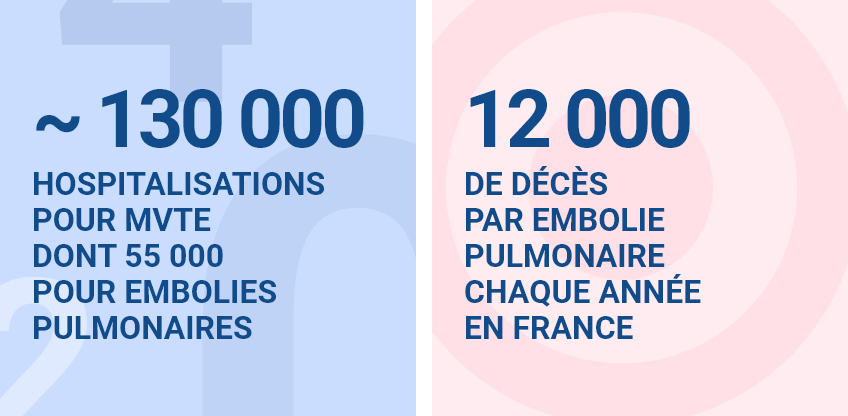
Key statistics on venous thromboembolism
In relation to

Vascular disorders of pregnancy
thematic dossier
Cardiovascular and cerebrovascular diseases are the second leading cause of death among women and the leading cause of postpartum maternal mortality in France. Certain pregnancy complications...

Nutrition and Physical Activity
thematic dossier
Nutrition and physical activity are two major determinants of health that contribute to improving the health of the population and are key priorities in public health policy.

thematic dossier
Cancers
Les cancers représentent en France la première cause de décès chez l’homme et la deuxième chez la femme. Santé Publique France copilote la surveillance épidémiologique et participe à leur prévention.











