image représentant des bactéries résistantes aux antibiotiques

Antibiotic Use and Antibiotic Resistance in France in 2020

To mark World Antimicrobial Awareness Week and European Antibiotic Awareness Day, Santé publique France and its partners are releasing the 2020 data on antibiotic use and resistance.

Résistance aux antibiotiques

Antibiotic resistance

thematic dossier

2020: A Unique Year Amid the COVID-19 Pandemic

Antibiotic use in the outpatient sector: a decline never seen before

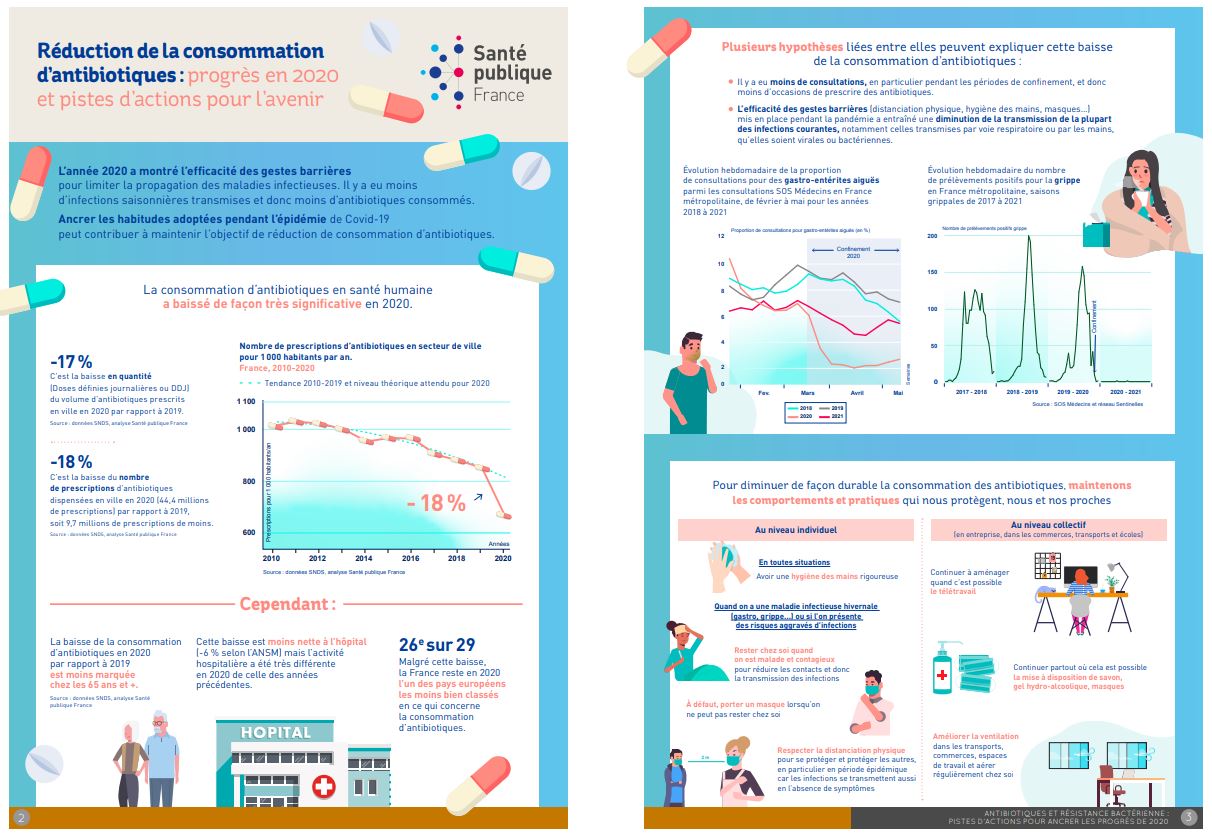
Data from the National Health Data System (SNDS), analyzed by Santé publique France, show that antibiotic use in the outpatient sector saw an additional decline in 2020 of approximately 17% in Defined Daily Doses (DDD) and 18% in the number of prescriptions compared to the levels expected for 2020 based on projections of the downward trends observed over the previous 10 years. Out of a total of 44.4 million antibiotic prescriptions in 2020, there were 9.7 million fewer prescriptions than expected.

This decline was observed across all age groups regardless of gender, and was most pronounced among children under 4 years of age. It was observed regardless of the prescriber’s specialty, including dental surgeons, among whom the number of prescriptions had been steadily increasing until 2019.

Out of a total of 44.4 million antibiotic prescriptions in 2020, there were 9.7 million fewer prescriptions than expected.

,

In healthcare facilities (HCFs), where nearly 20% of antibiotics are prescribed, antibiotic consumption (expressed in DDD) as measured by the SPARES initiative increased overall from 300 to 306 DDD/1,000 patient-days (+2.1%) despite a reduction in activity.

In long-term care facilities for dependent elderly individuals (Ehpad) with an in-house pharmacy, overall antibiotic consumption decreased.

Antibiotic Use and Antibiotic Resistance: Key Figures for 2020

  • In human healthcare, 92% of antibiotics are dispensed in outpatient settings and 8% in healthcare facilities; of those dispensed in outpatient settings, 15% are based on a hospital prescription.

  • Antibiotic consumption in the outpatient sector saw an additional decline in 2020 of approximately 17% in Defined Daily Doses (DDD) and 18% in the number of prescriptions compared to the levels expected for 2020 based on the downward trends of the previous 10 years.

  • France remains in 26th place among the 29 European countries contributing to the ESAC-Net surveillance network. It is therefore essential to continue promoting and expanding initiatives to ensure the appropriate use of antibiotics among all stakeholders: citizens, patients, human and animal healthcare professionals, and policymakers.

  • Bacterial resistance among Enterobacteriaceae, particularly in Escherichia coli, appears to have shifted in 2020 due to the unique circumstances of that year, with an upward trend in healthcare facilities. This underscores the importance of maintaining a high level of prevention against resistant bacterial infections in the immediate aftermath of this crisis.

Antibiotic-resistant Enterobacteriaceae Infections: Vigilance Must Be Maintained

An analysis conducted by the national Primo initiative reports a strengthening of the downward trend in resistance among Enterobacteriaceae found in urinary tract infections, in both community-based patients and those residing in long-term care facilities.

However, in healthcare settings, antibiotic resistance measured by the SPARES mission—particularly among Enterobacteriaceae—increased in 2020 compared to 2019. At the same time, the number of external reports of infections/colonizations caused by emerging highly resistant bacteria (BHRe) is decreasing, raising concerns about underreporting and a decline in screening efforts during the pandemic, with a risk of these bacteria spreading quietly within hospitals.

Promise

This year, Santé publique France is joining Promise. Promise is a meta-network currently being established, bringing together professionals working to combat antibiotic resistance in human and animal health and the environment. Its goal is to foster synergies by creating a "One Health" community that enables academic networks and teams to share best practices and expertise, and to coordinate their efforts.

Antibiotic resistance: a major public health challenge

Antibiotic resistance is identified by the World Health Organization as one of the most serious threats to public health, requiring a “One Health” approach that recognizes the interconnectedness of human health, animal health, and ecosystem health. Over time, the use of antibiotics leads to increased bacterial resistance, ultimately threatening the effectiveness of these treatments. This resistance spreads among living organisms and into the environment.

Two pillars for effectively combating antibiotic resistance in human health

  1. Prevent infections and limit the transmission of bacteria and resistance genes

  2. Use antibiotics wisely (the right ones, when needed)

Since 2016 in France, an interministerial roadmap for controlling antibiotic resistance has coordinated actions in human health, animal health, and the environment under a “One Health” approach. Each year, a summary of updated data is published by Santé publique France and its partners on the occasion of European Antibiotic Awareness Day on November 18.

This year, the publication of this summary comes amid the COVID-19 pandemic, highlighting that our behaviors can have a rapid impact on certain indicators of antibiotic resistance. Hand hygiene, protective measures, and ventilation of enclosed spaces can, by helping to limit the spread of infections, contribute to controlling antibiotic resistance.

In this context, an educational infographic focused on human health has been produced. It highlights the significant decrease in antibiotic use observed in 2020, a departure from previous years. In contrast, it also shows the drastic reduction in healthcare utilization and common winter illnesses and reminds us of the behaviors and practices adopted during the COVID-19 pandemic that protect us and our loved ones.


Reducing Antibiotic Use: Progress in 2020 and Future Action Steps

Infographie - Réduction de la consommation d’antibiotiques : progrès en 2020 et pistes d’actions pour l’avenir

Track trends in antibiotic resistance indicators with our Géodes observatory

Indicators on antibiotic use and antibiotic resistance in community settings and healthcare facilities are available via our Géodes platform. They enable better monitoring and understanding of trends in antibiotic resistance indicators in France through interactive, region-specific visualizations.

Access our indicators

Learn more about antibiotic resistance in France

Combating and Preventing Antibiotic Resistance in Europe and Around the World

EU-JAMRAI

France is actively involved in the fight against antibiotic resistance at the international level. In particular, for three and a half years, it coordinated the European Joint Action on Antimicrobial Resistance and Healthcare-Associated Infections (EU-JAMRAI). This joint action aimed to strengthen synergies among Member States and propose concrete "One Health" measures to combat antibiotic resistance and healthcare-associated infections. Learn more.

European Antibiotic Awareness Day

European Centre for Disease Prevention and Control. Discover the online event “In times of COVID-19, don’t forget about antimicrobial resistance. Stay united to preserve antimicrobials.” Learn more.

World Antimicrobial Awareness Week - World Health Organization

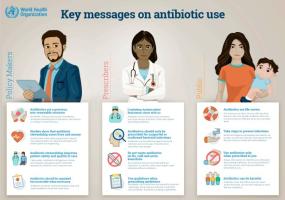
Key messages on the proper use of antibiotics were drafted in 2021 for policymakers, prescribers, and the general public:

See also