


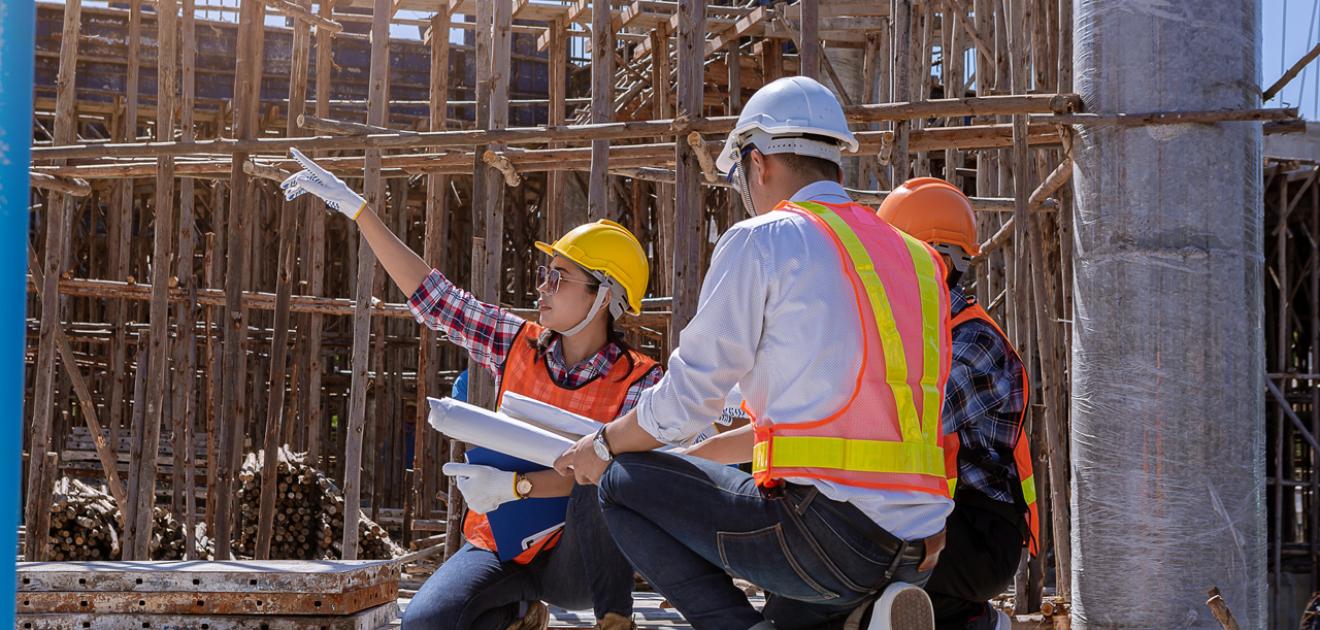
Adapting urban environments to heat waves by raising awareness among building professionals
Santé publique France has published a summary of the health issues associated with heat exposure in urban planning and building construction and renovation. Drawing on evidence-based data, our approach aims to change professional practices to help protect the public from heat.
Video replays
Watch the videos from the workshop held on June 20, 2024: Heat, Buildings, and Health
In the context of climate change and increasingly severe heat waves, heat exposure poses a major public health challenge. The monitoring, early warning, and prevention efforts regarding health impacts carried out by Santé publique France for over 20 years on this topic have led to a better understanding of the impact of heat on health and have identified factors in our environments that can exacerbate these impacts, particularly the layout of built-up areas and housing. That is why the agency is developing awareness-raising and informational initiatives for urban planning professionals. A new issue of the “Parole d’Experts” series, titled “Adapting Urban Environments to Heat Waves: A Necessity for Protecting Public Health?” is now available on our website. Thirteen thematic and educational fact sheets have also been published, compiling evidence on the health impacts of heat, thereby offering an overview of current knowledge and potential actions in this field to facilitate their adoption by stakeholders.
These publications follow a day of discussions held on June 20, 2024, in collaboration with Ademe1, CSTB2, CNFPT3, and EHESP4. Bringing together various stakeholders in the fields of urban planning and construction to share evidence regarding the impacts of heat on human health, this event provided an opportunity to discuss and address the challenge posed by heat exposure in urban development projects and building construction or renovation projects.
3 Questions for Sébastien Denys, Director of Occupational Health and Safety at Santé publique France

In practice, how was this initiative launched, and what are the expected results?
The findings of Santé publique France’s research on the health impacts of heat show, in particular, that planning and land-use decisions have a significant impact on the health, quality of life, and well-being of populations. However, public health considerations are sometimes insufficiently taken into account in urban planning or construction. It is therefore essential to improve collaboration among stakeholders in public health, the environment, and urban planning.
Through this work, Santé publique France sought to establish a method aimed at increasing the dissemination and adoption of evidence-based information among professionals involved in urban planning and building construction/renovation. It aims to raise awareness among project owners and contractors that the technical solutions they implement have an impact on health and that they must adapt their professional practices to promote the protection of populations from heat.
What other actions are planned for the future?
Based on these results, Santé publique France intends to continue its efforts by establishing and facilitating a network for knowledge exchange, open to training providers and leaders of organizations involved in urban planning and building construction and renovation.
The focus now is on continuing collaboration with stakeholders in conjunction with our partners. Through this future network, partners and professionals in the field will be able to discuss their respective needs and the levers to activate for better adoption of the data by professionals in the targeted sectors. This network will also serve as a forum for discussion regarding the development of training or awareness-raising tools for stakeholders, such as the thematic fact sheets we have developed on the issue of heat adaptation.
The Agency also aims to strengthen the dissemination and adoption of evidence-based findings by local authorities, which play a key role in implementing public policies on urban planning. This step is part of a broader movement to promote health-promoting urban planning (HPUP).
What is at stake for Santé publique France in adopting this approach?
HUP integrates health and well-being as essential criteria in land-use planning. This approach aims to reduce exposure to risks (air pollution, noise, heat islands, social isolation, etc.) while promoting factors beneficial to health: physical activity, access to healthcare, nature in the city, active transportation, social connections, etc.
The UFS, a positive and forward-looking framework, offers concrete solutions, such as the development of green spaces, not only to mitigate heat but also to improve air quality while limiting allergens, and to promote physical activity and social interactions in a safe and accessible environment for all.
Thus, this initiative, launched to address heat adaptation, is intended to be expanded to other components of the UFS. On May 26 and 27, 2025, Santé publique France, in collaboration with Ademe1, Cerema5, Inca6, and Ecolab7, organized a workshop on health-promoting urban planning. These collective intelligence workshops bring together stakeholders from the ecosystem (urban planners, developers, health experts, local governments, researchers, and elected officials) to engage in a discussion based on fictional development projects and collaboratively develop arguments grounded in compelling health outcomes to convince local stakeholders.

communication congrès
22 May 2025
Expert Insights: Adapting Urban Environments to Heat Waves: A Necessity for Protecting Public Health?; Event on June 20, 2024.

infographie
22 May 2025
Heat and Health Effects. Summary sheets of data/results from Santé publique France
1Ademe (French Energy Management Agency)
2CSTB (Scientific and Technical Center for Building)
3CNFPT (National Training Center for Local Government Professionals)
4EHESP (School of Advanced Studies in Public Health)
5Cerema (Center for Studies and Expertise on Risks, the Environment, Mobility, and Planning)
6INCA (National Cancer Institute)
7Ecolab (Innovation Laboratory for Ecological Transition)

Extreme heat, heat wave
thematic dossier
Heat waves can have a significant impact on health. It is therefore essential to take proper precautions. Certain measures must be put in place, especially for those most at risk.
Living with the heat
This website is intended for the general public—anyone looking for information and advice on how to cope with the heat.












