



Data
A marked decline in the detection of human cases of MERS-CoV infection has been observed since 2020
According to the WHO and the ECDC, the number of confirmed cases of MERS-CoV infection reported internationally stood at 2,640 as of early November 2025, with 36% resulting in death. The incidence of reported MERS cases has decreased significantly since 2020. Cases are still detected sporadically in the Middle East (about ten cases per year), mainly in Saudi Arabia, and to a lesser extent in the United Arab Emirates, Qatar, Jordan, and Oman.
According to the FAO, the MERS cases reported since 2022 were predominantly primary cases with no identified animal exposure or secondary cases (i.e., resulting from human-to-human transmission).
Suspected MERS-CoV spikes coinciding with the return period of the Hajj pilgrimage to Mecca during the 2012–2015 period
Between 2012 and 2015, healthcare professionals treating patients suspected of MERS-CoV infection were required to report them to health authorities. Santé publique France analyzed the data from these reports.
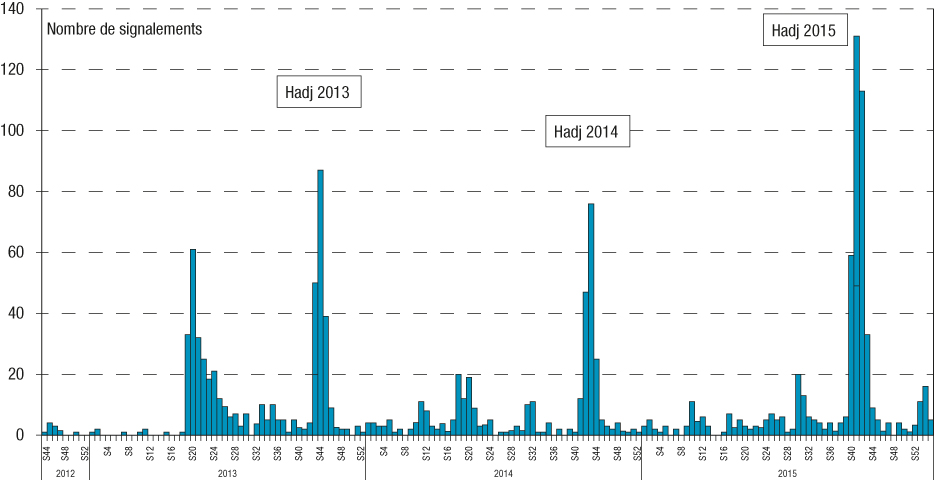
Between October 2012 and December 2015, 1,410 reports of clinically suspected MERS cases were recorded by Santé publique France, clustered primarily into four distinct peaks of activity. The first peak coincided with the detection of two confirmed cases of MERS-CoV infection in May and June 2013. As for the other three peaks, they coincided with the return period from the major pilgrimage to Mecca (Hajj) in 2013, 2014, and 2015. Outside of these periods, the monthly number of reports ranged from 1 to 55 in 2014 and 2015, with a median of 14 reports per month.
Weekly distribution of suspected MERS-CoV cases in France, October 2012–December 2015 (N=1,410)
PUBLICATION AVAILABLE FOR DOWNLOAD

article
6 September 2019












