
thematic dossier
Vector-borne diseases
Les maladies à transmission vectorielle sont des maladies infectieuses transmises par des vecteurs, essentiellement insectes et acariens hématophages. Santé publique France participe à leur...



From May 1 to November 30 each year, Santé publique France coordinates enhanced seasonal surveillance for chikungunya, dengue, Zika, and West Nile virus.
thematic dossier
Les maladies à transmission vectorielle sont des maladies infectieuses transmises par des vecteurs, essentiellement insectes et acariens hématophages. Santé publique France participe à leur...
Surveillance for dengue, chikungunya, and Zika is based on mandatory reporting. During the active season of mosquito vectors, this surveillance is intensified through awareness-raising among healthcare professionals, automated transmission of results from Eurofins and Cerba laboratories, and investigations of each case. This system aims to prevent and control transmission outbreaks within the region, in collaboration with the Regional Health Agencies (ARS) and mosquito control operators (see surveillance system and partners)
Download

bulletin national
26 November 2025
The chikungunya, dengue, and Zika viruses are primarily transmitted by mosquitoes of the genus Aedes, specifically Aedes albopictus (or the tiger mosquito) in mainland France. Aedes albopictus is considered the most invasive mosquito species in the world. Native to Southeast Asia, it has spread from east to west through commercial transport. It has been established in southern France since 2004 and has been gradually expanding ever since.
By early 2025, 81 departments were colonized by the Aedes albopictus vector mosquito (out of the 96 metropolitan departments).
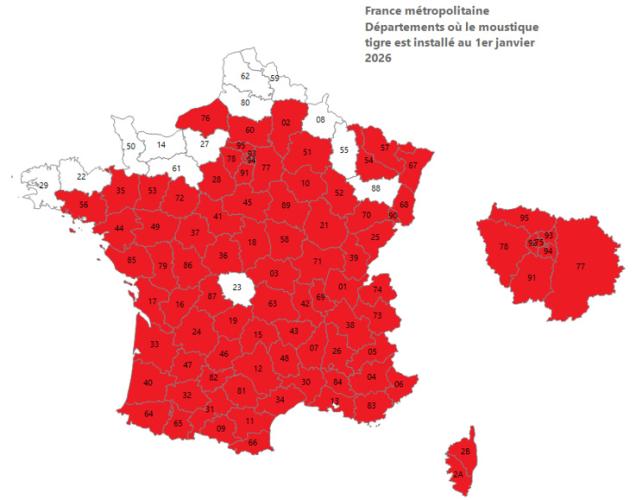
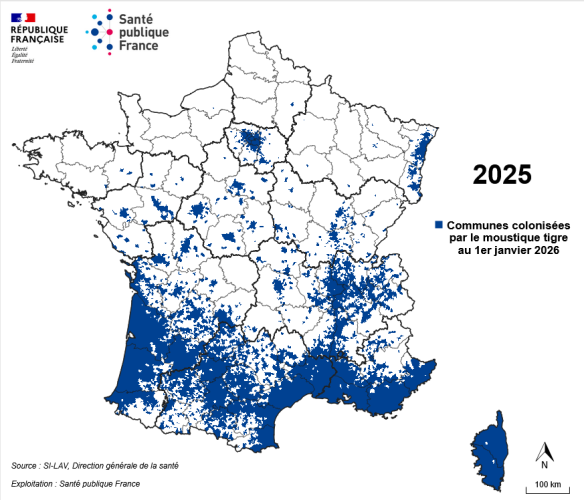
The surveillance system for reportable diseases relies on the transmission of data by physicians and laboratory professionals (both in private practice and in hospitals) to the relevant...
prevention
The prevention of arbovirus diseases relies on both individual and collective actions. It helps reduce the risk of local transmission chains (autochthonous cases).












