


National Survey of COVID-19 Cases Among Healthcare Workers
Since April 22, 2020, Santé publique France, in collaboration with GERES and with the support of the CPIAS, has established a surveillance system to identify healthcare professionals working in public or private healthcare facilities who have been infected with the SARS-CoV-2 coronavirus.
Stay informed about the COVID-19 pandemic in France and around the world
Updates, Q&As, expert interviews... everything you need to know about the novel coronavirus (SARS-CoV-2) and COVID-19 in France and around the world
In the face of the COVID-19 pandemic, healthcare workers are a particularly vulnerable group. It is therefore important to monitor them as part of the surveillance system established by Santé publique France. Furthermore, the data currently available at the national level is fragmented and inconsistent. For this reason, Santé publique France, in partnership with Geres (Study Group on the Risk of Exposure of Healthcare Workers to Infectious Agents) and with the support of CPias (Support Center for the Prevention of Healthcare-Associated Infections), has developed a surveillance protocol for healthcare professionals employed in public or private healthcare facilities, in collaboration with operational hygiene and occupational medicine teams. At the same time, Geres has launched a tool on its website to collect more qualitative information, intended for all healthcare professionals infected with the SARS-CoV-2 coronavirus, regardless of their profession or place of practice.
Objective
The objective of this surveillance is to identify the number of these professionals who have been infected with SARS-CoV-2 since March 1, 2020.
Who is involved?
All public and private inpatient healthcare facilities.
The information collected pertains to all employees of these facilities: healthcare professionals and other staff (maintenance staff, administrative staff, etc.).
Case definition
The PES/COVID-19 case definition used for the survey has been as follows since November 9, 2020:
any healthcare worker in a healthcare facility (HF), symptomatic or asymptomatic, with a laboratory result confirming SARS-CoV-2 infection, by RT-PCR, or by serology as part of a retrospective diagnosis, in accordance with HAS recommendations, or by an antigen test (TROD or TDR)
any healthcare worker in a healthcare facility who is likely infected with SARS-CoV-2 (based on clinical presentation, contact history, or suggestive imaging findings), and who is identified as infected by the “covid19” unit or the healthcare facility’s infectious disease specialist.
Regarding deaths, these are deaths related to Covid-19.
Who completes the questionnaire?
A designated representative within the facility (human resources department, occupational health services, hygiene team, etc.) is assigned to complete the questionnaire each week. The data collected includes the number of healthcare workers who were infected with SARS-CoV-2 in the previous week, broken down by occupational category for healthcare workers, as well as deaths related to SARS-CoV-2 infection reported among infected healthcare workers.
Key Findings as of February 7, 2023
Launched on April 22, 2020, this surveillance system aims to identify salaried healthcare professionals (PES) working in public or private inpatient healthcare facilities who have been infected with SARS-CoV-2 since March 1, 2020. These data are reported weekly by a designated representative from each facility and may be corrected retrospectively during the surveillance period.
1,436 of the 3,998 healthcare facilities in France have participated in the survey at least once since March 1, 2020. The participating facilities in 2022 account for 305,214 salaried healthcare professionals, representing 23.3% of all salaried PES in France. Participation varied over time, averaging 390 facilities per week in 2020, 200 facilities per week in 2021, and approximately 150 facilities per week on average in 2022. In January 2023, weekly participation ranged from 30 to 90 healthcare facilities. (Figure 1).
Since December 6, 2022, 3,341 additional Covid-19 infections have been reported among PES, bringing the total number of reported infections among PES to 158,336 for the period from March 1, 2020, to February 7, 2023. Data from week S48-2022 onwards are not consolidated (Figure 1).
No additional COVID-19-related deaths have been reported since the last update. In total, 19 deaths related to SARS-CoV-2 infection have been recorded since March 1, 2020, occurring among 5 physicians, 5 nursing assistants, 1 nurse, 2 healthcare professionals classified as “other,” and 6 non-healthcare professionals. Among the reported deaths, none have occurred since mid-December 2020.
Of the 158,336 cases, 97,014 (61%) were healthcare professionals and 18,888 (12%) were non-healthcare professionals. For 27% of cases, the occupational category was not reported.
The two most frequently reported professions were nurses (N=34,913, 22% of cases) and nursing assistants (N=27,295, 17.2% of cases).
In 2022, compared to the overall workforce by occupational category, nurses and nursing assistants were the professions most impacted by the COVID-19 pandemic, with 17.1% and 16.4%, respectively, of professionals working in healthcare facilities that participated in the survey in 2022 having been infected with SARS-CoV-2, whereas in 2021, nursing assistants and physical therapists were the most affected professions.
Among the 87,548 cases for which the department of employment during the two weeks preceding infection was reported, the majority had worked in general medical wards (N=34,588, 39.5%), medical-technical departments (N=27,268, 31.1%), or rehabilitation/long-term care units (12,747, 14.6%). 12% of healthcare workers had worked in other types of units.
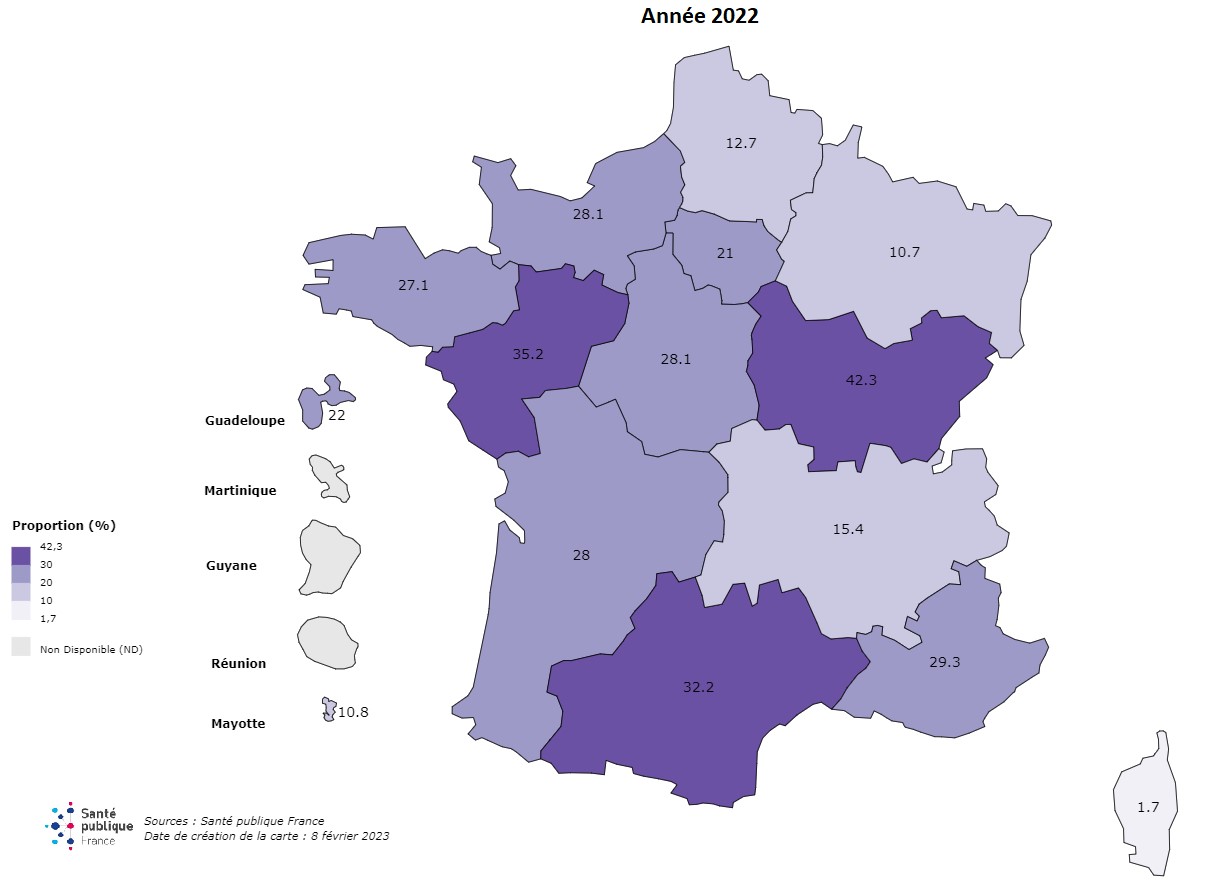
In 2022, the regions where healthcare workers appear to be most affected by the pandemic are Bourgogne-Franche-Comté, where 42.3% of healthcare workers from healthcare facilities participating in the survey were infected with COVID-19, followed by the Pays de la Loire region (35.2%) and the Occitanie region (32.2%). In 2021, the most affected regions were Île-de-France and Provence-Alpes-Côte d’Azur (Figures 2, 3, and 4).
Figure 1. Number of healthcare workers with COVID-19 reported in healthcare facilities, by week and number of participating facilities, since July 20, 2020 (N=124,736), France (data as of February 7, 2023)
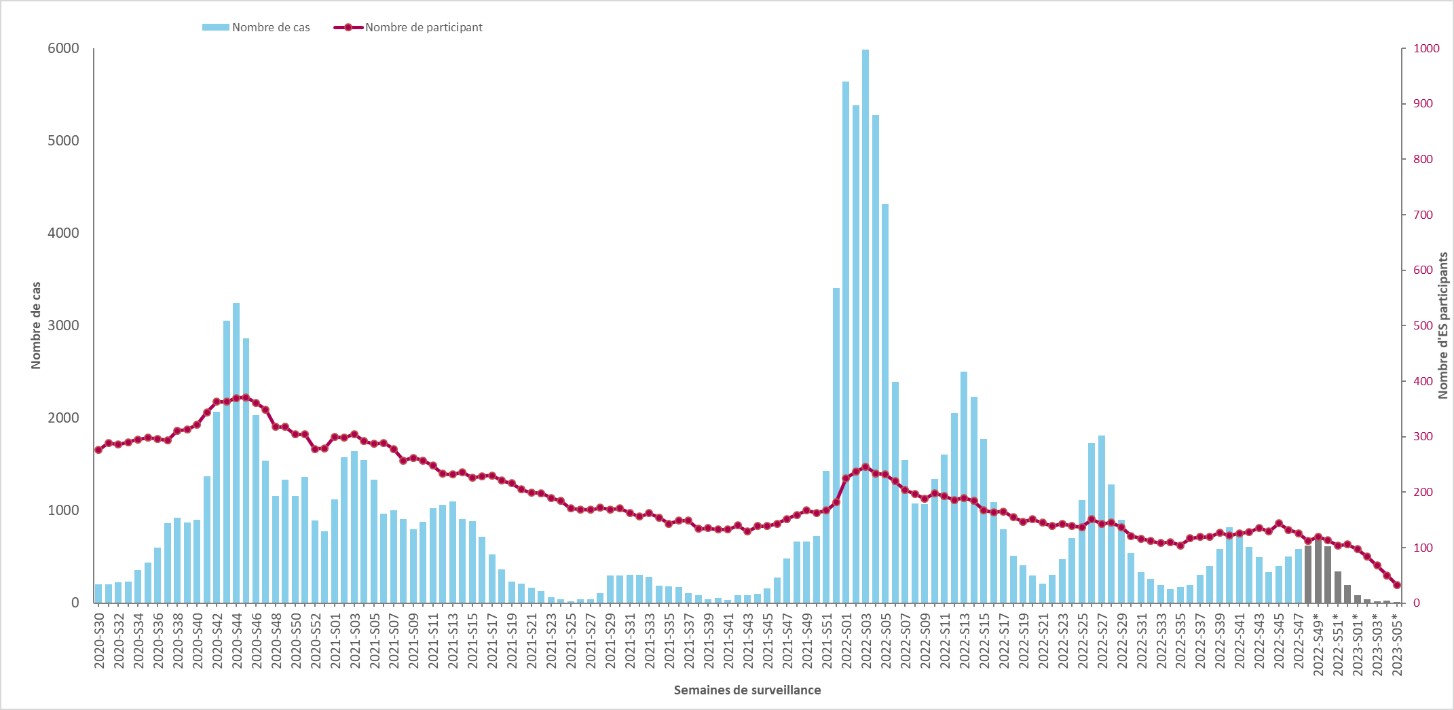
Table 1: Number and proportion of healthcare workers infected with COVID-19, by occupational category, among healthcare workers at participating healthcare facilities by year since March 1, 2020 (N = 151,507 data points as of December 6, 2022), France
| Occupational category | Number of cases | % of healthcare workers | ||||
|---|---|---|---|---|---|---|
| 2020* | 2021** | 2022* | 2020* | 2021** | 2022 | |
| Nurse | 15,778 | 5,648 | 13,437 | 6.2 | 5.7 | 17.1 |
| Nursing Assistant | 13,726 | 4,584 | 8,949 | 8.3 | 6.7 | 16.4 |
| Physician | 4,848 | 1,070 | 2,407 | 5.4 | 2.8 | 8.0 |
| Internal | 1,928 | 549 | 621 | 6.0 | 4.0 | 6.0 |
| Physical therapist | 606 | 5,648 | 764 | 8.1 | 6.8 | 14.7 |
| Midwife | 410 | 168 | 329 | 3.2 | 3.6 | 14.6 |
| Other healthcare professional | 7,384 | 2,776 | 490 | 5.8 | 5.3 | 18.2 |
| Other non-clinical professional | 6,623 | 3,244 | 7,480 | 2.7 | 3.0 | 10.6 |
| Unknown | 9,092 | 10,787 | 8,979 | N/A | ||
| Total | 60,395 | 29,029 | 65,217 | 6.5 | 7.5 | 21.4 |
ND: Not Available
Note 1: Cases occurring among the occupational category “students” (N= 3,507) were not included in this analysis due to the lack of a known denominator.
Note 2: The number of missing values in the table above (N= 42,404) is due to the fact that the occupational category is an optional variable that was not filled in by all participating ES.
*Data source for the total number of professionals by occupational category per region: SAE, 2019 data https://www.sae-diffusion.sante.gouv.fr/sae-diffusion/accueil.htm **Data
source for the total number of professionals by occupational category per region: SAE, 2021 data https://www.sae-diffusion.sante.gouv.fr/sae-diffusion/accueil.htm
Table 2. Breakdown by department of healthcare workers reported as infected with SARS-CoV-2, since April 13, 2020 (data as of February 7, 2023, N=133,950), France.
| Department | Number of healthcare workers infected | % |
|---|---|---|
| Internal Medicine | 25,582 | 19.1 |
| Surgery | 6,817 | 5.1 |
| Obstetrics | 2,189 | 1.6 |
| Intensive care | 2,417 | 1.8 |
| Follow-up care and rehabilitation | 7,261 | 5.4 |
| Long-term care | 5,386 | 4.1 |
| Medical technology | 27,268 | 20.4 |
| Other | 10,528 | 7.9 |
| Unknown | 46,402 | 34.6 |
| Total | 133,950 | 100.0 |
Note: The number of unknowns in the table above (N=46,402) is due to the fact that the type of department is an optional variable that was not reported by all participating healthcare facilities.
Note: The number of cases reported between March 1 and April 13 (N=24,386) was not broken down by service.
SSR: follow-up care and rehabilitation
SLD: long-term care
Figure 2. Regional distribution of the proportion of healthcare workers infected while working in healthcare facilities during the three years of the COVID-19 pandemic, France, 2020
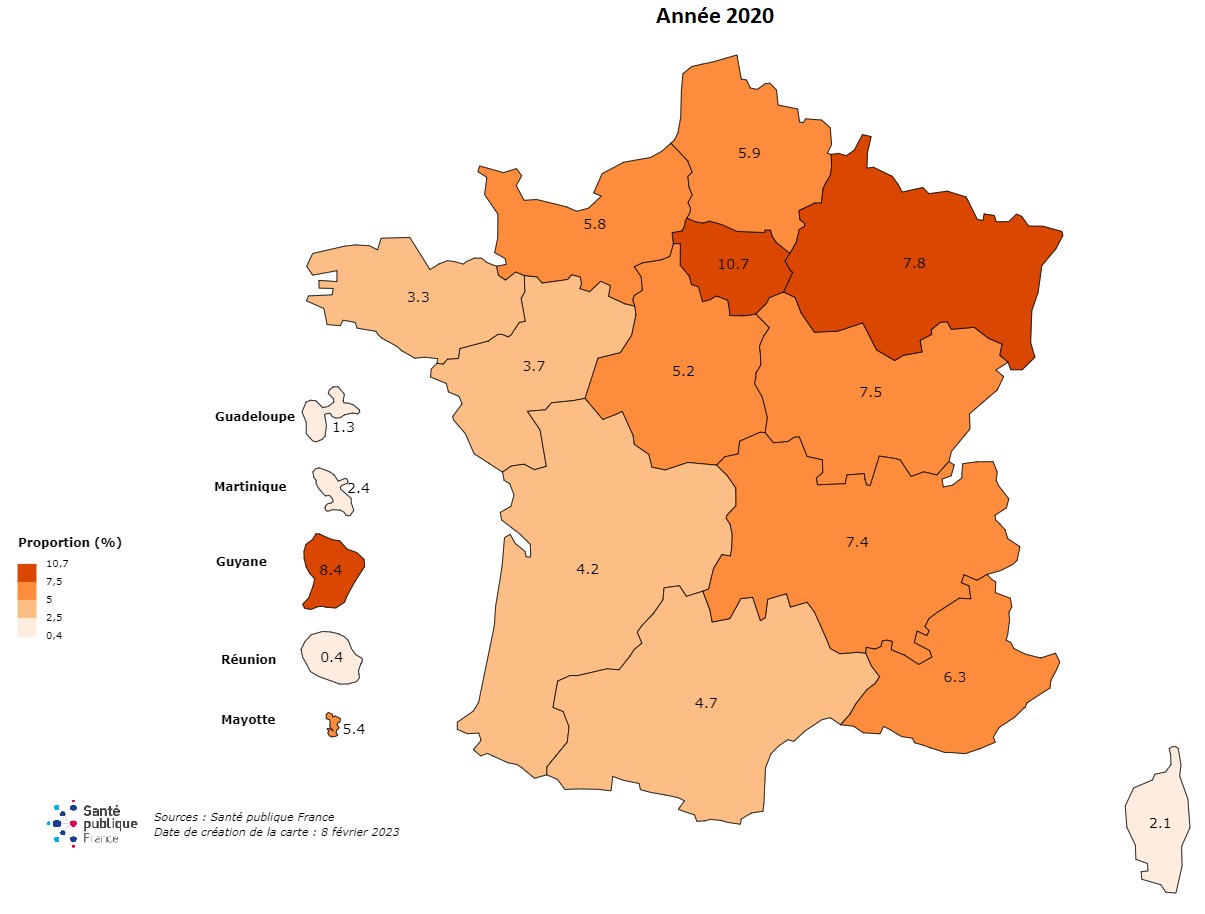
Figure 3. Regional distribution of the proportion of healthcare workers infected while working in healthcare facilities during the three years of the COVID-19 pandemic, France, 2021
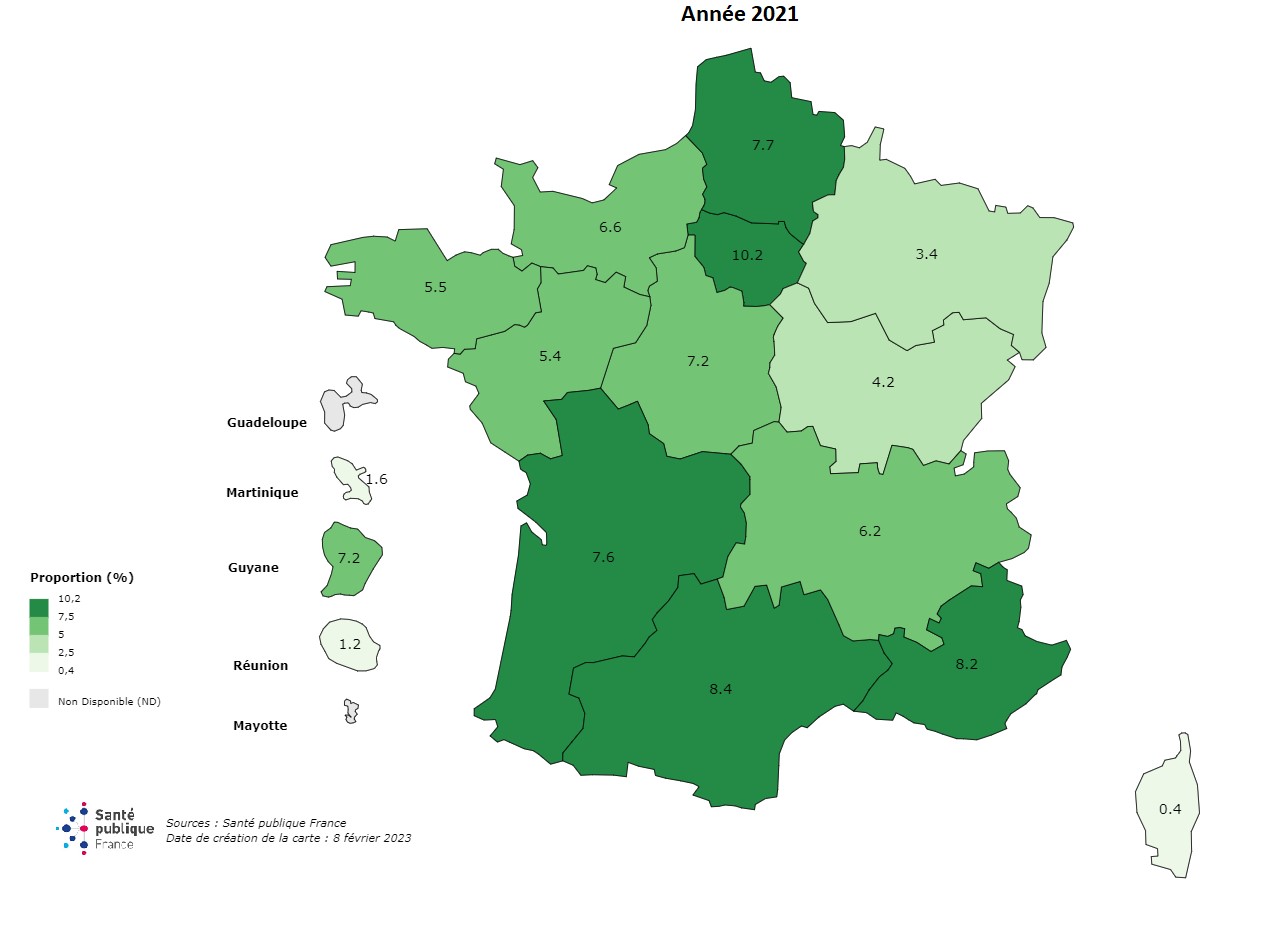
Figure 4. Regional distribution of the proportion of healthcare workers infected while working in healthcare facilities during the three years of the COVID-19 pandemic, France, 2022
Discussion
This specific surveillance of COVID-19 among healthcare workers in healthcare facilities (HCFs) has made it possible to track the number and proportion of healthcare workers who have been infected with SARS-CoV-2 since the start of the COVID-19 pandemic.
As of February 7, 2023, it reported 158,336 healthcare workers infected in participating healthcare facilities since March 1, 2020, and helped describe their main characteristics, particularly in terms of the professions or departments most at risk. Thus, since the start of the epidemic, nurses and nursing assistants have been the professions most frequently affected. Furthermore, the majority of cases had worked in Internal Medicine, Surgery, and Obstetrics (MCO) departments or in medical-technical departments.
However, participation by healthcare facilities has varied significantly over time. These data are therefore not exhaustive and do not allow for a direct comparison of the number of reported cases from one time period to another. Since the end of 2022, this participation has declined even further due to the discontinuation of this surveillance in several large healthcare facilities.
Thus, the current low participation in this voluntary surveillance network, occurring against the backdrop of an overall downward trend in the COVID-19 epidemic, has led to the discontinuation of this specific surveillance, and this report serves as its conclusion. Other data sources remain in place, however, particularly within the framework of reporting healthcare-associated infections, to detect potential clusters and alert to any new trends that might be cause for concern.
It remains necessary to emphasize the importance of implementing preventive measures in healthcare facilities and to continue promoting vaccination among this population, which is particularly vulnerable to SARS-CoV-2 infection and poses a potential risk of transmission to patients.












