


Why is social status an important factor to consider when assessing a population’s health, and how can it be measured in public health research? The role of social status in health
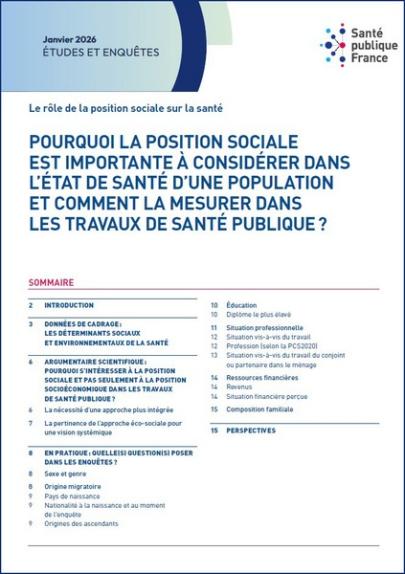
Social inequalities in health are systematic differences in health status among population groups that are socially constructed: they can be dismantled and are therefore modifiable.; Social health inequalities do not affect only populations in precarious socioeconomic situations but society as a whole: a person’s health status depends on their position within the social hierarchy.This position, known as social position, is characterized by various dimensions and social identities—including gender, migration background, and socioeconomic status (level of education, socio-professional category, resources)—and cannot be reduced to a single dimension: it is often the interaction of these dimensions that has the most significant impact on health.;In France, research on social health inequalities struggles to account for other dimensions such as migration background and gender in addition to socioeconomic status (education, income, employment status), which itself remains understudied in relation to health.;Santé publique France has systematized the collection of data on social position in its studies to better highlight their impact on public health: results from major health surveys can now be systematically analyzed in relation to social position.
Author(s): Vandentorren Stéphanie, Mondeilh Aude, Soullier Noemie
Publishing year: 2026
Pages: 20 p.
Collection: Studies and Surveys
In relation to
Our latest news

news
Shamonda Virus: First Human Case Detected in France—What Do We Know?

news
Call for Nominations for the Renewal of the Scientific Advisory Board of the...

news












