



The disease
A disease that affects the digestive tract
Non-typhoid salmonellosis refers to infectious diseases caused by Salmonella bacteria, which infect the digestive tract (enterobacteria). These bacteria of the genus Salmonella primarily cause digestive disorders. Salmonella is one of the leading causes of foodborne bacterial illness in developed countries.
Salmonellosis manifests as isolated cases, community outbreaks, or outbreaks of foodborne illness (the occurrence of at least two clustered cases with similar symptoms, generally digestive, whose cause can be traced to a single food source).
Non-typhoid salmonellosis differs from typhoid and paratyphoid fevers, which are caused by Salmonella Typhi and Salmonella Paratyphi, respectively. The symptoms are also different, and the reservoir is strictly human.
For Santé publique France, the challenge is to monitor human Salmonella infections in order to alert authorities in the event of a threat to the population or an outbreak. This surveillance also helps detect changes in epidemiological trends and emerging outbreaks. Santé publique France also regularly investigates Salmonella-related foodborne illness outbreaks (Tiac) and clusters of salmonellosis cases to identify a common source of contamination and reduce the number of cases through appropriate control measures.
Key statistics on salmonellosis
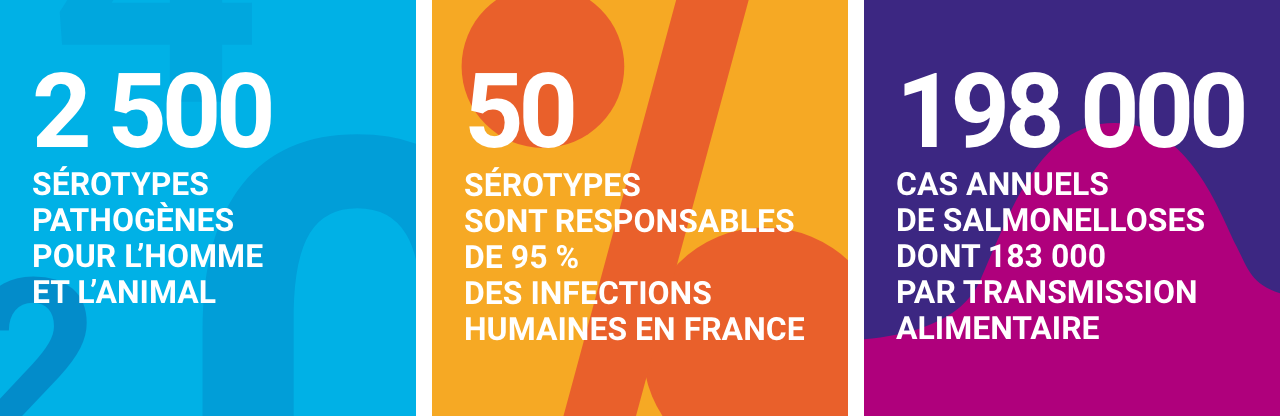
Transmission is primarily foodborne
Salmonella is primarily transmitted to humans through food when contaminated animal-derived foods are consumed raw or undercooked (meat, including ground meat and certain deli meats, eggs and products made with raw eggs, raw milk cheeses, etc.) In rarer cases, contamination can occur through the consumption of fresh fruits or raw vegetables contaminated by animal feces. Outbreaks of salmonellosis among infants and young children associated with the consumption of contaminated powdered milk can also occur.
In fact, the reservoir of Salmonella is primarily animal-based, including both domestic and wild animals. This includes poultry, pigs, cattle, sheep, goats, horses, rodents, as well as dogs, cats, and exotic pets (reptiles: snakes, iguanas, land or sea turtles).
Direct contact with animals or indirect contact through their environment can also lead to cases of human salmonellosis.
Humans (whether sick or asymptomatic carriers) are also a potential source of Salmonella transmission. In cases of human-to-human transmission, lapses in hygiene practices are not uncommon (washing hands after using the restroom, before preparing meals, and after changing a baby, etc.). These situations are primarily observed in childcare facilities (daycare centers, schools, etc.) or sometimes within families with young children.
Prevention Based on Good Hygiene Practices
The risk of salmonellosis transmission can be reduced through good hygiene practices, whether in institutional food service settings, in the home, or through contact with animals.
People working in food service, whether in commercial or institutional settings (medical-social institutions, schools, etc.), must be vigilant regarding the following points:
Adherence to best practices for transporting, storing, preparing, and cooking food
Strict adherence to hot and cold chains.
The presence of populations more susceptible to infection (young children, the elderly, and the sick) should prompt the utmost vigilance and the strengthening of preventive measures.
In the context of home cooking, following simple recommendations can reduce the risk of salmonellosis:
Wash your hands before cooking
Keep raw and cooked foods separate
After purchase, eggs should be placed in the refrigerator (4°C) immediately; they should not be stored for more than 2 weeks
Uncooked egg-based preparations (mayonnaise, custards, chocolate mousse, pastries, etc.) should be prepared as close as possible to the time of consumption and kept refrigerated in the meantime
Vulnerable individuals (young children, pregnant women, the elderly) should not consume raw or undercooked eggs
Ground meat and poultry must be cooked until the center is thoroughly cooked
Avoid serving raw milk cheeses to young children and immunocompromised individuals.
Formula bottles should preferably be prepared right before feeding. Infant meals and bottles should not be left at room temperature for more than one hour or in the refrigerator for more than 48 hours.
Bottles should be washed with hot water and soap immediately after use.
Contact with animals, particularly exotic pets (EPs) such as reptiles (especially snakes and turtles), which are very frequently carriers of Salmonella and can be a source of salmonellosis transmission to humans, and to children in particular. It is recommended to wash hands with soap after direct contact with the animal and to ensure there is no contact between the animal and food preparation areas. Parents of infants and young children, as well
as immunocompromised individuals, are advised to avoid contact with these exotic pets. In fact, cases of serious infections in infants and young children (Salmonella meningitis) have been reported, even without direct contact between the baby and the animal. In a household where exotic pets live, the environment is often contaminated with Salmonella, and the baby becomes infected indirectly through the parents’ hands, their clothing, or the environment.
Gastrointestinal symptoms
Symptoms of salmonellosis appear after an incubation period of 12 to 72 hours on average. The clinical signs observed include acute gastroenteritis with sudden onset of abdominal pain, diarrhea (which may be bloody, particularly in infants), nausea, vomiting, fever, and headaches. Diarrhea often persists for several days and can lead to severe dehydration, particularly in vulnerable individuals (infants, young children, pregnant women, the elderly, or immunocompromised individuals). Salmonella infection can lead to complications such as generalized infection (sepsis), meningitis, or abscesses.
While the mortality rate associated with salmonellosis is low in non-immunocompromised adults, the number of cases and the costs associated with salmonellosis are significant.
Antibiotic treatment for severe cases
In most cases, treatment is symptomatic and aims to prevent dehydration. However, in certain situations (very severe cases, cases in newborns, etc.), antibiotic treatment is indicated.
The increasing detection of strains resistant to multiple antibiotics is particularly concerning. Cases caused by these multidrug-resistant strains most often result in isolated cases, but can also sometimes lead to national or even international outbreaks.
In relation to

Typhoid and paratyphoid fever
thematic dossier
Typhoid fever and paratyphoid fevers are rare in mainland France, where they are most often contracted following travel to endemic areas (regions with poor sanitation).

Outbreaks of foodborne illness
thematic dossier
A foodborne illness outbreak is defined as the occurrence of at least two cases with similar symptoms—typically gastrointestinal—that can be traced to a single food source. In France, such...












