


Surveillance of Antibiotic Resistance in Healthcare Facilities. 2018 Data. Part 2: Bacterial Antibiotic Resistance
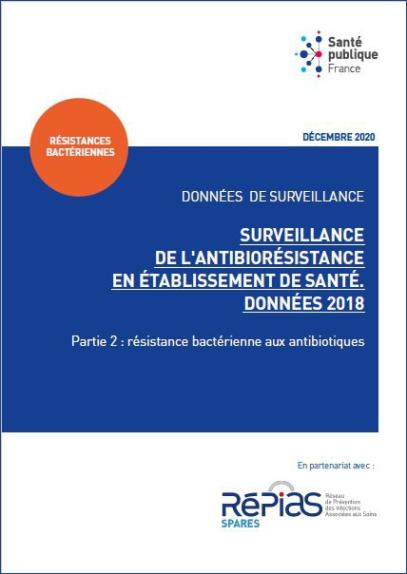
The bacterial resistance surveillance program launched in 2019 as part of the national mission for the surveillance and prevention of antibiotic resistance in healthcare facilities (SPARES) aims to meet the objectives of facilitating surveillance and expanding the range of bacterial species and resistance patterns monitored compared to the previous national BMR-Raisin surveillance program. French healthcare facilities (HFs) were asked in 2019 to participate in this new surveillance program, which focused on strains of Staphylococcus aureus, Enterococcus faecalis, Enterococcus faecium, Pseudomonas aeruginosa, Acinetobacter baumannii, and Enterobacteriaceae isolated from diagnostic specimens collected from patients hospitalized for at least 24 hours during 2018. Data from 246,299 samples from 327 microbiology and clinical laboratory departments representing 441 participating healthcare facilities, covering 23% of hospital beds in France, were analyzed. Among the Staphylococcus aureus strains, 15.1% were methicillin-resistant (MRSA). One in five MRSA strains came from patients hospitalized in rehabilitation or long-term care units. Among Enterobacteriaceae strains, 8.9% produced extended-spectrum β-lactamase. The incidence rate of infections caused by extended-spectrum beta-lactamase-producing Enterobacteriaceae (ESBL-producing Enterobacteriaceae) was 0.52 per 1,000 patient-days, which is three times higher than that of MRSA infections (0.17 per 1,000 patient-days). Data on infections caused by highly antibiotic-resistant bacteria were collected: Klebsiella pneumoniae accounted for more than 50% of the 165 carbapenemase-producing Enterobacteriaceae strains, and two-thirds of the 36 vancomycin-resistant Enterococcus faecium strains were isolated from urine samples. Bacterial resistance was generally lower than that observed in previous surveillance networks, except for Klebsiella pneumoniae and the Enterobacter cloacae complex, possibly due to epidemiological trends and differences among participating healthcare facilities (activity and geographic distribution). Continued collaboration with software developers to facilitate surveillance and enhance the surveillance tool’s capabilities for analyzing, comparing, and presenting local results should help increase participation in this surveillance program, whose findings will help guide actions to prevent infectious risks and antibiotic resistance at the local, regional, and national levels.
Publishing year: 2020
Pages: 54 p.
Collection: Monitoring data
In relation to
Our latest news

news
Growing Up with Screens. A special report in *La Santé en action* No. 474,...

news
Seniors, pregnant women, and nursing home staff: What is the status of their...

news












