


COVID-19 Epidemiological Update for September 10: The outbreak is spreading, and the number of cases will double in 14 days if the current trend continues
CP_pe_covid_100920.pdf
Download (PDF - 559.81 KB)
Press Contacts
Santé publique France
presse@santepubliquefrance.fr
Stéphanie Champion: 01 41 79 67 48
Marie Delibéros: 01 41 79 69 61
Camille Le Hyaric: 01 41 79 68 64
Published weekly, the epidemiological update on COVID-19 surveillance provides a detailed analysis of the various indicators established by Santé publique France and its partners to track the progression of the epidemic and guide public policy decisions. Some indicators are updated daily on the Géodes mapping observatory. The epidemiological update of September 10 reveals a concerning situation: the virus is circulating in the population and is spreading very actively among young adults. If the trend continues, the weekly number of new cases will double in 14 days, with a risk of the virus spreading to older and more vulnerable populations.
A virus that is particularly prevalent among young adults
Viral circulation in France continues to rise. The sharpest increase in cases during week 36 was among those aged 75 and older, although the incidence rate in this age group remains relatively low. The increase in new cases remains predominant among young
adults: in week 36, the incidence rate rose across all age groups between 15 and 44 years old, with a particularly significant increase among those aged 15–19 (+35%) followed by those aged 40–44 (+23%).
Impact on the healthcare system remains moderate, except in the PACA region
From August 26 to September 1, the weekly rate of new hospitalizations for COVID-19 patients increased in all regions except the Grand-Est, but remains below 5.0 per 100,000 inhabitants. In Provence-Alpes-Côte d’Azur, this rate was 10.3 per 100,000 inhabitants in week 36 compared to 6.1 per 100,000 inhabitants in week 35. The weekly rate of COVID-19 patient admissions to intensive care units increased in all regions except Corsica and Brittany (where rates remained stable) and reached 1.4 per 100,000 inhabitants in Provence-Alpes-Côte d’Azur.
Hospitalization and ICU admission rates remain moderate today compared to the March-April period, but the risk of the virus spreading to older populations could lead to a sharper increase in hospitalizations, including ICU admissions, in the coming weeks
Increasing clusters
The number of clusters has risen sharply, further indicating active circulation of the virus across the region. 291 clusters (excluding nursing homes) were reported in week 36, compared to 200 in week 35. Clusters in the categories “Extended family” or “Public or private event: temporary gatherings of people” account for more than a quarter of the 1,583 clusters reported since May 9. The increase also affects nursing homes, with 224 clusters reported between May 9 and September 7, 2020. Over the past six weeks, the weekly number of new clusters (30 clusters in Week 36, 18 in Week 35) has been higher than that observed since early June.
Progress remains to be made on the consistent adoption of preventive barrier measures
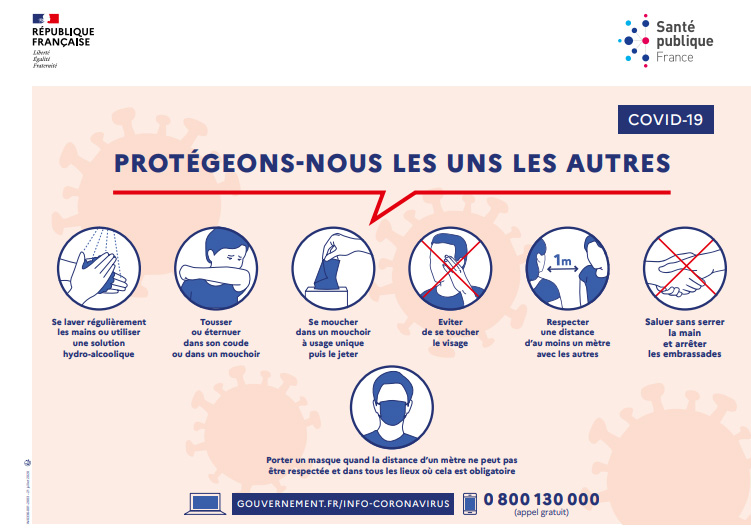
The CoviPrev survey shows that the systematic adoption of preventive barrier measures varies by age group and by specific actions. It is important to remember that protecting oneself also means protecting others.
Our latest news

news
Shamonda Virus: First Human Case Detected in France—What Do We Know?

news
Call for Nominations for the Renewal of the Scientific Advisory Board of the...

news












