


COVID-19 Epidemiological Update for February 18, 2021. Indicators are beginning to decline, but the spread of variants is accelerating: a worsening of the epidemic remains possible
CP_pe_covid_180221_v2.pdf
Download (PDF - 305.67 KB)
Press Contacts
Santé publique France
presse@santepubliquefrance.fr
Stéphanie Champion: 01 41 79 67 48
Marie Delibéros: 01 41 79 69 61
Camille Le Hyaric: 01 41 79 68 64
Published weekly, the epidemiological update on COVID-19 surveillance provides a detailed analysis of the indicators established by Santé publique France and its network of partners to track the progression of the epidemic and guide public policy decisions. In Week 06 (February 8–14, 2021), although the main indicators of the epidemic are declining, viral circulation remains at a very high level, with an average of 18,237 new confirmed cases each day, and significant strain persists on the hospital system. In this context, and as analysis of new data in SI-DEP shows a high proportion of suspected variants of interest in mainland France, the situation remains fragile. The adoption of preventive measures and, in the event of suggestive symptoms, immediate isolation and testing must be strictly followed alongside the rollout of the vaccination program to prevent a worsening of the epidemiological situation in the coming weeks.
Epidemiological indicators are improving, but hospitals remain under significant strain
In Week 06, virological indicators showed signs of improvement: the number of new confirmed cases decreased (-9%), with 127,661 new cases recorded compared to 139,874. The incidence rate decreased across all age groups, particularly among people aged 75 and older (-19%), who remain, however, the group most severely affected by SARS-CoV-2.
The number of new hospitalizations of COVID-19 patients decreased by 10% in Week 06 (9,921 versus 11,063 in Week 05), while the number of new ICU admissions remained stable (1,763 in Week 06 versus 1,767 in Week 05). The continued high level of hospitalizations, particularly in intensive care, remains a concern due to persistent strain on the healthcare system over the past several weeks, with varying situations across regions.
The weekly number of deaths, including COVID-19-related deaths occurring in hospitals and long-term care facilities (deaths occurring at home not included), decreased slightly in Week 05 but remained high at 2,869 deaths (compared to 2,949 in Week 04, a decrease of 3%).
In Week 06, the Provence-Alpes-Côte d’Azur, Hauts-de-France, and Île-de-France regions had the highest incidence rates (above 200 per 100,000 inhabitants), as well as some of the highest hospitalization rates in mainland France.
More favorable indicators among those aged 75 and older
In Week 06, people aged 75 and older remained heavily affected by SARS-CoV-2. However, for the second consecutive week, the incidence rate was significantly lower in this age group, as was the positivity rate. Several factors may have contributed to the decline in new infections in this particularly vulnerable age group. The proportion of people aged 65 and older among high-risk contacts has been decreasing since Week 01, which could reflect a particular focus on avoiding situations that expose older adults to risk. Furthermore, vaccination campaigns, which specifically target this age group, have increased vaccination coverage. According to data from Vaccin Covid, 22.5% of the population aged 75 and older had received at least one dose of a COVID-19 vaccine as of February 16, 2021.
Suspected variants: enhanced monitoring via the SI-DEP surveillance system
To complement and build on the initial Flash surveys, Santé publique France has conducted the first analyses of SI-DEP data regarding screening test results that indicate suspected infections with variants of interest. In fact, these screening tests must now be performed systematically following any diagnosis of SARS-CoV-2 infection, and their results have been integrated into SI-DEP since January 25, 2021. These results allow for the identification of a suspected 20I/501Y.V1 (UK) variant, a 20H/501Y.V2 (ZA) variant, or a 20J/501Y.V3 (BR) variant (without distinction), or to conclude that no variant of concern is present.
After verifying the quality and completeness of the data, Santé publique France published, for the first time, in the epidemiological update of February 18, 2021, an analysis of the results of screening tests for variants of interest. This analysis shows that in week 06:
36% of positive screened tests correspond to a suspected variant 20I/501Y.V1 (UK),
5% corresponded to a suspected 20H/501Y.V2 (ZA) or 20J/501Y.V3 (BR) variant.
These variants were detected in all metropolitan regions, with significant disparities across departments: 40 departments had a proportion exceeding 30% of suspected 20I/501Y.V1 (UK) variants among screened tests, and 8 had a proportion exceeding 10% of suspected 20H/501Y.V2 (ZA) or 20J/501Y.V3 (BR).
Analysis of screening data via SI-DEP enables daily monitoring of suspected cases of known variants of interest and an assessment of their spread across the country. In addition, a third Flash survey was launched on February 16, 2021, and involves sequencing a random sample of specimens (prior to any screening) to create a comprehensive map of the types of viruses (known or unknown variants of interest) circulating in France. These random Flash surveys, which will be repeated at very regular intervals, aim to expand a national sequence database to enable regular analyses in search of new variants. Conducted by the CNR Virus des infections respiratoires and Santé publique France, these analyses—which cross-reference genomic and epidemiological data—will enable the detection of other variants and the assessment of the risks associated with them, in conjunction with similar analyses conducted by other international institutes.
Vaccination campaign continues; healthcare professionals more likely to get vaccinated
According to data from Vaccin Covid, the vaccination rollout continues among priority groups. As of February 16, 2021:
2,357,946 people had received at least one dose of the COVID-19 vaccine, representing 3.5% of the population in France.
466,094 residents in nursing homes (Ehpad) or long-term care facilities (USLD) and 158,101 professionals working in these facilities have received at least one dose of the COVID-19 vaccine in France. It is thus estimated that 74.4% of residents in nursing homes or long-term care facilities and 33.8% of healthcare workers in these facilities have received a first dose of the COVID-19 vaccine.
Vaccination monitoring indicators are updated daily and available on Géodes.
The GERES CAPP-VaCov1 survey collected data between December 18, 2020, and February 1, 2021, on COVID-19 vaccination intentions among healthcare professionals in France. The analysis shows a clear improvement in their intention to get vaccinated against COVID-19, regardless of professional category or practice setting. However, vaccination intentions among staff at social and medical-social institutions, including nursing homes (EHPADs), remain the lowest.
1 Survey on knowledge, attitudes, practices, and preferences regarding COVID-19 vaccination conducted by members of the Study Group on Healthcare Workers’ Exposure to Infectious Agents (GERES) at the School of Advanced Studies in Public Health (EHESP) and the PréVacCI Chair at Jean-Monnet University in Saint-Étienne (Présage Institute), with support from Santé publique France.
The epidemic persists, variants are emerging…: Prevention is everyone’s ally
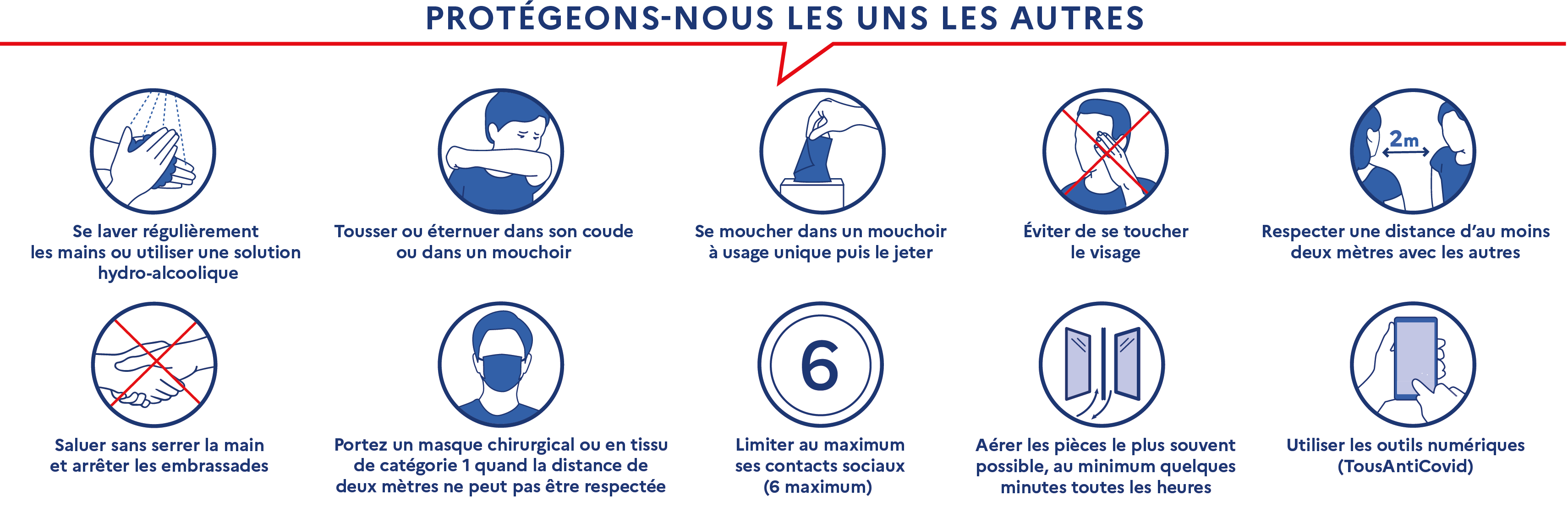
The adoption of preventive measures and contact restrictions for everyone, including those who have been vaccinated, must be reinforced; and if symptoms develop, immediate isolation and testing as soon as possible are essential.
See also

bulletin national
19 February 2021
COVID-19: Epidemiological Update for February 18, 2021
Stay informed about the COVID-19 pandemic in France and around the world
Updates, Q&As, expert interviews... everything you need to know about the novel coronavirus (SARS-CoV-2) and COVID-19 in France and around the world
Our latest news

news
Growing Up with Screens. A special report in *La Santé en action* No. 474,...

news
Seniors, pregnant women, and nursing home staff: What is the status of their...

news












