



The disease
A parasite transmitted by mosquito bites
Malaria is a potentially fatal infectious disease caused by a parasite of the genus Plasmodium, of which there are five species: Plasmodium falciparum, Plasmodium vivax, Plasmodium ovale, Plasmodium malariae, and Plasmodium knowlesi.
P. falciparum is of particular concern because it causes potentially severe or even fatal forms of the disease.
P. vivax and P. ovale sometimes cause relapsing forms of the disease. Relapses can occur years after the initial infection.
Female mosquitoes of the genus Anopheles are vectors for the transmission of malaria. After ingesting the parasite during a blood meal from an infected human, the parasite undergoes a life cycle within the Anopheles mosquito, which, after a few days, becomes capable of infecting another human during a subsequent blood meal following a bite.
Furthermore, malaria can, in rare cases, be transmitted via the mother-to-fetus route or through blood (via blood transfusion, as well as through organ transplantation or needle sharing).
In this context, Santé publique France’s priorities are:
to monitor the incidence of malaria in mainland France and the overseas departments,
to encourage its prevention during travel to endemic areas.
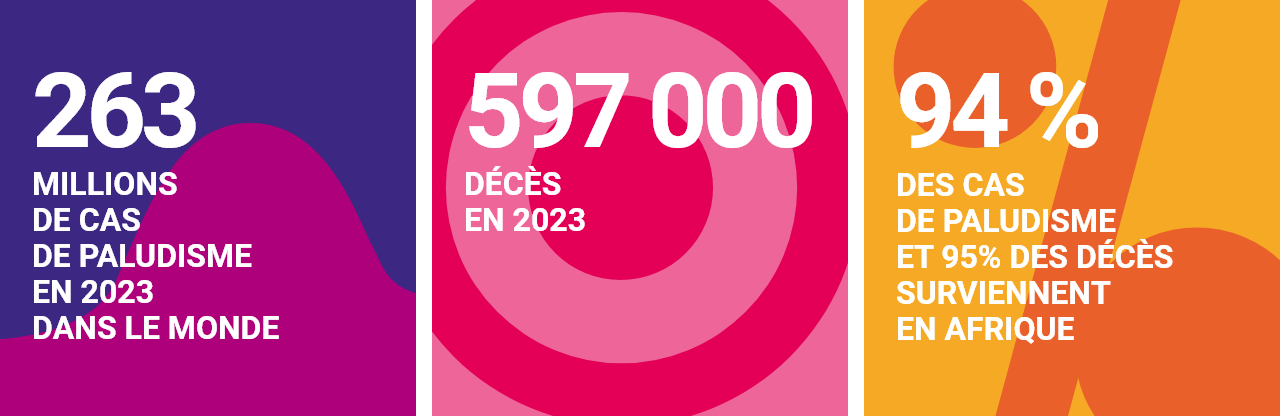
Key statistics on malaria
Clinical and Parasitological Diagnosis
After the infectious bite, symptoms generally appear within 8 to 30 days.
Since no symptoms are specific to the disease, malaria should be considered in any case of fever occurring in a person returning from an endemic area.
The various symptoms are:
In cases of uncomplicated falciparum malaria, the classic presentation of the disease includes fever, flu-like symptoms with chills, headache, muscle pain, and fatigue, as well as frequent diarrhea, vomiting, and sometimes cough. The “thrombocytopenia–anemia–splenomegaly” triad is highly suggestive of malaria but does not develop until several days into the course of the disease.
In cases of complications, the following may occur:
extreme fatigue; difficulty breathing;
dark urine or blood in the urine;
jaundice (yellowing of the skin and eyes);
neuro-malaria (P. falciparum), which involves repeated seizures, altered consciousness that can progress to coma, or even death.
The diagnosis of malaria is based on a parasitological microscopic examination using thick and thin smears, a quantitative white blood cell count (QBC), or a molecular biology technique (RT-PCR). In emergency situations, rapid immunochromatographic diagnostic tests may be used, but these must be confirmed by parasitological testing.
A therapeutic emergency
Antimalarial drugs can be used for treatment (when malaria is confirmed) or for prophylaxis (prevention during travel to endemic areas).
Since the course of P. falciparum malaria is unpredictable and can sometimes be rapidly fatal, treatment must be initiated immediately upon any suspicion of malaria, even before the diagnosis is confirmed.
Essential prevention in endemic areas
Prevention is essential and should involve a consultation—ideally with a travel medicine specialist—before traveling to an endemic area. It relies on:
Avoiding mosquito bites, which is essential especially between dusk and dawn. The recommendations to follow are:
sleeping under an insecticide-treated mosquito net;
using skin repellents (while observing contraindications) on exposed parts of the body;
turning on the air conditioning, when possible;
using electric insecticide diffusers indoors;
wear long, covering clothing.
Chemoprophylaxis: This involves taking, under a doctor’s prescription, an antimalarial drug intended to prevent infection in the event of possible exposure to malaria. This chemoprophylaxis must be tailored to the traveler’s individual characteristics, the chosen medication, and the country being visited.
There is currently no vaccine against malaria, but trials are underway.
No preventive measure can provide absolute protection against malaria. It is therefore essential to remain vigilant for the onset of fever for up to three months after returning from an endemic area and, if necessary, seek urgent medical attention and inform the doctor of your stay in a malaria-endemic area.
Travel Recommendations
Health Recommendations for Travelers | High Council for Public Health
Health Recommendations for Travelers: For Healthcare Professionals | Ministry of Health
Links
Directorate General of Health (Ministry of Health)
Malaria Fact Sheet (WHO)
Fact Sheet (WHO)
In relation to
thematic dossier
Reportable diseases
The surveillance system for reportable diseases relies on the transmission of data by physicians and laboratory professionals (both in private practice and in hospitals) to the relevant staff at...

thematic dossier
Vector-borne diseases
Les maladies à transmission vectorielle sont des maladies infectieuses transmises par des vecteurs, essentiellement insectes et acariens hématophages. Santé publique France participe à leur...












