



What We Do
Occupational diseases have a significant impact on public health in France. While they represent a major burden, exposure to occupational risk factors and the associated disorders and diseases are preventable through appropriate preventive measures, which must be adapted over time in response to changes in the characteristics of the working population and in working conditions (longer working lives, aging, job insecurity, etc.). High-quality epidemiological surveillance is necessary to identify priorities, quantify and monitor occupational exposures, work-related illnesses, and their consequences on employment and the under-recognition of occupational diseases. In particular, it helps to better tailor prevention efforts to the sectors, occupations, and groups of workers most at risk. The goal is to better understand and identify occupational exposures, and to reduce the occupational (illness, disability, impairment, social exclusion, etc.), socio-familial, psychological, and economic consequences of work-related health issues.
To address these challenges, Santé publique France is committed to producing reliable and reproducible indicators tailored to current workplace issues, covering both occupational exposures and the main work-related conditions. Santé publique France contributes notably to the 2021–2025 Occupational Health Plan (PST4), whose two main pillars are prevention and job retention.
Epidemiological Surveillance of Occupational Diseases
Following an initial pilot project to centralize the reporting of work-related diseases in the Pays de la Loire region, the surveillance program for work-related diseases has gradually expanded. This system relies on a network of volunteer occupational physicians and their teams who, during predefined two-week periods twice a year—the “MCP Fortnight”—report all work-related diseases they encounter during their medical visits.
The anonymous reporting form includes information on the condition(s) and occupational exposure agents related to the reported condition, the employee’s job and type of contract, and the company’s industry sector; the employee’s year of birth and gender are also recorded. A dashboard listing all employees who underwent a medical examination during the two-week period is also provided.
To facilitate data collection, a pilot program aimed at integrating an MCP module into the specialized software used by occupational health and safety services has been underway since 2024. These modules allow volunteer occupational health teams to more easily enter data related to MCPs and will prevent duplicate entry of data already available in the specialized software.
The data obtained is then analyzed and published at the regional level through the collaboration of a regional labor inspector and an epidemiologist. Data from all participating regions is analyzed by Santé publique France, in accordance with Article L1413-4 of the Public Health Code Act of August 9, 2004, and the CNIL authorization obtained.
These fortnightly surveys enable the estimation of the prevalence of conditions deemed by occupational physicians to be work-related. The results are presented in the form of summary statistical tables at the regional and national levels. Conducted regularly, they provide annual data on the frequency of work-related pathological conditions among active employees. They contribute to estimating the extent of underreporting of conditions that are eligible for reporting and recognition under the occupational disease schedules. Data from this surveillance program regarding three sites of musculoskeletal disorders (lumbar spine, shoulder, and elbows) and carpal tunnel syndrome are regularly compared with compensation data from the general Social Security system and the Agricultural Social Security system. Furthermore, the impact of changes to the occupational disease schedules on reporting can be assessed.
This surveillance network could help identify the potential emergence of health issues associated with occupational activity. The occupational disease surveillance program is an effective tool for guiding prevention policies, both in the field and at the national level.
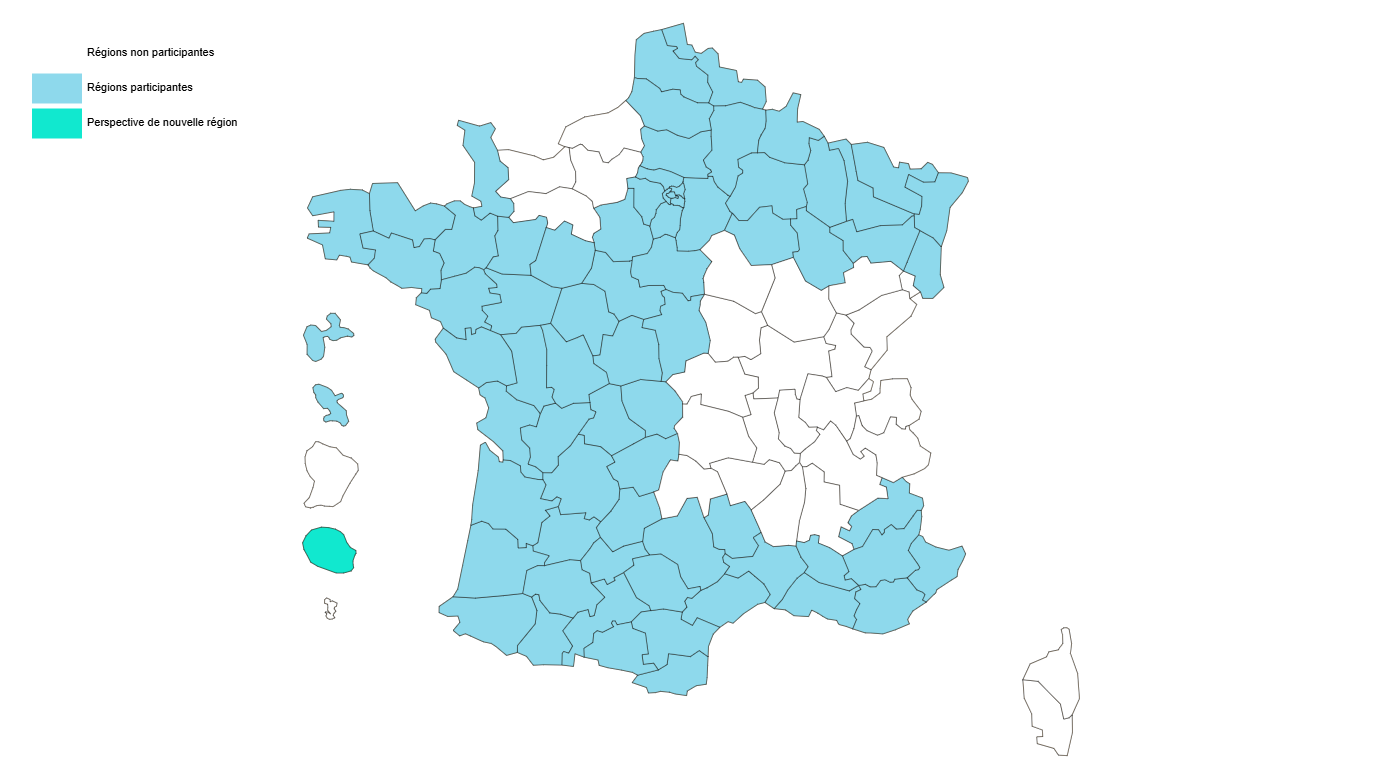
National Network for the Monitoring of MCPs 2025
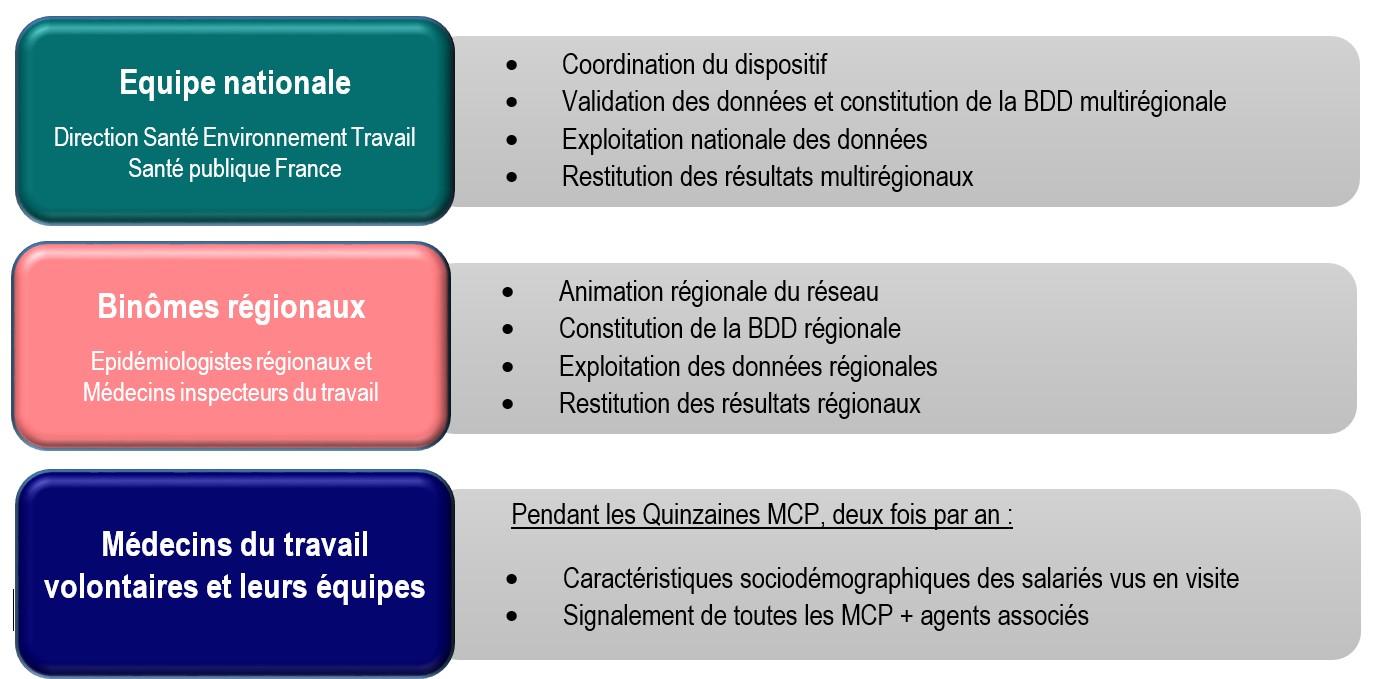
Organizational chart for the “MCP Fortnight” events, which take place twice a year
Preventing occupational diseases
The epidemiological data obtained through the MCP Fortnightly Reports are essential tools to help various prevention stakeholders (Regional Association for the Improvement of Working Conditions, Regional Health Insurance Fund, Regional Committee for the Prevention of Occupational Risks, etc.) to identify and develop priority prevention measures for specific diseases, occupations, or sectors of activity, within the framework of regional plans such as the Regional Occupational Health Plan (PRST) or the Regional Public Health Plan (PRSP).
Contacts
National Coordinator:
Juliette Chatelot, MCP Program Coordinator
Email: mcp@santepubliquefrance.fr
Regional contacts:
Antilles (Martinique / Guadeloupe)
Dr. Guillaume Anoma, Deets
Christina Goudou, ORSAG
Natacha Neller, OSM
Brittany
Dr. Thomas Bonnet, Dreets
Patricia Bedague, ORS
Centre-Val-de-Loire
Dr. Bernard Arnaudo, Dreets
Claire Cherbonnet, ORS
Grand-Est
Dr. Martine Léonard, Dreets
Dr. Stéphanie Scarfone, Dreets
Emilie Boiselet, Dreets
Nadia Honoré, ORS
Hauts-de-France
Dr. Jean-François Verquin, Dreets
Cécile Gauthiez, ORS
Nouvelle-Aquitaine
Dr. Florence Fernet, Dreets
Dr. Nadine Renaudie, Dreets
Julie Debarre, ORS
Audrey Rouchaud, ORS
Reunion
Emmanuelle Rachou, ORS
Hélène Mignon-Racault, ORS
Occitanie
Dr. James Alves, Dreets
Dr. Nathalie Bernal-Thomas, Dreets
Dr. Marie-Ange Chancelier, Dreets
Patrice Poinat, ORS
Pays de la Loire
Dr. Véronique Mennetrier, Dreets
Marie-Christine Bournot, ORS
Provence-Alpes-Côte d'Azur
Dr. Irène Sari-Minodier, Dreets
Virginie Gigonzac, ORS
In relation to

Musculoskeletal disorders
thematic dossier
Musculoskeletal disorders primarily manifest as pain and functional impairment of varying severity, often occurring on a daily basis and caused or exacerbated by work

Mental distress and burnout
thematic dossier
Mental health can be affected by certain psychosocial workplace exposures, leading to conditions such as burnout, depression, and suicidal behavior.












