



World Health Day: "Toward a fairer and healthier world"
Numerous individual and social factors (living and working conditions, social rights, health coverage, social inclusion, the existence of discrimination, health literacy, etc.) can expose certain vulnerable populations to increased risks and poor health outcomes. To address these inequalities, Santé publique France offers a variety of initiatives and tools in partnership with stakeholders from the nonprofit, research, and institutional sectors.
Information accessible to everyone
Health prevention accessible to everyone
Health literacy, recognized as a determinant of health (WHO, 2013), is addressed across all areas of Santé publique France, and we have gradually integrated this concept into our core activities. For example:
better integrating the needs of the most vulnerable populations—particularly those with the lowest literacy skills (including a wide range of groups, depending on the context: migrants, people who are disconnected from the healthcare system, people in precarious socioeconomic situations, people with disabilities, etc.)—into our communication and social marketing initiatives,
gaining a better understanding of these groups’ health expectations and behaviors through various studies conducted among the general population or ad hoc studies (for example, the 2019–2020 study on the health of Travellers),
train and equip Santé publique France professionals and our partners to address these challenges,
exploring how to leverage this dimension to reduce hospital-acquired infections (HAIs), in partnership with research teams,
involve vulnerable populations and associations in our work processes (e.g., participatory approaches in developing communication materials, knowledge-sharing processes regarding COVID-19, etc.).
Information accessible to all
A dedicated section on the Santé publique France website brings together documents and tools designed for a broad audience, regardless of literacy levels. This is the “Pour comprendre” collection. Other tools address specific needs: documents in foreign languages, in Braille, in audio format, or in French Sign Language.
The information gathered in this section was developed with the help of working groups and organizations. You can order these materials, view them online, or download them.
COVID-19
Coronavirus information and prevention tools accessible to vulnerable individuals
Prevention messages must reach the entire population living in the region, including the most vulnerable groups who are furthest from healthcare and prevention services. They are tailored to account for people’s knowledge, living conditions, and ability to understand the information, among other factors. This work is carried out in collaboration with associations and partners.
Posters available for download and translated into multiple languages, as well as video spots produced to meet the need for access to information during the COVID-19 pandemic. They are aimed at vulnerable groups, particularly people living in shelters or other group living settings, in substandard housing, or who are homeless.
COVID-19: Leading Health Education Activities with People in Precarious Situations
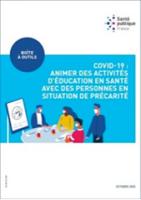
This toolkit is intended for healthcare professionals, volunteers, and students working with adults in precarious situations.
It includes a theoretical section on conducting health education sessions in the context of the COVID-19 pandemic and a practical section with suggested activities to help develop the skills of the affected populations.
Bilingual health booklets in 15 languages
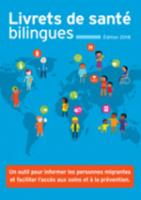
Produced in partnership with the Committee for the Health of Exiles (Comede) and several partner organizations, the bilingual health booklets are intended for migrants in precarious situations. They provide information on health, rights, and administrative procedures in France. Their bilingual format makes it easier to communicate with doctors, social workers, or other professionals.
The bilingual health booklets were expanded and updated in 2018 and are available in 15 languages: Albanian, Arabic, Bengali, Chinese (Mandarin), Creole (Haitian), Dari, English, Georgian, Hindi, Portuguese, Romanian, Russian, Tamil, and Turkish. They are available for download and can be ordered by professionals and organizations that work with migrants.












