


What are effective interventions for preventing suicide? The special report in *La Santé en action* No. 450, December 2019
In the December 2019 issue of its quarterly journal *La Santé en action*, Santé publique France has published a special feature on suicide prevention that provides an overview of current knowledge and effective strategies implemented in the field.
Subscribe to the magazine
To receive the newsletter via email announcing each new issue and providing free access to the issue
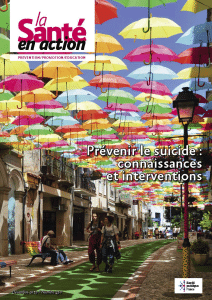
Every year in France, nearly 9,000 people die by suicide, and approximately 140,000 suicide attempts result in contact with the hospital system. Some thirty experts and practitioners in the field contributed to this issue, which highlights current knowledge on the subject and presents some of the effective strategies being implemented on the ground.
A feature article analyzing several effective suicide prevention strategies
Several evidence-based interventions are presented.
At the national level, the VigilanS program aims to prevent recurrence by monitoring and re-contacting individuals discharged from the hospital following a suicide attempt; the Papageno program works with the media to prevent the spread of suicide contagion, notably by raising journalists’ awareness of the World Health Organization’s recommendations for responsible reporting.
Internationally, several programs have demonstrated that raising individuals’ awareness of mental health issues, fostering their understanding, and encouraging them to discuss these issues effectively reduces suicidal behavior. This is the case with the Youth Aware of Mental Health (YAM) program.
The issue of suicide prevention training is also addressed, with new initiatives implemented in France in 2018 that incorporate the latest international scientific knowledge. Among these is the “sentinels” program, with an increasing number of individuals receiving specialized training.
Initiatives in line with the “Mental Health and Psychiatry” suicide prevention policy
These actions align with the specific “Mental Health and Psychiatry” suicide prevention policy, implemented in 2018. One of the objectives is to encourage regional health agencies to combine, at the local level (multimodal approach), a set of actions identified in the scientific literature as effective. These include:
maintaining contact with people who have attempted suicide;
training in the identification, assessment, and intervention for suicidal crises;
preventing suicide contagion;
establishing a national suicide prevention hotline;
improving public information.
Also in this issue:
the “Sortir ensemble et se respecter” program, aimed at 13- to 15-year-olds in Switzerland, to prevent violence in romantic relationships among young people. It helps them become more aware of what they want in a romantic relationship and develop behaviors based on understanding, empathy, and listening to their romantic partner;
impact assessments of urban planning and development projects on residents’ health;
an analysis of behaviors related to the use of psychoactive substances portrayed in television series, with a focus on health education for middle and high school students.
Download

magazines/revues
4 September 2026












