



Nutri-Score: An Update on the Changes for 2024
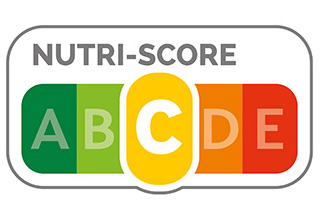
In France, Nutri-Score has been in use since 2017. This logo, which uses a five-color, five-letter scale, is designed to provide information about the nutritional quality of the products we buy. In 2024, the calculation method will be updated to better help consumers make informed nutritional choices.
thematic dossier
Nutri-Score
Since 2021, the seven countries committed to Nutri-Score have established a European governance framework to harmonize the rules for using the logo and review its calculation method. To achieve this goal, scientists from the various participating countries have worked together to identify improvements to the algorithm so that the logo is more closely aligned with the dietary recommendations of the countries involved, better reflects scientific knowledge, and adapts to changes in the food supply resulting from manufacturers’ modifications to product composition. In 2024, Nutri-Score will thus evolve to help consumers choose products of higher nutritional quality.
3 questions for Pauline Ducrot, Senior Advisor on Prevention and Health Promotion at Santé publique France
What will change in 2024?
Nutri-Score takes into account the nutritional values table as well as certain ingredients. It considers the content of foods and nutrients to be encouraged (fiber, protein, fruits, vegetables, legumes, etc.) and those to be limited (calories, sugars, salt, etc.). In 2024, the factors considered in the calculation will remain largely the same, but the rules for calculating the score have been revised to allow consumers to compare products even more effectively based on their nutritional quality. For beverages specifically, the presence of sweeteners is now taken into account to prevent manufacturers from using these additives in place of sugar to improve their products’ scores. Diet sodas containing sweeteners will no longer be rated B, but rather C through E.
As a result, the scores for certain fatty fish and oils rich in healthy fats will improve, while those for other products that are still too sweet or too salty will decline. Additionally, it will be easier to identify whole-grain products rich in fiber, which will now receive higher scores than their refined counterparts. Finally, poultry will be ranked higher than red meat, the consumption of which should be limited.
Many products will therefore see their scores change; between 30 and 40% of products are affected. It is not the composition of the products that is changing, but the way their scores are calculated.
When will these changes take effect?
In Germany, Belgium, Switzerland, and the Netherlands, the new algorithm took effect on January 1, 2024. In France, the regulatory process leading up to the implementation of this new calculation method is underway. The draft decree has been submitted to the European Commission, and since the process may take 3 to 6 months (in the event of a detailed opinion from another country), the new system will take effect in late January or late April 2024.
Afterward, manufacturers and retailers will have two years to bring their packaging into compliance and apply the new Nutri-Score.
Where do we stand with the rollout of Nutri-Score in France and other European countries?
France was the first country to commit to Nutri-Score in 2017. It has since been joined by six other countries: Belgium, Switzerland, Germany, Luxembourg, Spain, and the Netherlands.
As of early 2024, 1,359 brands had committed to Nutri-Score on the French market. The list of these brands is available on the Santé publique France website.
Since the logo’s introduction, the estimated market share of participating brands has steadily increased, reaching 58% of sales volume in 2022.
Furthermore, 99.6% of French people had already seen or heard of the logo by December 2023, an increase of approximately 7 percentage points compared to 2020. It appears to be increasingly embedded in consumers’ daily lives, as one-third of French people spontaneously report using it to assess the nutritional quality of the products they buy, a 20-point increase compared to 2020.

Nutrition and Physical Activity
thematic dossier












