



International salmonellosis outbreak among young children linked to the consumption of Kinder brand products. Update on the situation in France as of June 2, 2022.
Update as of June 2, 2022, following the recall of several Kinder products manufactured at a plant in Belgium due to suspected contamination with Salmonella Typhimurium.

Salmonellosis
thematic dossier
Non-typhoid salmonellosis refers to infectious diseases caused by Salmonella bacteria that infect the digestive tract. These diseases are generally characterized by gastrointestinal symptoms.
Following investigations conducted by Belgian health authorities, in collaboration with their British, European, and notably French counterparts, Ferrero issued a recall on April 5, 2022, for several products in the Kinder range manufactured at a factory in Belgium due to suspected contamination with Salmonella Typhimurium. On April 8, 2022, the recall was ultimately expanded to include all Kinder products from that factory, regardless of their expiration date. On April 14, 2022, an update to the list of recalled products, including the 2021 Christmas Advent Calendars, was issued.
Cases of salmonellosis in France: status as of June 2, 2022
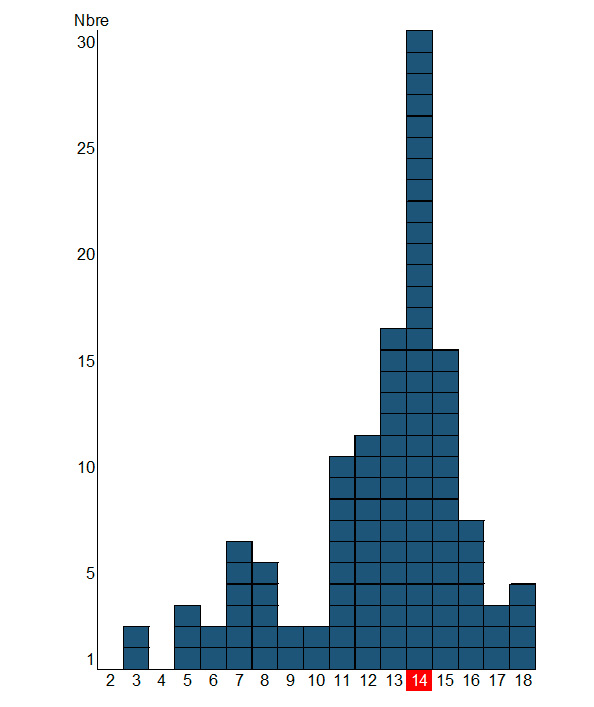
As of June 2, 2022, a total of 118 cases of salmonellosis caused by a strain associated with the outbreak have been identified by the National Reference Center (CNR) for Salmonella at the Pasteur Institute in France (Figure 1).
Figure 1 - Epidemic curve: number of confirmed cases of Salmonella Typhimurium salmonellosis, monophasic variant (cluster 1 HC5_296366 and cluster 2 HC5_298160), by week of isolation (with the week corresponding to the recall of the products shown in red)
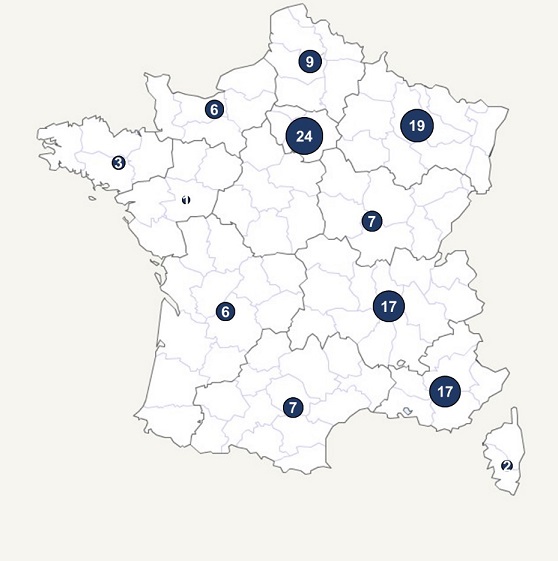
The 118 cases are spread across 12 metropolitan regions (Île-de-France (24 cases), Grand Est (19 cases), Auvergne-Rhône-Alpes (17 cases), Provence-Alpes-Côte d'Azur (17 cases), Hauts-de-France (9 cases), Bourgogne-Franche-Comté (7 cases), Occitanie (7 cases), Normandy (6 cases), Nouvelle-Aquitaine (6 cases), Brittany (3 cases), Corsica (2 cases), and Pays de la Loire (1 case)), with a median age of 4 years, and involve 57 girls and 61 boys.
Figure 2 - Geographic distribution of confirmed cases of Salmonella Typhimurium salmonellosis (monophasic variant; cluster 1 HC5_296366 and cluster 2 HC5_298160) by region of residence—metropolitan France, weeks 2–18, 2022
Fifty-one cases were interviewed by Santé publique France. All but one of the cases reported consuming chocolates from the brand mentioned here prior to the onset of their symptoms (which occurred between January 20 and April 4, 2022).
Twenty-two people were hospitalized for salmonellosis; all have since been discharged. No deaths have been reported.
Since the implicated foods have been identified and management measures implemented, weekly updates have been discontinued. Santé publique France continues to monitor case reports from the National Reference Laboratory (NR), which are expected due to the various delays inherent in surveillance (see the infographic on food alerts).
The successive recalls and withdrawals of the affected Kinder brand products, manufactured at the Belgian plant—which has since been shut down by Belgian authorities—should limit the occurrence of new salmonellosis cases in France linked to these chocolates.
Any identification of new cases with isolation dates occurring after the withdrawal and recall measures will be investigated as necessary.
For a list of products affected by the recall: https://rappel.conso.gouv.fr/
Anyone who has consumed the products mentioned above and is experiencing symptoms (gastrointestinal distress, fever within 72 hours of consumption) is advised to consult their primary care physician immediately and inform them of this consumption.
To limit person-to-person transmission (particularly in households with young children), it is recommended to wash your hands thoroughly with soap and water after using the restroom, after changing a child, and before cooking.
International Situation
Multi-country outbreak of monophasic Salmonella Typhimurium sequence type (ST) 34 linked to chocolate products - first update (ECDC, 05/18/22)
Monophasic Salmonella Typhimurium outbreak (ECDC, 04/19/22)
Investigation of an international outbreak of multidrug-resistant monophasic Salmonella Typhimurium associated with chocolate products, EU/EEA and United Kingdom, February to April 2022 (Eurosurveillance, 04/14/22)
See previous items
International outbreak of salmonellosis among young children linked to the consumption of Kinder brand products. Update as of May 4, 2022. (news from 05/10/22)
International outbreak of salmonellosis among young children linked to the consumption of Kinder brand products. Update as of April 27, 2022. (news from 04/28/22)
International outbreak of salmonellosis in young children linked to the consumption of Kinder brand products. Update as of April 20, 2022. (News from 04/21/22)
International outbreak of salmonellosis in young children linked to the consumption of Kinder brand products. Update as of April 15, 2022. (News from 04/15/22)
International outbreak of salmonellosis in young children linked to the consumption of Kinder brand products. Update as of April 12, 2022. (News from 04/14/22)
Additional information regarding the recall of Kinder brand products due to contamination with Salmonella Typhimurium (DGCCRF, 04/14/22)
Recall of all Kinder products manufactured at the Arlon plant, which has been closed by Belgian authorities (press release dated 04/08/22)
Additional information regarding the recall of Kinder brand products due to Salmonella Typhimurium contamination (press release dated 04/07/22)
International outbreak of salmonellosis among young children linked to the consumption of Kinder brand products. Update as of April 6, 2022. (news update dated 04/07/22)
Recall of Kinder brand products (Kinder Surprise, Kinder Surprise Maxi, Schoko-Bons, and Kinder Mini Eggs) due to suspected Salmonella Typhimurium infection (press release dated 04/04/22)












