



How does asthma affect one's career path?
Santé publique France has published the results of a study on the links between asthma and career paths, highlighting the negative impact of asthma on career trajectories.

Asthma
thematic dossier
Asthma is a chronic respiratory disease characterized by attacks, which are episodes of breathing difficulties (dyspnea). Asthma has a significant impact on patients’ quality of life.
Asthma is a common chronic respiratory disease that affects approximately 6 to 9% of adults in France. Several studies have shown that asthma has a negative impact on career trajectories (sick leave, job loss, reassignment to non-exposed positions, etc.). As part of its mission to monitor respiratory diseases linked to the environment and work, Santé publique France studies the consequences of chronic diseases on employment. To this end, the Agency, in collaboration with research teams from Inserm, has studied the links between asthma and career trajectories using data from the Constances cohort for the 2013–2014 period, the results of which are published today.
What indicators were used?
Two asthma indicators were used in this study: current asthma and the asthma symptom score.
The indicators of career trajectory were derived from employment history: the number of jobs, the total duration of employment periods, the number of part-time jobs, the number of periods of employment interruption due to unemployment or health issues, and employment status.
A negative impact of asthma on career trajectories
The study included 33,996 individuals, 52.3% of whom were women. The prevalence of current asthma (8.4% among men and 10.3% among women) and the average asthma symptom score were significantly higher among women than among men.
Regardless of the definition of asthma used, significant associations were observed with indicators of career trajectory in both men and women.
increased frequency of job changes among people with asthma
shorter working hours among people with asthma
higher frequency of health-related work interruptions among people with asthma
Figure: Asthma Symptom Score and Career Path Among Men and Women, Constances 2013–2014
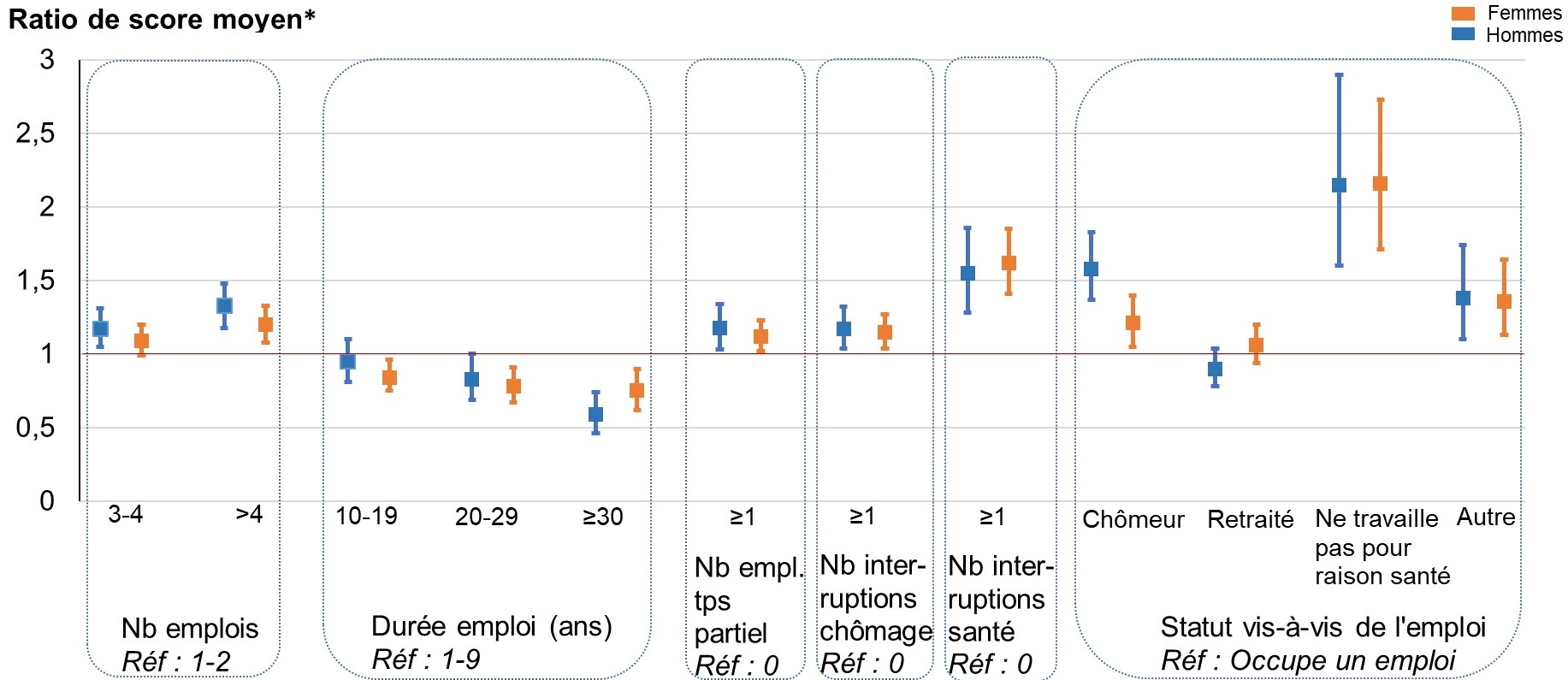
*adjusted for age, smoking status, educational attainment, and body mass index, with a 95% confidence interval
Download

rapport/synthèse
4 July 2023
The Impact of Asthma on Career Paths in France: Analysis of Data from the Constances Cohort. Summary
These findings, based on a large number of individuals (the Constances cohort), highlight the negative impact of asthma on career trajectories. This research will be continued with an analysis of the prevalence of chronic respiratory diseases by industry sector, occupation, and occupational exposure, aimed at identifying occupational groups at risk for these diseases, and a study of the career trajectories of people with asthma using cohort follow-up data.
Given that this is a condition that compromises job retention and impacts quality of life, prevention clearly plays a pivotal role. Prevention efforts, particularly those aimed at maintaining employment and facilitating the return to work for people with asthma, must be strengthened.
The Constances Cohort
Constances is a French cohort of adults aged 18 to 69 who are enrolled in the general health insurance system and reside in one of the departments participating in the cohort. More than 200,000 individuals were enrolled between 2012 and 2020. Upon enrollment, participants who agreed to take part completed a self-administered questionnaire (covering lifestyle and health, employment history, etc.) and underwent a medical examination (medical questionnaire, anthropometry, blood pressure, electrocardiogram, etc.) at one of the health examination centers in the participating departments.
Asthma, Work, and the Environment: The Role of Santé publique France
To fulfill its mission of monitoring respiratory diseases linked to the environment and work, various projects and studies are conducted in collaboration with partners and specialists and rely on cohorts (COSET, Constances, etc.). Data from these cohorts enable the monitoring of the prevalence of work-related asthma, the study of asthma’s impact on professional life, and the links between air pollution and respiratory diseases, including asthma.
Identifying occupations and working conditions associated with an increased risk of asthma provides valuable insights for the prevention of work-related asthma.












