



Diabetes in France continues to rise
To mark World Diabetes Day on November 14, Santé publique France is releasing its latest data on diabetes surveillance in France.

Diabetes
thematic dossier
Diabetes mellitus is a metabolic disorder characterized by chronic hyperglycemia resulting from a deficiency in either insulin secretion, insulin action, or both.
Every year, diabetes continues to rise, affecting millions of people, particularly young people under the age of 20 with type 1 diabetes. The surveillance program developed by Santé publique France aims to provide indicators of the prevalence, severity, and trends of diabetes in France. To mark World Diabetes Day, Santé publique France is publishing updated diabetes surveillance data for 2023, also available on its Géodes platform (prevalence, complications, frequency of recommended follow-up tests).
Rise in Type 1 Diabetes Among Those Under 20 in France
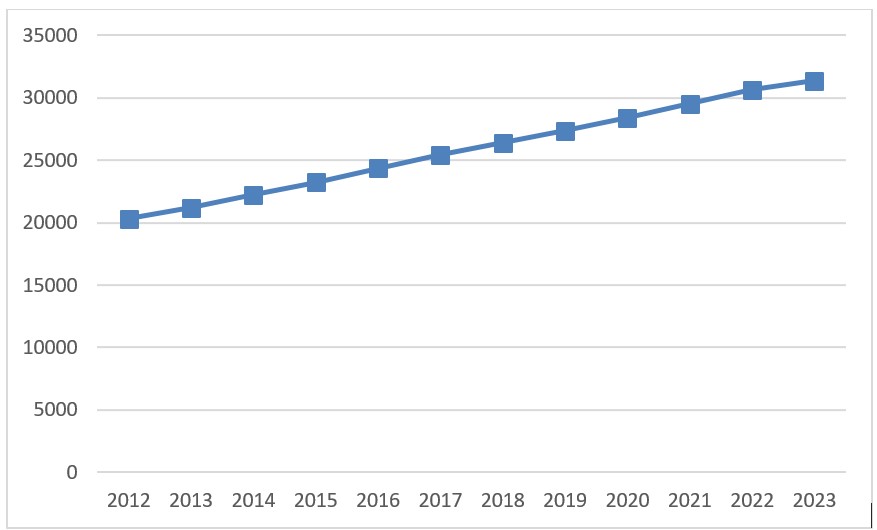
The number of people living with type 1 diabetes among those under 20 is increasing every year. In 2023, more than 31,000 young people were affected by this disease. This number is rising every year: it stood at 20,300 young people in 2012 and reached 31,400 in 2023. It is essential to diagnose it as quickly as possible to avoid serious complications that can lead to coma.
Type 1 diabetes is an autoimmune disease that generally appears in childhood or adolescence and is detected following warning symptoms. This disease is linked to numerous factors, both genetic and environmental. One of the challenges of research on type 1 diabetes is to identify these various risk factors.
Number of young people under the age of 20 living with type 1 diabetes
Learn more
Access the latest data on the number of cases and prevalence of type 1 diabetes among young people, available on Géodes.
Diabetes: A Disease That Continues to Spread
In 2023, diabetes (all types combined) continued to rise. The disease is more common among men than women, with the exception of overseas territories, where women are the most affected.
In France in 2023, more than 3.8 million people were receiving medication for diabetes, representing 5.6% of the population.
Regional disparities remain very pronounced, with a much higher prevalence of diabetes in the overseas departments and regions and in Seine-Saint-Denis. In contrast, departments located in western France, particularly in Brittany, have the lowest prevalence rates.
Chronic diabetes-related complications remain common
In 2023, hospitalizations for chronic complications related to diabetes remain very common. Among people aged 45 and older who are receiving medication for diabetes, foot complications (foot ulcers and lower limb amputations) affect 981 and 286 per 100,000 people, respectively. As for cardiovascular and neurovascular complications (stroke and ST-segment elevation myocardial infarction), they affect 589 and 223 per 100,000 people, respectively.
Learn more
Access standardized incidence rates of diabetes-related complications on Géodes:
Standardized incidence rate of lower limb amputations in 2023 – ages 45 and older in 2023
Standardized incidence rate of hospitalizations for foot ulcers in 2023
Standardized incidence rate of hospitalizations for transmural myocardial infarction in 2023
Standardized incidence rate of hospitalizations for stroke in 2023
Standardized incidence rate of hospitalizations for end-stage chronic kidney disease treated in 2023
In addition, clinical monitoring of people with diabetes is guided by the care pathway recommendations established by the French National Authority for Health. Since 2020, the frequency of follow-up for recommended tests has remained fairly stable.
Santé publique France is committed to combating diabetes and cardiovascular diseases in Europe
Santé publique France has joined the European Joint Action on CARdiovascular diseases and DIabetes (JACARDI), which aims to reduce the burden of cardiovascular diseases and diabetes in European Union member states.
This coordinated, Europe-wide approach has a greater impact than isolated national efforts, thereby contributing more effectively to the development of ambitious and sustainable public health initiatives.
Santé publique France leads and participates in several projects within this joint action. These projects focus on the early detection of type 2 diabetes, the prevention of complications, and the improvement of epidemiological surveillance systems for diabetes.
Santé publique France is supporting a campaign highlighting the importance of early diagnosis among young people
wideThe association Aide aux Jeunes Diabétiques (AJD) is launching a national campaign this year titled “Together, let’s spot the signs of type 1 diabetes before it’s too late.” It aims to promote early diagnosis and help limit complications ranging from moderate ketoacidosis to coma*.
The AJD’s DKA Prevention Observatory shows that in 2023, more than 4 out of 10 children and adolescents under the age of 15 were diagnosed far too late, with moderate (24.9%) or severe (17.5%) DKA, or even diabetic coma (3%). It is therefore essential to promote early diagnosis, particularly through greater awareness of the symptoms among parents and healthcare professionals.
For more information on the campaign, visit the AJD website.
*The messages in these documents, developed by the AJD independently of private funders, are supported and validated by Santé publique France.












