


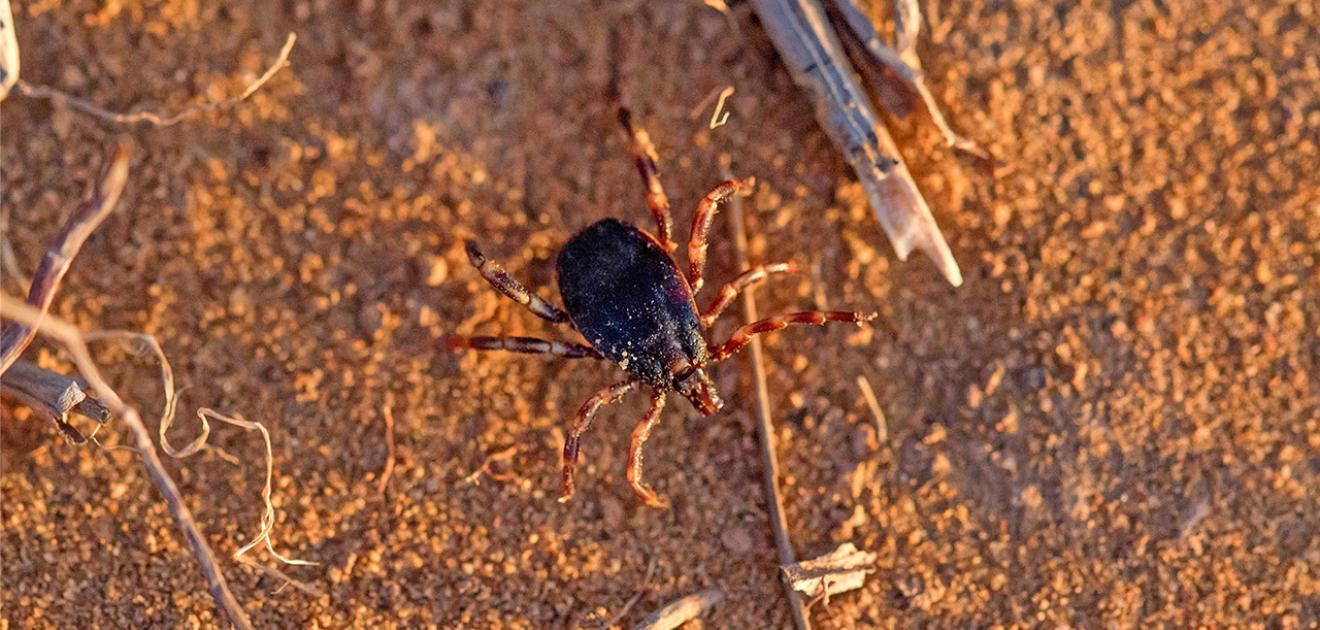
Crimean-Congo Hemorrhagic Fever: Take the Right Steps to Protect Yourself from Tick Bites
The Hyalomma marginatum tick is currently found in southern France and Corsica. With summer approaching, Santé publique France is reminding the public of the preventive measures they should take to avoid infection.
See also
Opinion of the HCSP
ANSES Opinion
In October 2023, for the first time in France, the Crimean-Congo hemorrhagic fever (CCHF) virus was detected in ticks of the species Hyalomma marginatum collected from cattle in the Pyrénées-Orientales and Corsica. CCHF is a viral infection that can cause fever, chills, and digestive problems in humans and, in rare cases, severe forms of the disease involving uncontrolled bleeding.
No human cases have been diagnosed in France to date. Nevertheless, the risk of transmission has now been demonstrated, as Hyalomma ticks infected with the virus are present in southern France.
The High Council for Public Health and the French Agency for Food, Environmental and Occupational Health & Safety (ANSES) recently issued their recommendations regarding medical management and prevention of CCHF, both for the general public and for groups of people who may be at higher risk of infection, particularly during their professional activities.
As the summer season approaches, the Directorate General for Health, ANSES, and Santé publique France are reminding the general public of the preventive measures to take to avoid contracting this disease.

Distribution map of the Hyalomma marginatum tick in mainland France
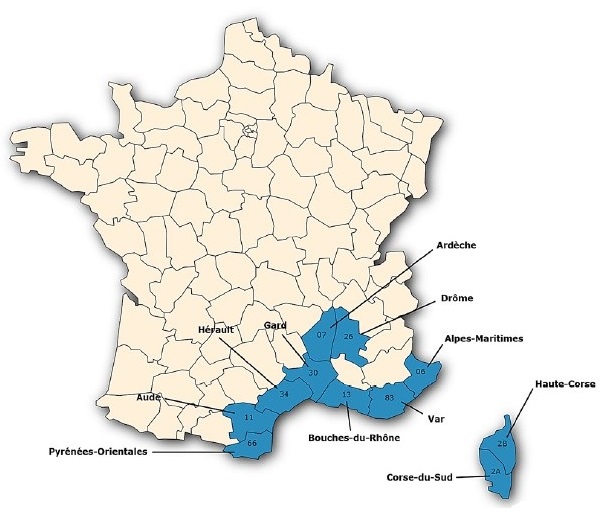
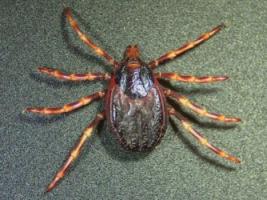
The FHCC virus is most commonly transmitted through the bite of a Hyalomma marginatum tick infected with the virus. This tick species is larger than other species found in France. Its legs are striped, and it can grow up to 8 mm in length as an adult. Established in Corsica for many years, it has also been present for about a decade along the entire French Mediterranean coast (Pyrénées-Orientales, Aude, Hérault, Gard, Ardèche, Drôme, Bouches-du-Rhône, Var, Alpes-Maritimes).
Photo credit: Frédéric Stachurski
The best way to protect yourself against CCHF is to avoid tick bites by taking personal protective measures in the spring and summer in areas where ticks are present (dry scrubland and maquis, pastures, hiking trails, fields, farmlands, orchards, vineyards, etc.):
Wear clothing that covers your legs and arms, preferably light-colored so you can spot ticks more easily
Wear closed-toe shoes
Regularly check your body and your children’s bodies
Keep a tick remover or fine-tipped tweezers on hand to quickly remove a tick if bitten
Since skin repellents have limited effectiveness, their use should not replace the preventive measures listed above.
If you are bitten by a tick, remove it (using a tick remover or fine-tipped tweezers) and disinfect the bite site; if possible, take a photo of the tick.
If, within 14 days of the bite, you suddenly develop any of the symptoms mentioned above, see a doctor, tell them you were bitten by a tick, and show them the photo.












