




The disease
Haemophilus influenzae is a bacterium found exclusively in humans, present in the upper respiratory tract and transmitted through the air. Haemophilus influenzae serotype b (Hib) causes serious invasive infections (meningitis, bacteremia) that can particularly affect infants and young children. Its invasive nature is linked to the bacterium’s polysaccharide capsule. Capsulated Haemophilus influenzae type b strains are responsible for the majority of severe infections in young children. Non-capsulated strains, known as “non-typeable,” can also lead to invasive infections and are also the cause of ear infections and secondary bronchial infections. Invasive infections associated with other serotypes (a, d, e, f) are rarer in France.
Characteristics of the disease
Invasive infections caused by Haemophilus influenzae, including Hib, primarily manifest as meningitis and/or bacteremia. Other clinical forms may occur: epiglottitis, septic arthritis (most often associated with bacteremia), pneumonia (with bacteremia), etc.
Invasive infections can cause very serious complications and lead to significant long-term sequelae. The case-fatality rate is 2 to 4%.
Learn more at professionnels.vaccination-info-service.fr
Transmission
Hib is transmitted through exposure to nasopharyngeal secretions from sick individuals or asymptomatic carriers.
Epidemiology
Children under 5 years of age are at the highest risk of invasive Hib infection.
The incidence of these infections dropped dramatically after the introduction of Hib vaccination into the infant immunization schedule in 1992. Between 2012 and 2017, fewer than 6 cases of invasive Haemophilus influenzae type b infections were reported annually in children under 5 years of age. The majority of cases involved unvaccinated or incompletely vaccinated children. The number of cases has gradually increased since 2018. Between 2022 and 2024, the National Reference Center (NRC) for Meningococcal and Haemophilus influenzae reported approximately 30 cases per year in children under 5 years of age.
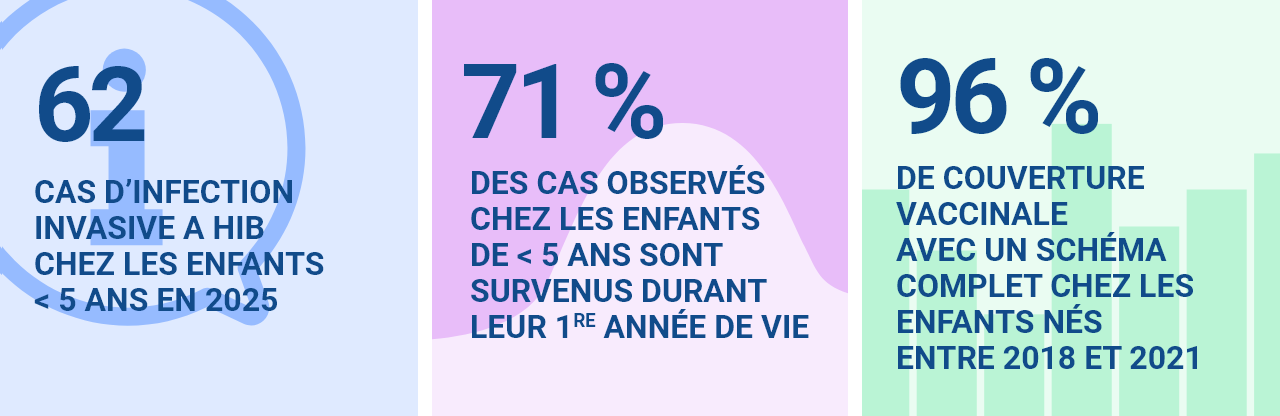
In 2025, 62 cases were confirmed by the NRC in children under 5 years of age.
The occurrence of these cases serves as a reminder that the bacteria continue to circulate quietly in the population, with a higher risk of invasive infection among unvaccinated or incompletely vaccinated infants.
Vaccine Prevention
Hib vaccination is essential to protect at-risk infants during the first months of life. Since January 1, 2018, vaccination against Hib infections has been mandatory for all infants. The vaccination schedule calls for three doses at 2 months, 4 months, and 11 months of age. This vaccination is required for children to enter or remain in childcare settings.
Learn more at vaccination-info-service.fr
Key statistics on invasive Haemophilus influenzae type b infections
In relation to

Antibiotic resistance
thematic dossier
Antibiotic resistance renders one or more antibiotics ineffective against a bacterial infection. This phenomenon can make it difficult, or even impossible, to treat certain infections.

Vaccination
thematic dossier
Contagious diseases most often affect children at a very young age. Because children are particularly vulnerable, they are a priority target for vaccination programs.











