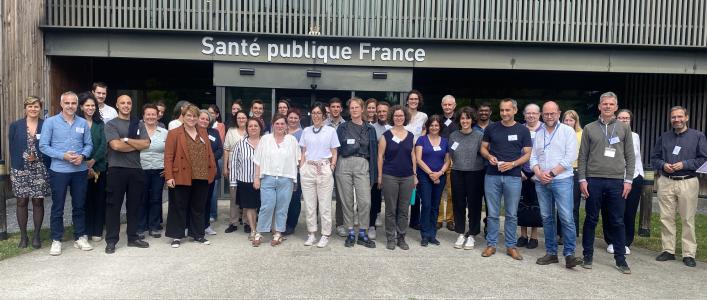
Health-Promoting Urban Planning, May 26–27, 2025

Santé publique France organized the third “Health-Promoting Urban Planning” workshop on May 26 and 27, 2025, in partnership with Ademe, Cerema, Ecolab, and InCa. Watch the videos to see highlights from the event.

It is possible to transform lifestyles and environments in order to simultaneously address environmental, health, and social challenges. This requires adopting new, creative, and experimental approaches to tackle complex problems and accelerate change, both in cities (regardless of their size) and in rural areas. It is with this approach in mind that several #boosters have been organized by stakeholders involved in health issues and health-promoting environments.

Following the first two editions of the booster organized by ADEME and then CEREMA, Santé publique France led this third edition to emphasize health data that enables a territorial assessment, supports policy arguments, and helps convince policymakers, local government agencies, funders, etc. to accelerate change and strengthen the positive health impact of public policies and their health-environment co-benefits.

What is health-promoting urban planning?

Health-Promoting Urban Planning (HPUP) aims to support the development of land-use policies and urban planning projects to mitigate risks (pollution, noise, heat, isolation) and promote health-promoting factors (active mobility, access to healthcare, and green spaces) by reducing social and territorial inequalities.

Objectives of the 3rd Booster

To create a space for in-person dialogue and foster a collaborative dynamic among stakeholders (local governments, researchers, elected officials, and organizations) to strengthen ownership of evidence-based health outcomes and jointly develop a clear scientific rationale to support health-promoting urban planning projects.

Target Audience

This event provided an opportunity to discuss these issues with some forty participants from diverse backgrounds (elected officials, urban planners, researchers, regional health agencies, regional health observatories, Cerema, Ademe, the Directorate General for Health, local authorities, and Santé publique France).

Video