




Trauma
Falls, which are particularly serious among older adults
Falls occur at all ages and in a variety of life situations—in daily life, during sports, while doing home improvement projects, and so on. They are particularly common and severe among older adults.
These injuries account for a significant portion (more than 80%) of everyday accidents among those over 65. In older adults, falls most often occur when a person makes a movement that shifts their center of gravity without being able to regain balance, as they have lost both muscle strength and balance.
Falls have an impact on:
The person’s physical condition, which becomes more vulnerable, especially if a fracture has occurred
Their psychological state, leading to a loss of confidence, fear of falling, and sometimes social withdrawal.
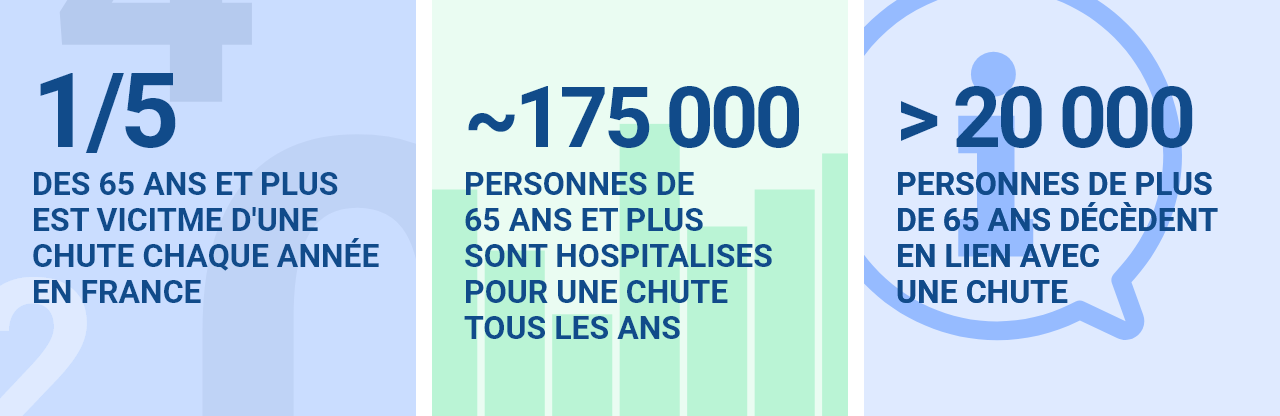
Every year, approximately 1 in 5 people over the age of 65 suffers a fall; nearly 175,000 are hospitalized due to a fall, and more than 20,000 die as a result of a fall. Nearly two-thirds of these deaths involve women, due to the demographic structure at these ages. Even in the absence of immediate trauma, the inability to get back up carries a poor prognosis, since metabolic complications associated with prolonged time on the ground—beyond one hour—increase mortality fivefold within six months.
Accidental falls are a major cause of mortality and morbidity. Given that the number of falls tends to increase as the population ages, falls among older adults represent a major public health issue.
Key statistics on falls
Falls: A Multifactorial Event
The causes of falls are often multifactorial. There are two main types of factors involved in the occurrence of falls:
Intrinsic factors related to the individual:
Extrinsic factors related to the environment: an unadapted home, cluttered rooms, slippery floors, footwear, black ice…
Preventing Falls
A fall is a preventable event that must be addressed to avoid fractures, hospitalizations, loss of independence due to disabilities, and the fears and inhibitions caused by the fall.
To do this, several preventive measures can be taken:
Take care of your physical health (engage in regular physical activity, avoid a sedentary lifestyle, monitor your medications) and mental health (maintain social connections, exercise your cognitive functions)
Adapt your home to ensure accessibility and safety, particularly in the kitchen and bathroom, on the stairs, and with regard to lighting
Prevent and address loss of stability
Loss of balance is not irreversible. It is possible to improve your balance by engaging in physical activity for 30 minutes a day, five times a week. Physical activity should focus on the following four benefits:
Balance
Flexibility
Muscle strength
Endurance
In addition, a balanced diet with sufficient protein intake helps combat sarcopenia, another risk factor that can lead to falls.
Links
In relation to

thematic dossier
Aging Well
People over the age of 60 could account for one-third of the population by 2050. The priority today is no longer to extend life expectancy but to improve the quality of life for older adults.











