




The disease
Stroke, a Disabling Condition
Strokes encompass a group of conditions characterized by the sudden onset of neurological deficits caused by vascular brain damage.
There are two main types of stroke:
ischemic strokes or cerebral infarcts (80% of strokes) resulting from the blockage of a cerebral artery;
hemorrhagic strokes (20% of strokes), caused by the rupture of a cerebral blood vessel.
Transient ischemic attacks (TIAs) are cerebrovascular events of ischemic origin characterized by the early and complete resolution of neurological deficits, as well as the absence of evidence of a cerebral infarction.
The consequences of a stroke can be significant and disabling. Indeed, strokes often result in severe sequelae, as the event can affect major neurological functions, such as motor skills (hemiplegia), sensation (numbness, pain), language (aphasia), vision, and attention. These impairments can lead to numerous difficulties in daily living activities or in returning to work.
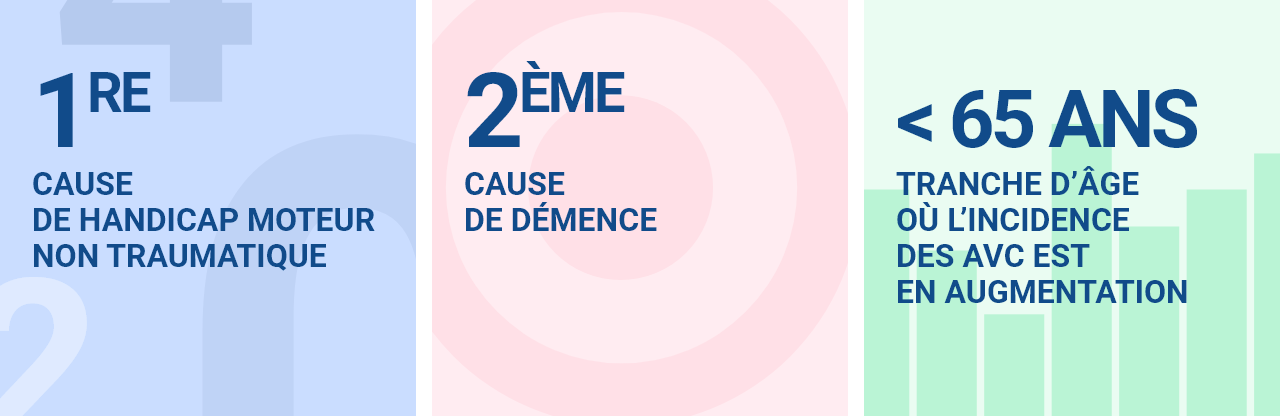
Thus, strokes are a major cause of non-traumatic motor disability and a significant risk factor for dependency.
Prompt treatment upon the onset of symptoms can help reduce the risk of long-term effects and death. France currently has more than 135 neurovascular units across the country, specializing in the care of this condition.
Key Statistics on Stroke
Risk Factors to Screen For
Stroke prevention relies primarily on the screening and treatment of individual vascular risk factors (high blood pressure, smoking, high cholesterol, diabetes, heart rhythm disorders, obesity, and a sedentary lifestyle). Environmental
factors such as air pollution have also been identified as stroke risk factors.
If someone has a stroke… Act quickly
A person having a stroke must receive treatment very quickly after the first symptoms appear. This rapid treatment offers hope for recovery of function in the affected area and a reduction in disability. If you have even the slightest doubt or notice signs suggestive of a stroke, the best way to minimize the delay in treatment is to call 911 directly.
In relation to

High blood pressure
thematic dossier
High blood pressure (HBP), defined as blood pressure that is too high, is the most common chronic condition in France and a major risk factor for cardiovascular and cerebrovascular diseases.

Tobacco
thematic dossier
Despite a slight decrease compared to 2015, tobacco remains responsible for more than 68,000 premature deaths in 2023—accounting for 11% of total mortality—making it still the leading cause of...

Nutrition and Physical Activity
thematic dossier
Nutrition and physical activity are two major determinants of health that contribute to improving the health of the population and are key priorities in public health policy.











