


Seasonality of SARS-CoV-2 transmission
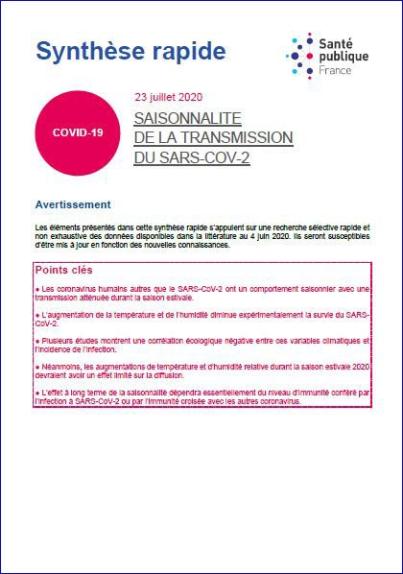
The information presented in this rapid review is based on a rapid, selective, and non-exhaustive search of the literature available as of June 4, 2020. It is subject to update as new knowledge becomes available. Key points: Human coronaviruses other than SARS-CoV-2 exhibit seasonal patterns, with reduced transmission during the summer season. Increased temperature and humidity experimentally reduce the survival of SARS-CoV-2. Several studies show a negative ecological correlation between these climatic variables and the incidence of infection. Nevertheless, increases in temperature and relative humidity during the 2020 summer season are expected to have a limited effect on transmission. The long-term effect of seasonality will depend primarily on the level of immunity conferred by SARS-CoV-2 infection or by cross-immunity with other coronaviruses.
Author(s): Ndeikoundam Ndeindo, Pascal Mathilde, Laaidi Karine, Le Vu Stéphane
Publishing year: 2020
Pages: 8 p.
Collection: COVID-19 Quick Overview
In relation to
Our latest news

news
Shamonda Virus: First Human Case Detected in France—What Do We Know?

news
Call for Nominations for the Renewal of the Scientific Advisory Board of the...

news












