



The Disease
In this article
- A disease caused by the monkeypox virus
- What is the origin of the monkeypox virus?
- How is smallpox B (Mpox) transmitted?
- What are the symptoms of smallpox B (Mpox)?
- How is the disease diagnosed?
- What is the treatment for smallpox B (Mpox)?
- How can you protect yourself from smallpox B (Mpox)?
- What are the recommendations for travelers leaving or returning from a country where smallpox B (Mpox) is actively circulating?
A disease caused by the Monkeypox virus
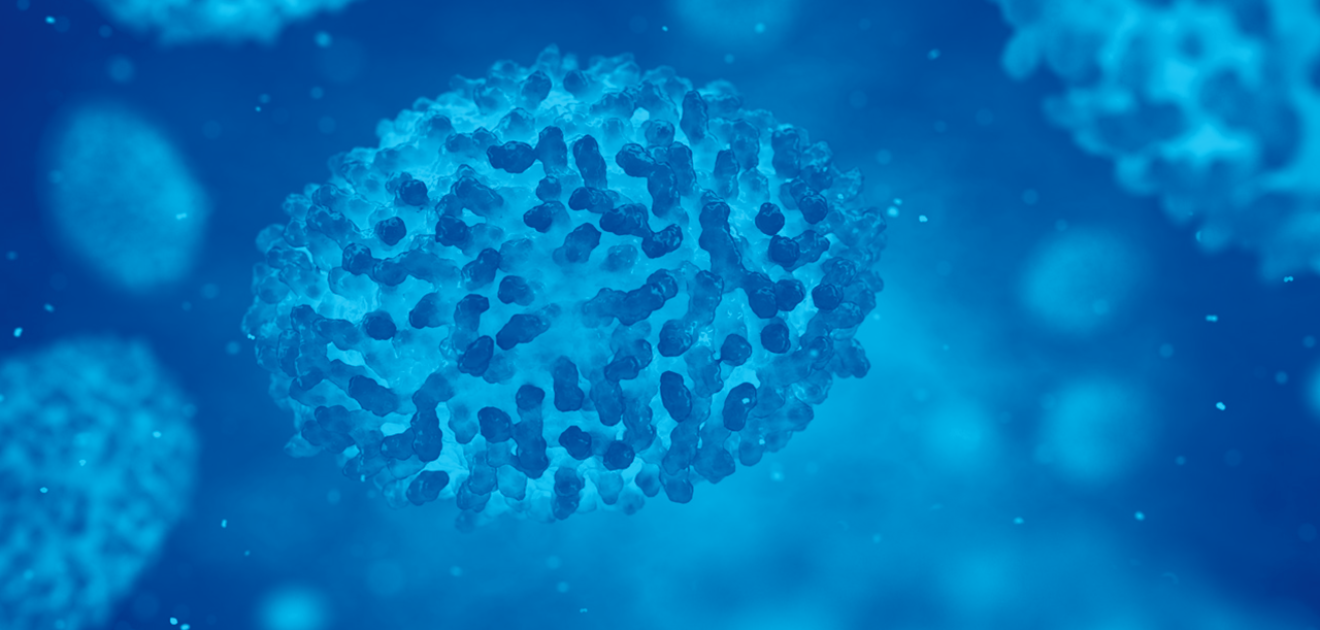
Monkeypox (Mpox), formerly known as simian pox, is a viral infectious disease caused by the Monkeypox virus, which belongs to the genus Orthopoxvirus in the family Poxviridae. The Orthopoxvirus genus includes, among others, the smallpox virus, the vaccinia virus (used in the vaccine for smallpox eradication), cowpox transmitted by rodents, and the bovine poxvirus. Following the eradication of smallpox in late 1979, the Monkeypox virus became the most common Orthopoxvirus.
The reservoir host of the monkeypox virus is unknown, but rodents play a significant role in transmission to humans in African countries where the disease is endemic. Transmission can also occur from person to person through close physical contact, primarily through unprotected direct contact with skin lesions containing viral particles or with the mucous membranes of infected individuals, through the sharing of toiletries, textiles (clothing, bath linens, bedding) used by an infected person, and, to a lesser extent, through respiratory droplets.
What is the origin of the monkeypox virus?
The monkeypox virus was first isolated in 1958 from monkeys bred for research that exhibited symptoms similar to those of human smallpox. The first human case of smallpox B (Mpox) was recorded in 1970 in the Democratic Republic of the Congo.
Since then, smallpox B (Mpox) has continued to occur in countries in Central and West Africa, notably with a major outbreak in 2017 in Nigeria and an increase in incidence in recent years in the Democratic Republic of the Congo, reaching 15,000 cases in 2023. Two distinct clades have been identified: clade II (found in West Africa) and clade I (found in the Congo Basin). Outside these endemic areas, an outbreak was recorded in Texas in 2003, and imported cases were diagnosed in the United Kingdom, Singapore, Israel, and the United States between 2018 and 2021.
In the spring of 2022, cases were reported in Europe and North America among individuals who had not traveled to a country where the disease typically occurs and had no contact with anyone who had traveled to one of those countries. This outbreak was the result of the emergence of a new subclade of the virus, subclade IIb, with the majority of cases involving men who have sex with men.
In 2023, the number of cases rose sharply in Central Africa, and in early 2024, a new subclade, subclade Ib, was identified. This led the WHO to declare a public health emergency of international concern on August 14, 2024, due to the spread of this new outbreak to other countries in Central Africa. Unlike the 2022 outbreak (subclade IIb), this new outbreak appears to affect a broader population, particularly children, and to be transmitted through close contact, though not exclusively through sexual intercourse.
How is smallpox B (Mpox) transmitted?
Smallpox B (Mpox) is originally a zoonosis, meaning a disease that is transmitted from animals to humans. Cases are often observed near tropical rainforests where animals carrying the virus are found. These animals can include rodents, such as squirrels, giant Gambian rats, and dormice, as well as various species of monkeys. Transmission occurs through direct contact with the bodily fluids or skin or mucous membrane lesions of infected animals, for example through a bite or scratch, or while preparing bush meat.
Following infection of a human by an animal, human-to-human transmission is common and occurs through contact:
with the patient’s skin lesions (scabs, blisters) or internal mucous membranes (such as the mouth, genitals, or anus);
with bodily fluids;
through objects contaminated by the patient, such as clothing or bedding, personal hygiene items (razors, toothbrushes), or kitchen utensils;
to a lesser extent, through droplets (spittle, sneezes, etc.).
What are the symptoms of monkeypox (Mpox)?
Infection with the monkeypox virus can cause a vesicular rash, consisting of fluid-filled blisters that dry out, form scabs, and eventually heal. The blisters tend to be concentrated on the face, in the anogenital area, on the palms of the hands, and on the soles of the feet. They may also appear on the trunk and limbs, or even spread to the entire body in severe cases. The mucous membranes are also affected (mouth and genital region). The lesions can sometimes be painful, particularly when they occur on the mucous membranes. This rash may be accompanied by fever, headaches, body aches, and fatigue. Lymph nodes may be swollen and tender under the jaw, in the neck, or in the groin. Sore throats have also been reported.
The incubation period for the disease ranges from 5 to 21 days. The fever phase lasts about 1 to 3 days. The disease usually resolves spontaneously after 2 to 3 weeks, though sometimes it takes 4 weeks.
What should you do if you have symptoms?
If symptoms appear (fever and a rash with blisters), contact your primary care physician or a free information, screening, and diagnosis center (CeGIDD) for HIV, viral hepatitis, and STIs. It is recommended that you self-isolate while awaiting medical advice, avoid contact with others, and wear clothing that covers the skin lesions and gloves if you have lesions on your hands whenever you must go out, particularly to see a healthcare provider.
How is the disease diagnosed?
Smallpox B (Mpox) is suspected based on the presence of suggestive clinical signs and the epidemiological context (travel to an area where the virus is circulating or high-risk contact with a confirmed case) and after ruling out differential diagnoses, that is, other diseases causing a skin rash such as chickenpox, shingles, measles, bacterial skin infections, scabies, syphilis, and drug allergies...
Diagnostic confirmation of a monkeypox virus infection is achieved through laboratory testing by identifying the virus via qPCR or RT-PCR (using skin and oropharyngeal specimens).
What should you do if you test positive?
People diagnosed with mpox must strictly follow their doctor’s recommendations and self-isolate at home until their skin and mucous membrane lesions have completely healed (usually 21 days). This 21-day period must be extended if the skin or mucous membrane lesions have not completely healed by the end of that time.
If strict isolation is not possible, they must avoid physical contact with others (sexual intercourse, hugging, skin-to-skin contact) and cover any skin lesions. They must not share or mix their clothing, household linens, bedding, or dishes with other people.
- Download: Mpox Virus - Patient Information Sheet, After Diagnosis | Coreb
What is the treatment for smallpox B (Mpox)?
Treatment for smallpox B (Mpox) is primarily aimed at relieving symptoms (particularly pain) and preventing or treating complications (secondary infections and unsightly scarring).
On May 24, 2022 (updated on June 9), the High Council for Public Health (HCSP) issued an opinion regarding the various available therapies (antivirals, specific immunoglobulins, hyperimmune plasma) for treating Monkeypox virus infection in humans.
For patients with a severe form of the disease, and depending on their symptoms, complications, and overall health status, Tecovirimat is currently the recommended first-line treatment. This medication is used to treat infections caused by Orthopoxviruses—the family of viruses that includes smallpox—including Monkeypox virus infection.
How can you protect yourself from smallpox B (Mpox)?
In regions where the virus is circulating, particularly in Africa, prevention of monkeypox (Mpox) relies primarily on reducing contact between humans and wild animals. It is recommended to avoid any direct contact with wild animals, sick or dead animals, or their secretions or bodily fluids, particularly rodents and primates.
To prevent human-to-human transmission, it is recommended to avoid close contact with infected or suspected cases, as well as with contaminated materials. Direct contact should therefore be limited, especially with anyone exhibiting symptoms of smallpox B (Mpox), such as rashes or sores.
Preventive Vaccination
In its opinion dated August 29, 2024, the French National Authority for Health (HAS), consulted by the Directorate General for Health, reiterated the importance of preventive vaccination with a third-generation smallpox vaccine for individuals most at risk of exposure to the virus:
men who have sex with men and report having multiple sexual partners;
transgender individuals with multiple sexual partners;
sex workers / people engaged in prostitution;
professionals working in venues where sexual services are provided;
partners or people living in the same household as those most at risk.
The HAS also recommends:
a booster dose for individuals who received their primary vaccination series in 2022 and for those vaccinated only during childhood;
reactive (post-exposure) vaccination for individuals who have had high-risk contact with an infected person. This vaccination must be administered within 4 days of the first high-risk contact and no later than 14 days.
In its advisory opinion dated July 7, 2022, the HAS specified that vaccination could be considered on a case-by-case basis for healthcare professionals who are required to care for sick patients.
Learn more about vaccination | vaccination-info-service.fr
What are the recommendations for travelers leaving or returning from a country where smallpox B (Mpox) is actively circulating?
Before Departure
Before traveling to a country with confirmed or potential active circulation of smallpox B (Mpox), travelers should receive relevant information regarding preventive measures and what to do in the event of risky contact or symptoms. Preventive vaccination with a smallpox vaccine may be offered to healthcare professionals and humanitarian workers. It may be considered on a case-by-case basis for individuals visiting family members.
During the trip
It is important to follow preventive measures during your stay: wash your hands regularly and avoid contact with infected people or animals, as well as with objects or linens used by these individuals (clothing, towels, bedding, dishes). It is also recommended to avoid sexual relations with casual partners.
Upon returning from travel
Upon returning from travel, it is recommended to monitor for symptoms consistent with smallpox B (Mpox) within 21 days of the return date and to seek medical advice if symptoms develop.
See also
Mpox Information Page | Ministry of Health











