



Data
The valve disease surveillance system established by Santé publique France makes it possible to study the epidemiological trends of these conditions.
Increasing Number of Patients Hospitalized for Valvular Heart Disease
In 2016, 38,875 patients were hospitalized for the treatment of valvular heart disease in France: 89.0% of them were hospitalized for non-rheumatic valvular heart disease (average age: 74 years – 42% women); 5.2% for rheumatic valvular heart disease (mean age: 67 years – 63% women), 2.6% for congenital valvular heart disease (mean age: 29 years – 40% women), and 3.2% for valvular heart disease of unspecified origin.
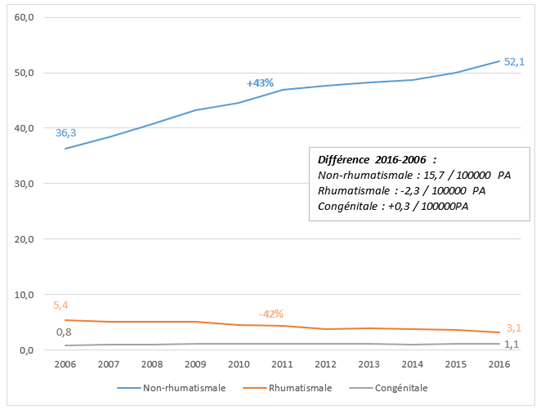
The standardized incidence rate of patients hospitalized for non-rheumatic valvular heart disease has been rising for several years and stood at 52 per 100,000 person-years in 2016. This rate was much lower for patients hospitalized for rheumatic valvular heart disease, at 3 patients per 100,000 person-years in 2016, with a reverse trend, showing a decline.
Trends in age-standardized incidence rates of hospitalizations for valvular heart disease (DP-DR) from 2006 to 2016, by cause of the valvular heart disease
Aortic stenosis is the most common valvular heart disease in France, ahead of mitral regurgitation
In Europe, the most common type of valvular heart disease is aortic stenosis. The primary cause of this condition is degenerative. In France, the incidence rate of patients hospitalized for the management of aortic stenosis is on the rise, particularly among those over 75 years of age. This can be explained by several factors, including the aging population, but also by the development of transcatheter aortic valve implantation (TAVI). This recent technique is less invasive than open-heart surgery performed under general anesthesia, and thus allows for the treatment of certain patients with contraindications to conventional valve replacement surgery.
Stable Mortality Rates for Non-Rheumatic Valvular Heart Disease
In France, in 2014, 11,179 people died with valvular heart disease listed as the primary or contributing cause on their death certificates. The most common types of valvular heart disease were non-rheumatic in origin (75.9%). Rheumatic valvular heart disease accounted for 21.8% of deaths, and congenital valvular heart disease accounted for 39 deaths (0.3%).
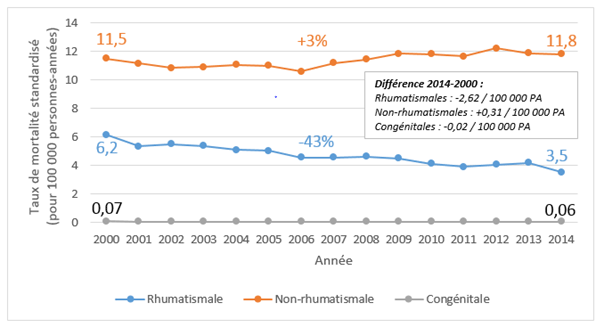
The standardized mortality rate for non-rheumatic valvular heart disease was 12 per 100,000 person-years in 2014. The mortality rate for non-rheumatic valvular heart disease was generally stable between 2000 and 2014, but it decreased among younger patients and increased among older patients, reflecting a higher age at death.
The age-standardized mortality rate for rheumatic valvular heart disease decreased between 2000 and 2014, when it stood at 3.5 per 100,000 person-years.
Trends in Standardized Mortality Rates by Cause of Valvular Heart Disease (2000–2014)
Significant regional disparities
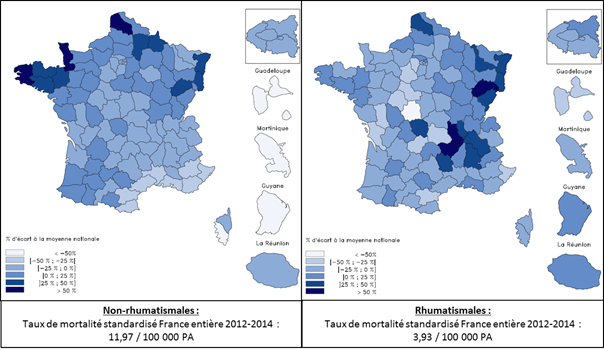
Analysis of standardized rates by department revealed disparities in mortality related to valvular heart disease across France (aggregated data from 2012–2014).
Specifically, the highest standardized mortality rates for non-rheumatic valvular heart disease were found in Manche (19.0/100,000 population), Pas-de-Calais (18.9/100,000 population), Finistère (18.3/100,000 population), Morbihan (17.9/100,000 population), Bas-Rhin (17.7/100,000 population), and Haute-Saône (16.8/100,000 population). These rates were lowest in southeastern France (Alpes-de-Haute-Provence (6.7 per 100,000 population)) and the overseas departments [French Guiana (5.5); Martinique (3.6); Guadeloupe (3.2)].
Regarding standardized mortality rates related to rheumatic valvular heart disease, the highest rates were found in the Loire (7.8 per 100,000 population), the Belfort region (7.2 per 100,000 population), Haute-Loire (6.5 per 100,000 population), and Haute-Saône (5.9 per 100,000 population).
Regional disparities in mortality from rheumatic and non-rheumatic valvular heart disease, 2012–2014
In relation to

Tobacco
thematic dossier
Despite a slight decrease compared to 2015, tobacco remains responsible for more than 68,000 premature deaths in 2023—accounting for 11% of total mortality—making it still the leading cause of...

Nutrition and Physical Activity
thematic dossier
Nutrition and physical activity are two major determinants of health that contribute to improving the health of the population and are key priorities in public health policy.

High blood pressure
thematic dossier
High blood pressure (HBP), defined as blood pressure that is too high, is the most common chronic condition in France and a major risk factor for cardiovascular and cerebrovascular diseases.











