



The disease
Outbreaks of foodborne illness in France
A foodborne illness outbreak is defined as the occurrence of at least two cases with similar symptoms, typically gastrointestinal, whose cause can be traced to a single food source. In France, foodborne illness outbreaks have been subject to mandatory reporting since 1987.
There are different types of TIAC outbreaks:
Outbreaks where a pathogen is confirmed: the pathogen is isolated from a human sample (blood/stool) or from food remnants, control meals, or the food environment/production chain;
Outbreaks where one or more pathogens are suspected: no pathogen has been microbiologically confirmed; it is therefore suspected based on the patients’ clinical signs, the median incubation period, and the type of food consumed;
Outbreaks of unknown etiology: no pathogen has been microbiologically confirmed or suspected based on the available information.
For Santé publique France, the priorities are the surveillance and prevention of foodborne illnesses to reduce the risks of contamination and contribute to food safety. To this end, we monitor the epidemiological trends of foodborne outbreaks through mandatory reporting and the analysis of data from the National Reference Center for Salmonella. We identify foods, high-risk products, and/or pathogens to stop transmission, guide control and prevention measures, and assess their impact in collaboration with the relevant authorities.
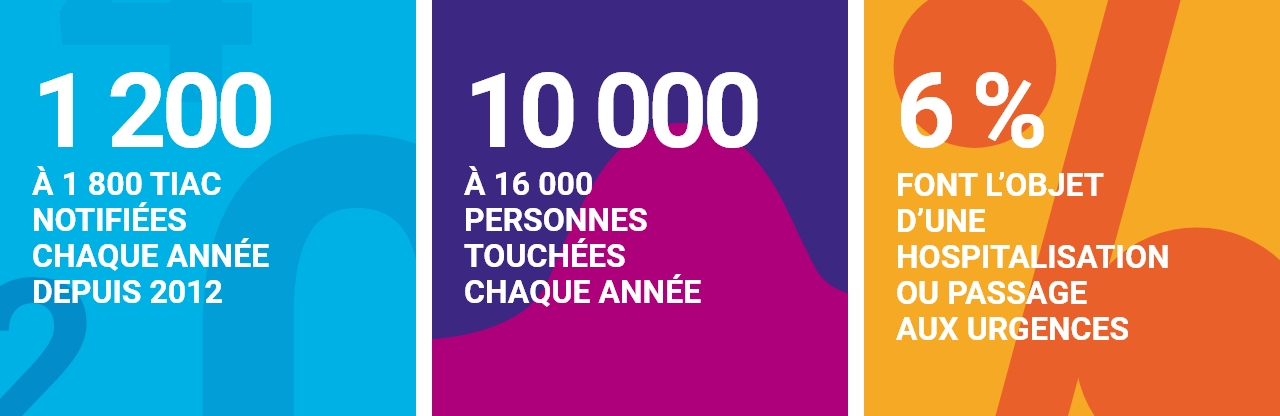
Key statistics on foodborne illness outbreaks
Prevention
Preventive measures based on hygiene help limit the risk of foodborne illness outbreaks.
See also

Ten simple steps to prevent microbiological risks
Symptoms and Diagnosis
The symptoms of a foodborne illness outbreak depend on the type of pathogen responsible. Gastrointestinal symptoms (diarrhea, vomiting, abdominal pain, nausea, etc.) are the most common, sometimes accompanied by fever. Other symptoms may also be reported, such as allergic reactions or neurological manifestations.
The main pathogens responsible for foodborne illness outbreaks are Salmonella and toxin-producing bacteria (Clostridium perfringens, Bacillus cereus, and Staphylococcus aureus). Other toxic agents (DSP diarrheal toxin), bacterial pathogens (Campylobacter, enterohemorrhagic E. coli), viral pathogens (norovirus), or chemical agents may also cause foodborne illness.
In relation to

Acute gastroenteritis
thematic dossier
Acute winter gastroenteritis is often caused by viruses. Every year, there is a surge in cases in France, as in the rest of Europe, leading to an increase in medical consultations for acute winter...












