OSARIB: Health Monitoring Group for Residents Affected by the Bure Storage Facility Project

Learn more

Find all the information about the Osarib creation project

Nuclear power generation produces radioactive waste. The most dangerous types of this waste cannot be stored on the surface or at shallow depths due to their high radioactivity levels and long half-lives. Osarib was established in response to concerns raised by stakeholders (including residents of the area surrounding the site) regarding the potential impact of the CiGéo project on the health of local residents, both during the construction of the infrastructure and throughout the site’s operational period.

Cigéo: France’s Deep Geological Repository Project for Radioactive Waste

The Industrial Geological Storage Center (Cigéo) is the French project for a deep geological repository for radioactive waste. It is designed to store, starting in 2030 and in deep geological layers at Bure (on the border of the Meuse and Haute-Marne departments), the long-lived high- and intermediate-level waste produced by all current French nuclear facilities. This project is led by the National Agency for Radioactive Waste Management (Andra), an independent public agency under the supervision of the ministries responsible for energy, the environment, and research. The Cigéo project has not yet been authorized. Various regulatory and legislative procedures must still be completed before such a decision can be made.

However, for over 20 years, studies have been conducted at the Andra center (commonly known as “the Bure laboratory”). This research laboratory comprises 20 hectares of facilities spread across two municipalities. It is an underground laboratory that collects nearly 3 million data points every day via 26,000 measurement points scattered throughout 2 km of tunnels. The laboratory has provided a better understanding of the surrounding rock, drilling techniques, the challenges of deep geological disposal, changes in packaging techniques over time, and more.
With this in mind, a 15-year regional development project was initiated by the government and local, regional, and national stakeholders to benefit the areas surrounding the proposed storage facility.

It is structured around four key areas:

  • the development of infrastructure to support the implementation of the Cigéo project;

  • revitalizing the region;

  • enhancing the region’s appeal;

  • sustainability.

A Local Information and Monitoring Committee (CLIS) to keep the public informed

As soon as Andra received its authorization to build the underground laboratory, the Local Information and Monitoring Committee (CLIS) was established in 1999. Established by the law of December 30, 1991, renewed by the law of June 28, 2006, and organized as an association since 2008, the CLIS is tasked with informing its members and the affected communities about activities conducted in the laboratory, monitoring research and the results obtained, and organizing public debate on the proposed storage facility.

Since its creation, the CLIS has questioned the need to conduct, prior to any decision regarding the storage project, a baseline health assessment and epidemiological monitoring in the Bure region. These would enable, in the long term and should it be decided to build the storage center, an evaluation of the potential impact of this center on the physical or psychological health of the nearby population.

In this context, a working group comprising the Local Information and Monitoring Committee (CLIS) of the Bure laboratory, the Meuse Prefecture (coordinator of the Cigéo mission), the Grand Est Regional Health Agency (ARS) Grand Est, the Institute for Radiation Protection and Nuclear Safety (IRSN), and Santé publique France, has recommended the establishment of an epidemiological surveillance and health monitoring system.

This initiative gave rise to the Observatory on the Health of Residents near the Bure Storage Center Project (OSaRiB), led by Santé publique France and coordinated by the Grand Est Regional Health Observatory (ORS).


An agreement to clarify the responsibilities and scope of each stakeholder

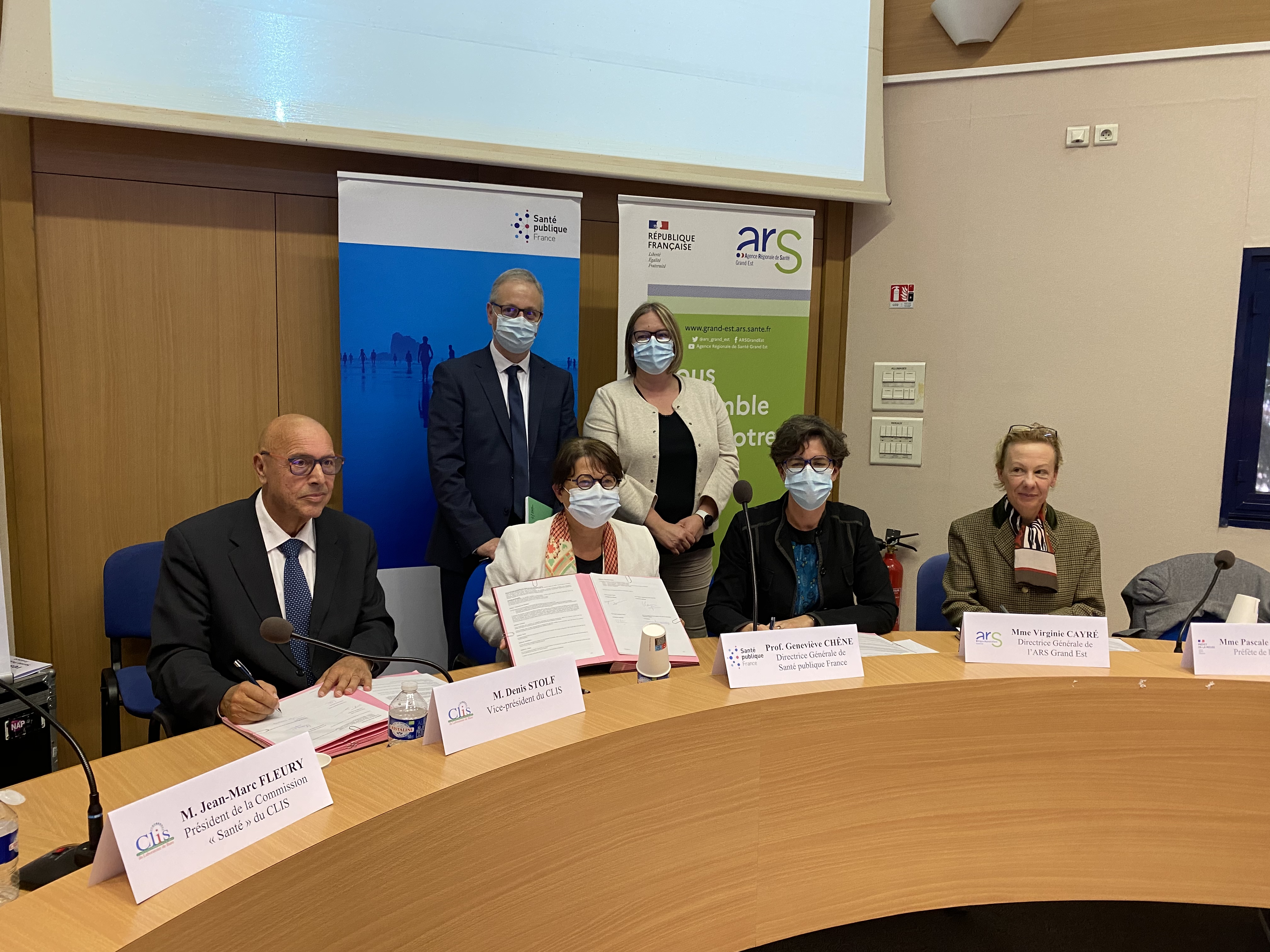
The establishment and implementation of OSaRiB are governed by a framework agreement signed on September 30, 2022, between Santé publique France, the Grand Est Regional Health Agency (ARS), the Local Information and Monitoring Committee for the Bure Underground Laboratory, and the Prefecture of Meuse. The purpose of this agreement is to define each party’s contributions to OSaRiB as well as the terms of their collaboration. Furthermore, each party undertakes to contribute the skills, knowledge, and expertise, as well as the human, material, financial, and technical resources necessary for the implementation of OSaRiB.

Photo de la signature de la convention autour du projet de l'Osarib

What are the objectives of the OSaRiB observatory?

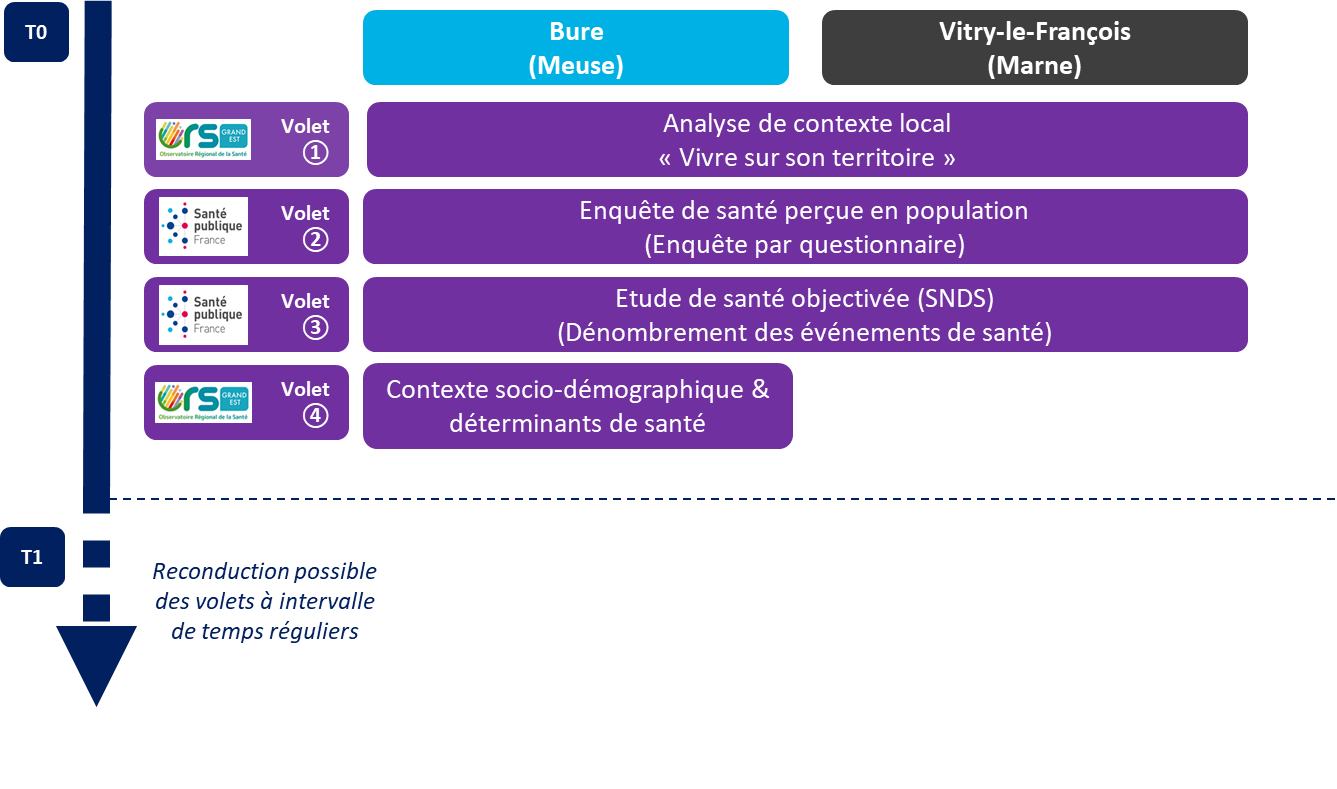
The OSaRiB aims to describe the health status of the local population and a non-local population comprising the community of municipalities of Vitry, Champagne, and Der in the Marne department, as well as how this status changes over time.

It will make it possible to assess the physical and psychological health of the population at a given point in time and then, if the Cigeo project is approved, to repeat this assessment at regular intervals to identify any changes in health status.

This initiative is structured around four components:

  • an analysis of the local context, conducted by ORS Grand Est with the support of Santé publique France, aimed at understanding experiences within the region, analyzing perceptions regarding health and the environment, risk perceptions, and concerns; identifying potential tensions and differences in viewpoints (regarding the aforementioned aspects); and identifying expectations;

  • a survey of perceived health among the general population conducted by Santé publique France with the support of the ARS Grand Est, designed to collect information directly from both residents and non-residents regarding their health status—information not found in any other data source;

  • an “objective” health study conducted by Santé publique France to count all health events affecting the population that result in the need for medical care and which, in the most severe cases, could lead to death;

  • an assessment of the demographic and socioeconomic context and other health determinants in the affected area, conducted in the vicinity of the proposed storage facility by the ORS Grand Est, with support from the ARS Grand Est and the CLIS.

Areas covered by the observatory

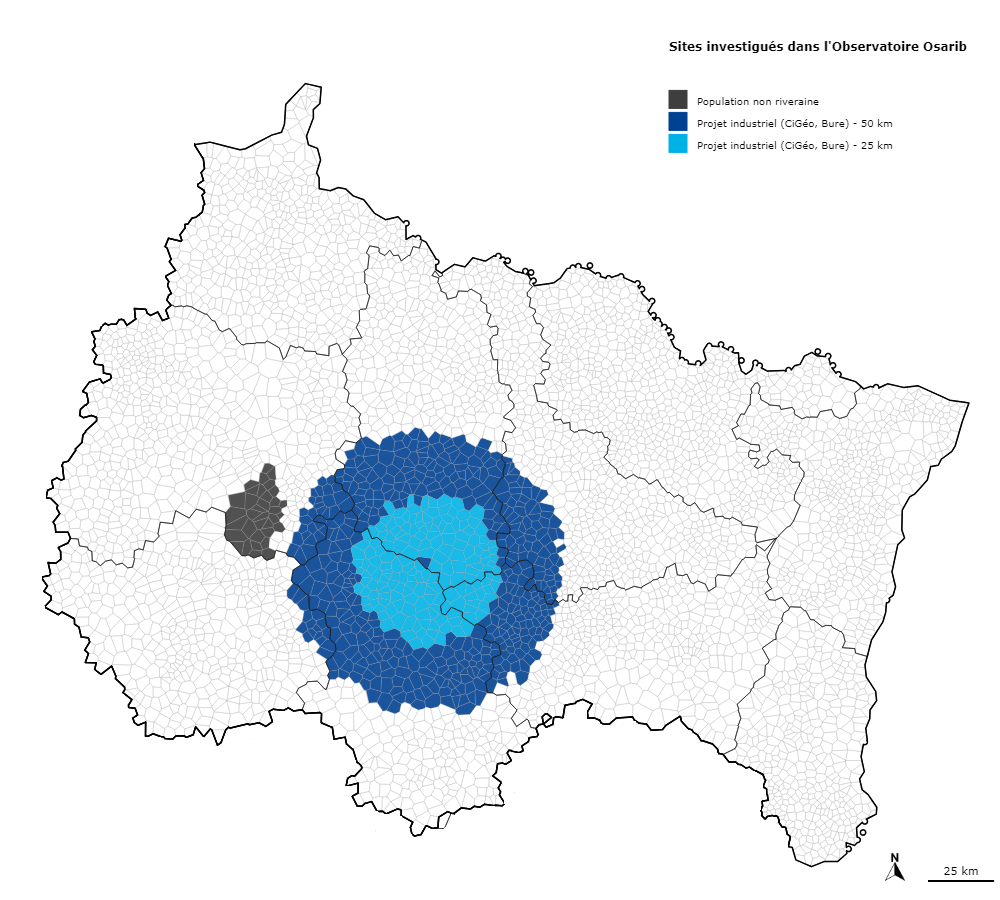
Two areas have been selected:

  • for the local population: a “25 km” zone around the site selected for the center project and a “50 km” zone spanning six departments: Aube, Marne, Haute-Marne, Meuse, Meurthe-et-Moselle, and Vosges;

  • for the non-adjacent area, the Community of Communes of Vitry, Champagne, and Der (including the commune of Vitry-le-François) has been selected; this area is geographically close to the site chosen for the project, has lifestyle habits similar to those of residents in the adjacent area, and has a limited number of identified potentially contaminated sites and soils.

Map of the areas covered by Osarib

Carte des zones couvertes par Osarib

Osarib’s governing bodies and their responsibilities

Three bodies are responsible for the steering mechanism:

  • The Steering Committee: it brings together the Clis de Bure, the Meuse Prefecture (coordinator of the CiGéo mission), the IRSN, the ARS Grand Est, and Santé publique France.

  • The Scientific Council: established in July 2021, it consists of four members and aims to ensure the scientific consistency, relevance, and quality of the work carried out within the project (methods, interpretation of results).

  • The Interface Committee: this role is fulfilled by the CLIS given its missions and composition. The Interface Committee facilitates stakeholder participation in the follow-up to the development of recommendations by the CLIS “Health Baseline” working group (2017–2019), specifically regarding the adoption, interpretation, and dissemination of results collected through the Osarib initiative.

What are the expected results?

The data collected under these four components will provide a snapshot serving as a baseline for public health against which any future studies can be compared, and will enable early detection of any favorable or unfavorable changes in population health.

Data from this monitoring system will also help define and evaluate preventive measures to be implemented across the region, particularly within the framework of the Local Health Contracts currently being developed.