


Health Mediation: Toward Professional Recognition and Wider Adoption of the Practice? A special feature in *La Santé en action* No. 460, June 2022.
In the June 2022 issue of its quarterly journal *La Santé en action*, Santé publique France publishes a special feature on health mediation and its role in reducing social inequalities in health.
Subscribe to the magazine
To receive the newsletter via email announcing each new issue and providing free access to the issue
Health mediation emerged empirically from practical needs on the ground, but its official recognition is recent, and until then it had received little recognition. The major challenge is therefore to demonstrate its value so that it is no longer experimental but becomes a permanent, established practice integrated into general law.
In 2017, the French National Authority for Health (HAS) took a first step toward structuring this practice by establishing a framework that defines its scope and interactions at the intersection with other professions in the social and health care sector. The objective is twofold: 1) to improve access to rights and to curative and preventive care by promoting the autonomy of the most vulnerable and those furthest removed from the healthcare system, and 2) to raise awareness among healthcare professionals of the potential difficulties patients face in navigating their care and prevention pathways. The HAS also identifies three key ethical principles that must apply to health mediation: confidentiality and professional secrecy; non-judgment (a stance of detachment); and respect for individuals’ wishes and their freedom of choice.
Health Mediators in France: A Response to Social Inequalities in Health
In the French system, access to health and social rights for the entire population is theoretically guaranteed by law. Although quite comprehensive, this system remains fairly complex for the layperson. Significant health inequalities are also observed within the country, both geographically and across the population. These manifest particularly in differences in life expectancy or the incidence of certain conditions (cancers, diabetes, obesity, etc.).
At the individual level, healthcare professionals also observe failures in follow-up and adherence to diagnostic or therapeutic pathways. The causes of these gaps, which often overlap, stem from all the vulnerabilities faced by populations who are distant from healthcare. Among the main obstacles identified are: social and economic precariousness, age, low educational attainment, language barriers, the digital divide, geographical isolation, lack of social support, physical or mental disabilities, loss of independence, mental health disorders, lack of knowledge or understanding of the healthcare system, cultural perceptions of illness, care, and medication, chronicity, and/or the accumulation of health problems.
These various vulnerabilities lead to interruptions or discontinuation of care pathways, both curative and preventive (how can one follow a treatment regimen while living on the streets; how can one attend an appointment without access to public transportation in rural areas or without the money to pay for it, even if it exists?). These failures, which cannot be reduced to language barriers or cultural factors alone, lay the groundwork for health inequalities. Furthermore, even though the ultimate goal of health mediation is to foster people’s autonomy and capacity to act, it must be recognized that it may also be necessary in the long term for certain patients with chronic conditions or those with permanent disabilities or conditions likely to worsen (such as the elderly or those with mental illnesses).
What professions, what skills?
In the first section, “State of Knowledge,” various mediation professions are defined: social mediators, health mediators, “peer health mediators,” transcultural mediators, and “adult liaisons.” Researchers and field professionals define mediation, its history (it originated in civil society and specifically in the field of HIV/AIDS in the early 1990s), its foundations, and its objectives.
They also define the skills required for this new profession: mastery of the fundamentals of the professions with which the mediator will interact, medical knowledge, knowledge of the basics of psychological support, motivational interviewing, the healthcare system, as well as access to rights (social assistance), the functioning of healthcare networks, the local nonprofit sector, a sense of otherness (defined as concern for others), empathy, the ability to listen, non-judgment, and the capacity to step outside one’s own perspective, etc.
Practice in France and abroad, in hospitals and beyond
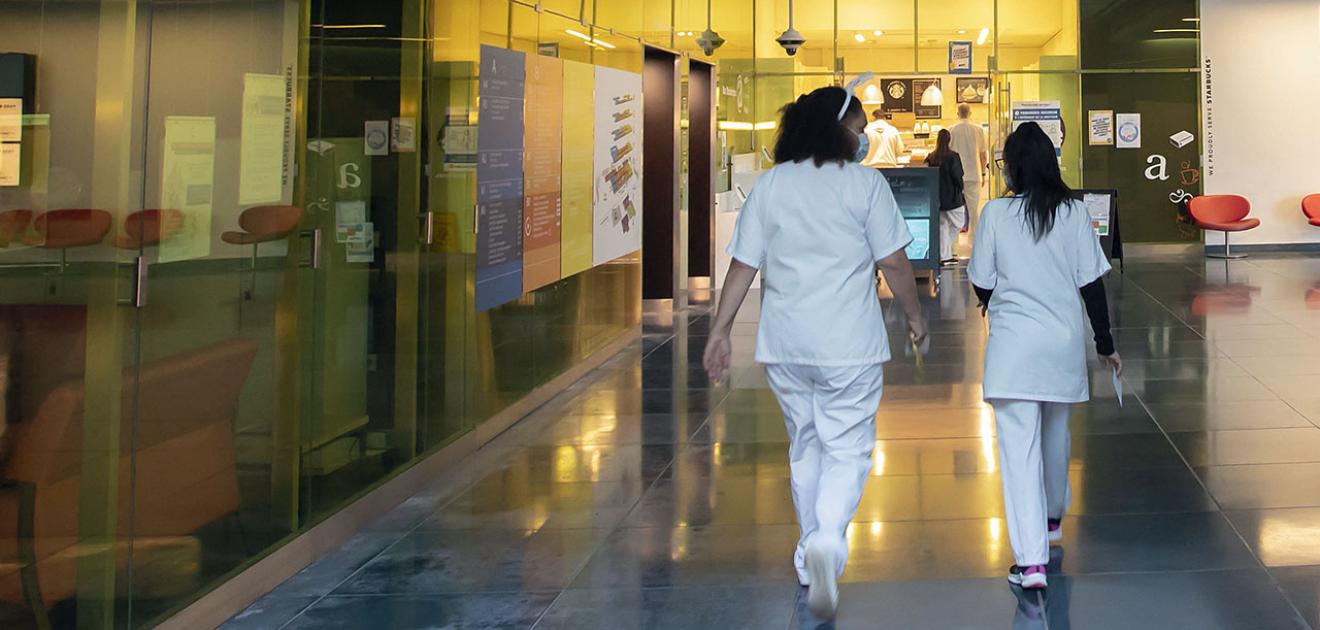
The remainder of this report is devoted to the current state of concrete practices and to mediation mechanisms and initiatives within hospitals or in neighborhoods of certain cities. A researcher analyzes the role of the “peer health mediator,” who shares the same experience as the patient; a psychologist describes transcultural consultation; and a focus is presented on the specific mediation needs of Travellers, particularly during the “COVID-19 crisis.” Various testimonials from mediators working in public hospitals in Paris, at the Saint-Laurent du Maroni Hospital (French Guiana), in Lille or Dunkirk, as well as in Germany and Belgium, illustrate the current state of the art in this field. Ultimately, this review of practices in France and internationally demonstrates the value of health mediation.
Learn more

magazines/revues
14 June 2023












