Download





Driven by difficulties in accessing safe drinking water and running water, as well as inadequate sanitation, a cholera outbreak is spreading in certain disadvantaged neighborhoods of Mayotte. Santé publique France is helping to combat the spread of the disease and support the population through the involvement of its staff at the Mayotte Regional Unit, the mobilization of volunteers from the Health Reserve, and the procurement and distribution of vaccines.
Are you interested in becoming a medical reservist? Visit our portal to learn more about the Medical Reserve and create your profile.
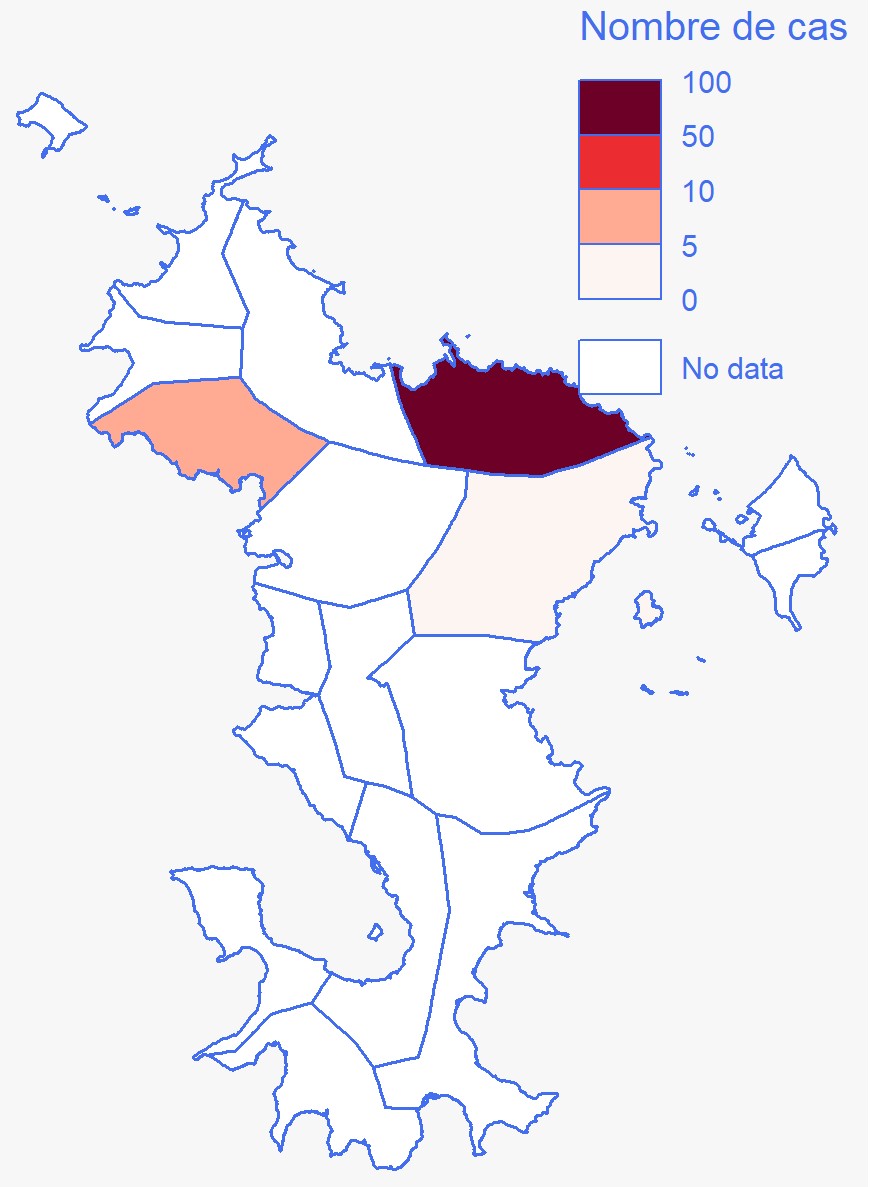
Following the resurgence of the disease in East Africa since 2021, a cholera outbreak has been ongoing in the Comoros since February 2, 2024, with an increase in cases in recent weeks, particularly on Anjouan. This outbreak has spread to the neighboring French archipelago of Mayotte. As of May 15, 2024, 85 cases of cholera have been reported in Mayotte since the first case on March 18, 2024, of which 68 are locally acquired and 17 were imported from the Comoros or countries on the African continent. Among these, 7 cases requiring intensive care and the first death—a 3-year-old child—have been recorded since the start of the outbreak. A weekly update tracking the epidemiological evolution of the situation is published every Friday on our website.
Download
The vast majority of cases (61) were detected in the municipality of Koungou, in a disadvantaged neighborhood with limited access to safe drinking water (some residents of this neighborhood drink river water) and poor sanitation (lack of sewage systems, shared latrines), which are the main risks for the spread of the disease. This community transmission of cholera in Koungou and the risk of new cholera cases being imported from the Comoros expose Mayotte to a risk of local transmission throughout the territory, particularly in other impoverished neighborhoods. A new outbreak was reported on May 14 in the municipality of Mtzangamouji.
The Mayotte Regional Health Agency is tasked with limiting the introduction and spread of the disease within the territory as much as possible. To this end, it has strengthened health surveillance and implemented screening and diagnosis for people entering the territory, as well as control measures for each diagnosed case
“What is the ARS’s role in managing cholera in Mayotte?” in the FAQ section on the ARS website
For its part, Santé publique France supports the ARS through various measures:
The Santé publique France regional unit in Mayotte conducts field investigations by visiting the homes of infected individuals or the dedicated cholera care units in hospitals to interview the patients or their contacts. These investigations aim to determine whether the infection was contracted in Mayotte or not, or whether there is an epidemiological link to individuals with already confirmed cholera, in order to trace the chain of transmission and prevent new cases. Additional information is collected (clinical data including the onset date and type of symptoms, presence of other sick individuals in the household, access to water, and other potential sources of exposure). This information is shared with the ARS as well as with the Health Reserve reinforcements deployed in the field to assist them in their efforts (disinfection of homes, vaccination, screening, active case finding). The Regional Unit produces a daily epidemiological update for the ARS and a weekly update for healthcare professionals and the general public, published on our website every Friday.
The Pharmaceutical Establishment (EP) is tasked with purchasing and maintaining, under the direction of the General Directorate of Health, operational stocks of health products necessary for the population in the event of an exceptional health situation. It is in part thanks to the purchase and shipment of these vaccine stocks from mainland France to Mayotte that, according to the ARS, 4,456 close contacts were able to be vaccinated on the island as of May 13, 2024.
Managed by Santé publique France, the Health Reserve consists of volunteer healthcare professionals capable of providing reinforcement in the face of an exceptional health situation requiring human resources support. It can be mobilized by the Ministry of Health, as well as by the directors of the Regional Health Agencies, for generally short-term missions, in France or abroad.
The Health Reserve’s missions are varied and include, in particular:
providing additional healthcare services;
the repatriation or evacuation of the population in the event of an exceptional situation;
reinforcing call centers for victims;
expertise and coordination missions.
In the event of an alert, volunteers are selected by Santé publique France and placed under its supervision. Reservists receive regular training, and their assignments are compensated.
In Mayotte, 86 reservists have been mobilized for various missions launched since mid-April, including 54 specifically focused on cholera. They are reinforcing teams from the ARS, Santé publique France Mayotte, the Mayotte Hospital Center, and the Reference Medical Centers, or are working in the field on investigation or vaccination missions. As some of these missions are coming to an end soon (a mission generally lasts one month), a new recruitment campaign for reservists is underway.
Healthcare professionals (emergency physicians, general practitioners, state-licensed nurses, epidemiologists, logisticians, pharmacists, etc.) interested in volunteering as part of the Health Reserve can consult the following information:
To learn more about the Reserve: Information for applicants
To sign up: Pre-registration form
To inform your employer: Employer’s Guide
thematic dossier
Cholera, a toxic gastrointestinal infection, is a notifiable disease caused by the ingestion of water or food contaminated with toxin-producing Vibrio cholerae bacteria of serogroups O1 and O139.












