
infographics
The Story of a Food Recall
How does a food safety alert work in France? What is the organizational structure? Santé publique France outlines the process—from patient consultation to the issuance of an alert—in an infographic.




Campylobacter infection is one of the most common causes of bacterial gastroenteritis in developed countries. Santé publique France has released surveillance data on Campylobacter infections in France for 2021, confirming the trends observed in recent years.

thematic dossier
Campylobacter infections, which are transmitted to humans primarily through undercooked contaminated meat, are a common cause of bacterial gastroenteritis in developed countries.
Campylobacter infection is one of the most common causes of bacterial gastroenteritis in developed countries. A large proportion of Campylobacter infections are asymptomatic. In symptomatic cases, the symptoms typically observed are those of acute gastroenteritis, which is usually mild and resolves spontaneously within a week. Complications associated with Campylobacter infection are rare, as are deaths (<0.1%), and occur mainly in vulnerable individuals (the elderly, immunocompromised patients).
Each year, Santé publique France publishes a comprehensive report on its website summarizing surveillance data on Campylobacter infections. This surveillance is based on the National Reference Center (CNR) for Campylobacter and Helicobacter and the mandatory reporting of foodborne illness outbreaks (TIAC).
In 2021, surveillance of Campylobacter infections confirmed the epidemiological and biological trends already observed in recent years. More specifically, the data show:
a predominance of the C. jejuni species;
a higher number of cases and incidence among children, with the highest incidence among those aged 0–9 years (27 cases per 100,000 inhabitants);
a predominance of infections among men—15 cases per 100,000 inhabitants versus 11 cases per 100,000 among women (a less pronounced trend among those aged 20–39);
a seasonal peak during the summer months;
high resistance to fluoroquinolones and tetracyclines, which has remained stable in recent years;
no notable increase in resistance rates for the six antibiotics routinely tested;
consumption of poultry products as the primary food (identified or suspected) identified as the source of contamination in outbreaks of foodborne illness.
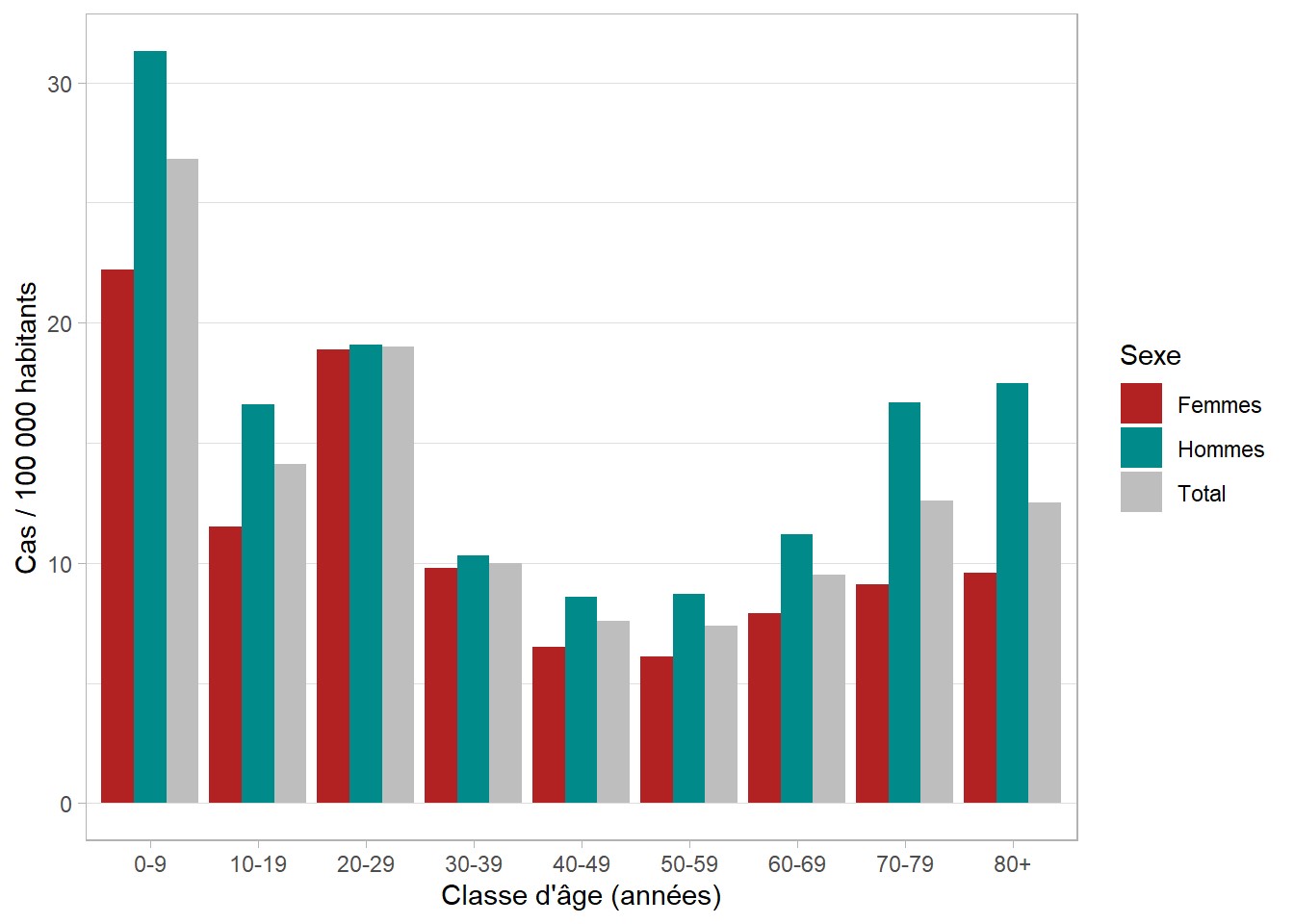
The number of Campylobacter strains recorded by the CNR has been rising since 2013, the year the network’s laboratories began entering data online. By way of comparison, at the European level, the trend in the number of reported Campylobacter infections remained stable between 2016 and 2020. This increase observed in France could reflect a genuine rise in Campylobacter infections. However, several factors—such as the consolidation of laboratories into technical platforms and the increasingly systematic use of multiplex PCR (diagnostic tests that allow for the simultaneous detection of multiple targeted pathogens from a single sample)— facilitating the detection of Campylobacter sp., may have contributed to the increase in the number of strain isolates and, consequently, to the reporting by network laboratories over time.
Download

bulletin national
28 December 2022
The main risk factors for infection are handling raw meat (poultry, pork, beef), cross-contamination of food from contaminated surfaces in the kitchen, and consumption of undercooked meat. Santé publique France reminds the public that preventing Campylobacter infections relies primarily on individual precautions. Particular attention must be paid to hygiene recommendations in the kitchen, especially for certain populations that may be particularly susceptible to foodborne infections (the elderly, young children, immunocompromised individuals, and pregnant women):
Hand washing
Cleaning kitchen surfaces and utensils after handling poultry or raw meat
Storing raw poultry or meat in the refrigerator separately from foods eaten raw or prepared dishes
Thorough cooking (cooked through, > 65°C) of poultry, beef, and pork destroys Campylobacter
Special care must be taken when barbecuing
infographics
How does a food safety alert work in France? What is the organizational structure? Santé publique France outlines the process—from patient consultation to the issuance of an alert—in an infographic.












