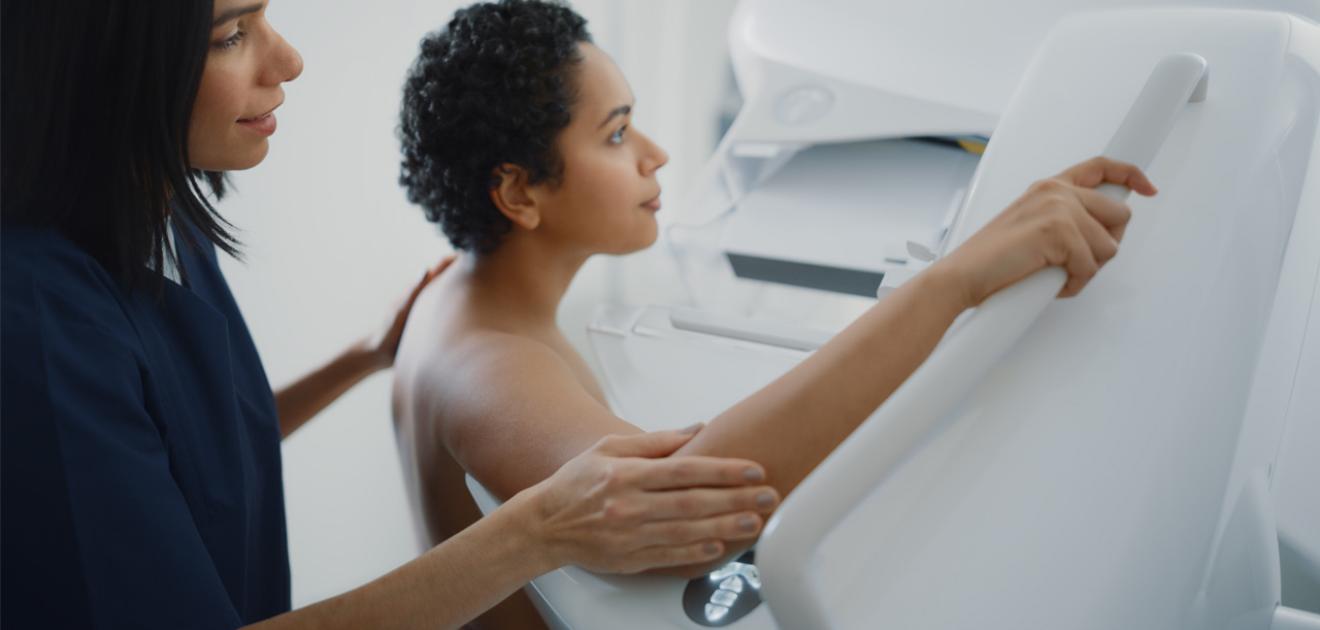

Une soignante aide une patiente pour sa mammographie

Breast cancer screening: Still too few women are getting screened

Santé publique France has released new data on organized breast cancer screening, covering participation in the program for the 2022–2023 period and its performance for the 2019–2020 period. Every two years, this program invites women aged 50 to 74 to undergo a screening mammogram to detect cancer at an early stage.

Breast cancer

thematic dossier

Breast cancer is the most common form of cancer in France and is the leading cause of cancer-related deaths among women. It is covered by a national screening program designed to detect the...

With nearly 60,000 new cases and 12,000 deaths each year, breast cancer is the most common cancer among women in France and the leading cause of cancer-related deaths. The national organized breast cancer screening program invites women aged 50 to 74 to undergo a screening mammogram every two years, supplemented by a clinical breast exam, targeting a population of nearly 10 million women. Santé publique France is responsible for the epidemiological evaluation of this program and publishes annual updates on participation rates at the national and regional levels, as well as performance indicators. Despite the number of invitations sent, the latest data show that the participation rate remains low (46.5% for the 2022–2023 period) and is down compared to the previous period (47.7% in 2021–2022). Furthermore, the trend in participation rates over the past few years remains complex due to the ongoing impact of the COVID-19 pandemic. The cancer detection rate is steadily increasing, consistent with the observed rise in breast cancer incidence in the general population. Santé publique France emphasizes the importance of undergoing screening as part of the organized screening program to detect potential abnormalities or cancer at an early stage and thereby increase the chances of remission.

How is women’s participation in the organized breast cancer screening program changing?

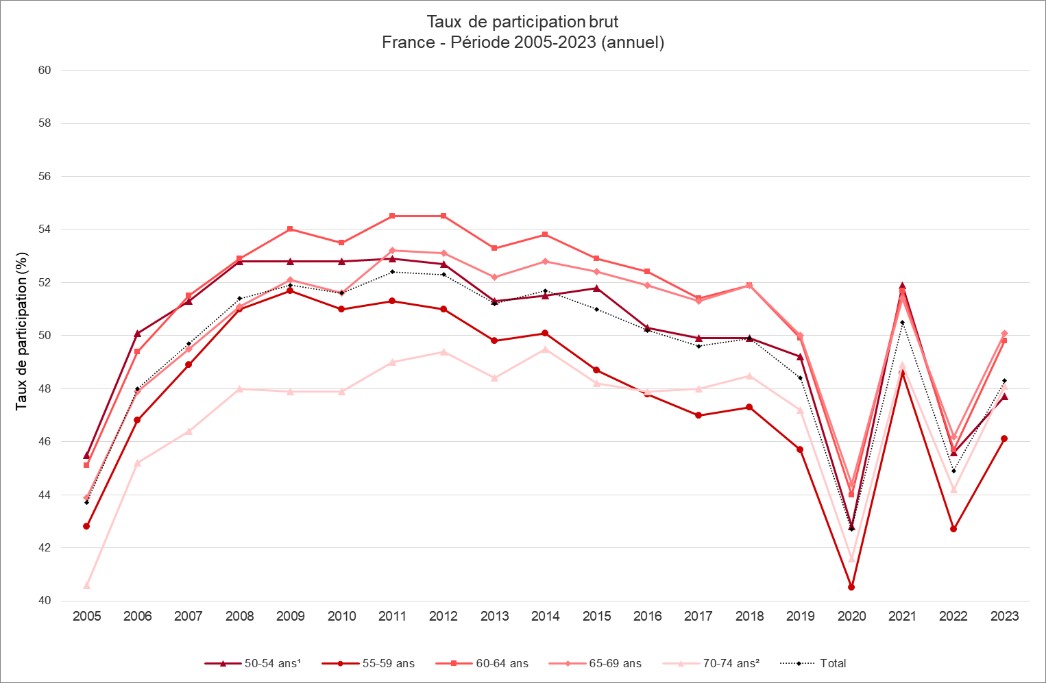
Approximately 2,620,500 women underwent a mammogram as part of the organized screening program in 2023, representing a national participation rate of 48.2% (compared to 44.8% in 2022). An increase in participation was therefore observed in 2023, but participation over the two-year rolling period of 2022–2023 remains lower than that of 2021–2022.

Trends in Participation Rates in Organized Breast Cancer Screening, by Age - 2005–2023

Évolution du taux de participation au dépistage organisé du cancer du sein, par âge - Période 2005-2023

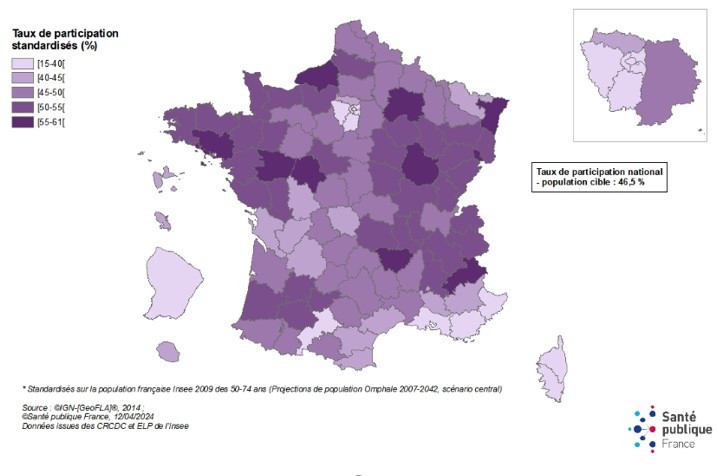
In 2022–2023, the highest regional participation rates were observed in Bourgogne-Franche-Comté, Normandy, and Brittany; the lowest were observed in French Guiana, Corsica, and the Provence-Alpes-Côte d’Azur region. While the 2022–2023 rate is stable or declining compared to the previous period in most regions of mainland France, an increase is observed in Hauts-de-France.
It is likely that the consequences of disruptions caused by COVID-19 will again impact the calculation of future participation data.

Organized Breast Cancer Screening Program. Standardized Departmental Participation Rates for 2022–2023

Programme de dépistage organisé du cancer du sein. Taux de participation départementaux standardisés 2022-2023

See also

données

Participation rates in the organized breast cancer screening program for 2022–2023 and trends since 2005

The number of cancers detected is gradually increasing thanks to improved screening practices

In 2019, 16,202 cancers were detected, and 14,800 in 2020, as fewer women underwent screening in 2020. At the same time, the cancer detection rate among women who undergo screening is steadily increasing. This trend is consistent with the observed increase in breast cancer incidence in the general population. While this trend is similar across all regions, there are variations in levels, with a higher detection rate in Hauts-de-France and a lower rate in the DROMs. These differences in levels are consistent with the incidence rates observed in these regions. Performance indicators regarding the characteristics of detected cancers show an improvement in screening practices at the first reading, with compliance with European targets.

See also

données

Departmental performance indicators for the breast cancer screening program for the 2019–2020 period

The Importance of Participating in the Organized Breast Cancer Screening Program

When detected at an early stage, breast cancer is more likely to be cured.

6

out of 10 breast cancers are diagnosed at an early stage (limited local spread)

Santé publique France emphasizes the importance of undergoing screening through the organized screening program to benefit from high-quality care and thus detect any abnormalities or cancer at an early stage, thereby limiting the need for treatment and increasing the chances of remission. Regular
screening through this program for all eligible women would help reduce breast cancer mortality.

What can you do in your daily life to reduce your risk of developing breast cancer?
Among the known risk factors for breast cancer, lifestyle-related factors have been identified, including alcohol consumption, smoking, being overweight or obese, and lack of physical activity.
Santé publique France has developed information and support resources accessible to everyone to help understand health issues, reduce risks, and adopt healthy behaviors.

Learn more:

GEODES

Track breast cancer trends in France and in your region