


Diabetes-related mortality
Trends in 5-year mortality and excess mortality among people with diabetes receiving pharmacological treatment in mainland France: a comparison of the Entred 2001 and Entred 2007 cohorts
A 5-year follow-up of people with diabetes included in the Entred 2001 and Entred 2007 cohorts allowed for an examination of trends in 5-year mortality and excess mortality among the pharmacologically treated diabetic population compared to the general population, for overall mortality, mortality from cardiovascular diseases, and mortality from malignant tumors, during the 2002–2012 period.
The analysis included 8,437 individuals from the Entred 2001 cohort (men: 54%; median age as of January 1, 2002: men 65 years and women 70 years) and 5,869 individuals from the Entred 2007 cohort (men: 52%; median age as of 08/01/2007: men 65 years and women 69 years). The age-standardized death rates in the two cohorts were 48.5‰ and 35.8‰ for men (CMF = 0.74 [0.64–0.85]), respectively; and for women, 30.5‰ and 27.1‰ (HR = 0.89 [0.77–1.02]).
Compared to the general population, excess all-cause mortality was high for both men and women with diabetes (according to Entred 2007, +34% and +51%, respectively). Excess mortality due to cardiovascular disease decreased from 1.62 [1.43 – 1.83] to 1.41 [1.20 – 1.64] for men, though the difference was not statistically significant, and remained stable for women at 1.68 [1.46 – 1.91] and 1.74 [1.47 – 2.03] between the two periods.
Excess mortality over the 2002–2011 period among people with diabetes receiving pharmacological treatment in mainland France compared to the general population—Entred 2001 cohort
Follow-up of people with diabetes included in the Entred 2001 cohort over the 2002–2011 period allowed for an examination of 10-year excess mortality, both overall and by specific causes, among the pharmacologically treated diabetic population compared to the general population.
The analysis included 8,437 individuals from the Entred 2001 cohort (men: 54%; median age at enrollment: men 65 years and women 70 years). During the 10-year follow-up period, 35% of the individuals died. The median age at death was 77 years for men (n=1,686 deaths) and 82 years for women (n=1,290). The leading causes of death were cardiovascular disease (30%) and cancer (26%). The overall excess mortality among people with diabetes compared to the general population was high for men (1.55, 95% CI [1.48–1.63]) and women (1.63, 95% CI [1.54–1.72]). Both men and women with diabetes had significantly higher excess mortality compared to the general population for cardiovascular and renal diseases, as well as for certain cancer sites: pancreas, liver, and colorectal. Among women, excess mortality was observed for uterine cancer, and among men for bladder cancer and leukemia. Additionally, excess mortality was found for diseases of the digestive system, infectious diseases, and respiratory diseases, including pneumonia.
National Mortality Data
All deaths occurring on French territory are subject to a death certificate issued by a physician and are recorded at the Center for Epidemiology on Medical Causes of Death (CépiDC). The CépiDC is responsible for the annual production of statistics on medical causes of death in France, the dissemination of data, and studies and research on medical causes of death.
The death certificate includes, on the one hand, information regarding the deceased’s civil status (including gender, age, and municipalities of residence and death) and, on the other hand, medical information on the medical causes of death. This medical information consists of two parts: in the first part, the physician must indicate the underlying cause of death (the cause directly linked to the disease process leading to death); in the second part, the physician must indicate the associated cause(s) of death (significant medical conditions that may have contributed to the death). Diabetes may therefore be listed as the underlying cause of death or as an associated cause. Since 2000, the coding for which CépiDC is responsible has been based on the 10th International Classification of Diseases (ICD-10). The ICD-10 codes used for diabetes are as follows: E10-E14 (diabetes mellitus), G590 (diabetic mononeuritis), G632 (diabetic polyneuropathy), H280 (diabetic cataract), H360 (diabetic retinopathy), I792 (diabetic peripheral angiopathy), N083 (glomerulopathy in diabetes mellitus), M142 (diabetic arthropathy), O24 (diabetes mellitus in pregnancy), P702 (neonatal diabetes mellitus).
Diabetes-related mortality is particularly difficult to assess, especially when the death is linked to one of its complications (for example, in the case of a person with diabetes who died of a heart attack). However, analyzing all reported causes (“multiple causes”: underlying causes and other causes) allows us to quantify the total number of deaths in which diabetes is involved, either directly or indirectly as a condition that worsens the prognosis of other diseases. The department of residence was used to distinguish diabetes-related mortality in mainland France and in the overseas departments. The results presented here may differ slightly from those presented on the CépiDc website because the deaths considered by CépiDc include all deaths occurring in mainland France (regardless of whether the individuals were domiciled in mainland France, overseas territories, or abroad).
The analysis aims to describe the impact of diabetes on overall mortality and the general characteristics of diabetes-related mortality. It covers all death certificates from the 2001–2006 period.
The main indicators of diabetes-related mortality presented here are: the number of diabetes-related deaths, the proportion of these deaths in overall mortality, the average age at death, crude and age-standardized mortality rates, age-standardized premature mortality rates, and potential years of life lost due to diabetes. The formulas for calculating these indicators are provided below.
Key Findings
In 2009, among death certificates for people residing in France, 34,599 listed diabetes among multiple causes of death (6.3%) and 11,675 identified diabetes as the underlying cause of death (2.1%). The crude and age-standardized mortality rates for diabetes among multiple causes of death are 53.7 and 30.3 per 100,000, respectively. The mortality rate is higher among men than among women (40.7 versus 22.6 per 100,000), but the excess mortality rate for men decreases with age. The average age at death is 79 years, and is higher among women than among men (81 vs. 76 years), as in overall mortality. Between 2001 and 2009, age-standardized mortality rates from diabetes-related causes across all causes tended to decrease among women (though there was a mortality peak in 2003 that may have been linked to the heat wave). Among men, rates fluctuated between 41 and 43 per 100,000. In overall mortality, the proportion of deaths linked to diabetes among multiple causes increased from 2001 (5.5%) to 2009 (6.3%). This increase in the proportion of diabetes-related deaths is more pronounced among men. Over nine years, the average age at death rose slightly, from 77 to 79 years. There are significant geographic disparities: in mainland France, overall for the 2007–2009 period, the highest age-standardized annual rates were found in Nord-Pas-de-Calais, Alsace, Champagne-Ardenne, Lorraine, and Picardy. Conversely, the lowest rates were found in Brittany, Île-de-France, Corsica, and Lower Normandy. In the overseas territories, over the 2007–2009 period, the age-standardized annual rates for diabetes-related deaths from multiple causes were extremely high: 96.8, 61.6, 61.2, and 54.4 per 100,000, respectively, in Réunion, French Guiana, Guadeloupe, and Martinique. The average age at death in the overseas territories is lower than in the rest of the country (ranging from 69 to 77 years depending on the overseas department versus 79 years). The excess male mortality observed in mainland France is also found in Martinique, Réunion, and Guadeloupe but is not observed in French Guiana.
Detailed results by year and geographic area:
Results for all of France, 2001–2009: Number of deaths, proportion, and average age
Results for all of France, 2001–2009: Crude and age-standardized rates
Results for metropolitan France, 2001–2009: Number of cases, proportion, and average age
Results in metropolitan France, 2001–2009: Crude and standardized rates
General Methodology
Formulas for calculating the various indicators
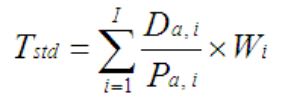
D a,i number of diabetes-related deaths in age group i in year a
P a,i average population in age group i in year a (source: INSEE, ELP updated in January 2007)
W i share of age group i in the IARC-1976 population
The multiple causes/primary causes ratio, calculated to determine the contribution of the use of multiple causes, corresponds to the number of deaths with diabetes listed as a multiple cause relative to the number of deaths with diabetes listed as the primary cause. The higher this ratio is above 1, the more frequent cases of diabetes reported as multiple causes are.
The share of diabetes in overall mortality corresponds to the number of people for whom the death certificate listed diabetes, divided by the total number of deaths regardless of cause. This figure is expressed as a percentage.
The crude diabetes-related mortality rate is the ratio of the number of diabetes-related deaths during the year to the average population of France for that same year. This rate is expressed per 100,000 people.
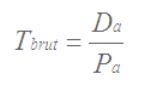
The standardized diabetes-related mortality rate is calculated using the “direct” standardization method, based on the age structure of the 1976 IARC European population. These rates are therefore defined as the rates that would be observed in France if the age structure were the same as that of the 1976 European population.
Standardized premature mortality rates are calculated in the same way as standardized diabetes-related mortality rates, but by considering only deaths occurring before the age of 65 (or 75) relative to the population of the same age. For international comparisons, the age limit most frequently used is 65. However, since life expectancy in France is high, and diabetes is a common chronic condition among the oldest age groups, calculations were also performed using an age cutoff of 75 years. Both approaches are presented in the “Results” section.
Potential years of life lost (PYLL) represent the number of years that a person who died prematurely (before a cutoff age) did not live. The choice of cutoff age varies by study. For the reasons stated above, PYLL before age 65 and those before age 75 are presented in the “Results” section. Infant deaths (<1 year) were excluded from this calculation because they are often due to specific causes. Diabetes-related PYLL are presented as the average number of years lost per person who died from diabetes.
Limitations of the Analysis
The quality of death certification and coding has improved in recent years: additional lines were added to the death certificate in 1997 and again in 2000; deaths are now coded using the 10th International Classification of Diseases; and an automated system is used to code the diseases listed. These significant changes, in accordance with the World Health Organization (WHO), have improved the quality and comparability of mortality data in France and other European countries.
However, diabetes is generally underreported. Indeed, it is possible that the death certificate of a person with diabetes may not mention diabetes if it is not directly linked to the death, but also if the person died from a predominant condition, leading to an omission by the certifying physician. Furthermore, it may be difficult for the physician to specify whether diabetes is the primary cause of the disease process or whether it merely contributes to it (for example, in the case of a person with diabetes who dies of a heart attack).












