



What are the sources of indoor air pollution?
Indoor pollutants can be classified into three categories and come from a variety of sources:
biological contaminants, such as allergens, bacteria, mold, viruses, etc.;
chemical pollutants, including carbon monoxide (CO), volatile organic compounds (VOCs) such as formaldehyde, nitrogen oxides, phthalates, etc.;
physical agents, such as ionizing radiation (including radon), asbestos fibers, fine and ultrafine particles, etc.
Sources of indoor air pollution linked to the outdoor environment
Pollutants emitted outside buildings by road traffic, industrial facilities, heating systems, or power plants (NO2, particulate matter, benzene, etc.) can enter indoor spaces through infiltration, natural ventilation, or mechanical ventilation—a process known as transfer. Outdoor air can infiltrate through openings, joints, and cracks in walls, as well as through windows and doors when they are open. Transfer of contaminants from the ground can also occur, particularly in areas naturally contaminated with radon or at current or former industrial sites (contaminated sites and soils). The transfer of these outdoor pollutants indoors varies depending on the type of ventilation, the type of construction, the nature of the pollutant in question, as well as the type of street on which the building is located, the floor level and its orientation, and even the location of the ventilation systems.
Sources of indoor air pollution related to occupants and their activities
One of the best-known sources of anthropogenic indoor pollution is tobacco smoke. Indeed, it contains more than 4,000 substances, in the form of gases or particles, some of which are known or suspected to be irritants or carcinogens to humans.
The use of appliances that operate via combustion processes—whether fueled by gas, fuel oil, petroleum, coal, or wood—also generates numerous pollutants, primarily nitrogen dioxide and fine particulate matter. These include appliances used for hot water production, heating, or cooking. The use of solid fuels (coal and biomass) is also a major source of pollution, particularly in developing and/or emerging countries: nearly 50% of the world’s population—or 3 billion people—uses this type of fuel as their primary source of domestic energy, and up to 80% in these countries.
Other human activities can lead to the emission of pollutants into indoor air, such as the use of cleaning products, incense, and candles, or DIY activities, The mere presence of humans, pets, and plants is also a source of various biological agents such as bacteria or viruses—for example, through the emission of saliva and nasal droplets by humans—as well as allergens and pollen, particularly those originating from outside the premises. Finally, any damp surfaces or water reservoirs associated with the use of showers, humidifiers, nebulizers, or water damage can lead to the proliferation of numerous microorganisms, including mold and bacteria such as Legionella.
Sources of indoor air pollution associated with building and interior design products
Building materials, flooring and wall coverings, furniture, and decorative items, as well as the installation and finishing products used with these materials, are a significant source of pollution. In particular, they can emit volatile organic compounds, including formaldehyde, which is present in the resins and adhesives used to manufacture particleboard, plywood, and engineered wood products.
Major sources of indoor air pollution
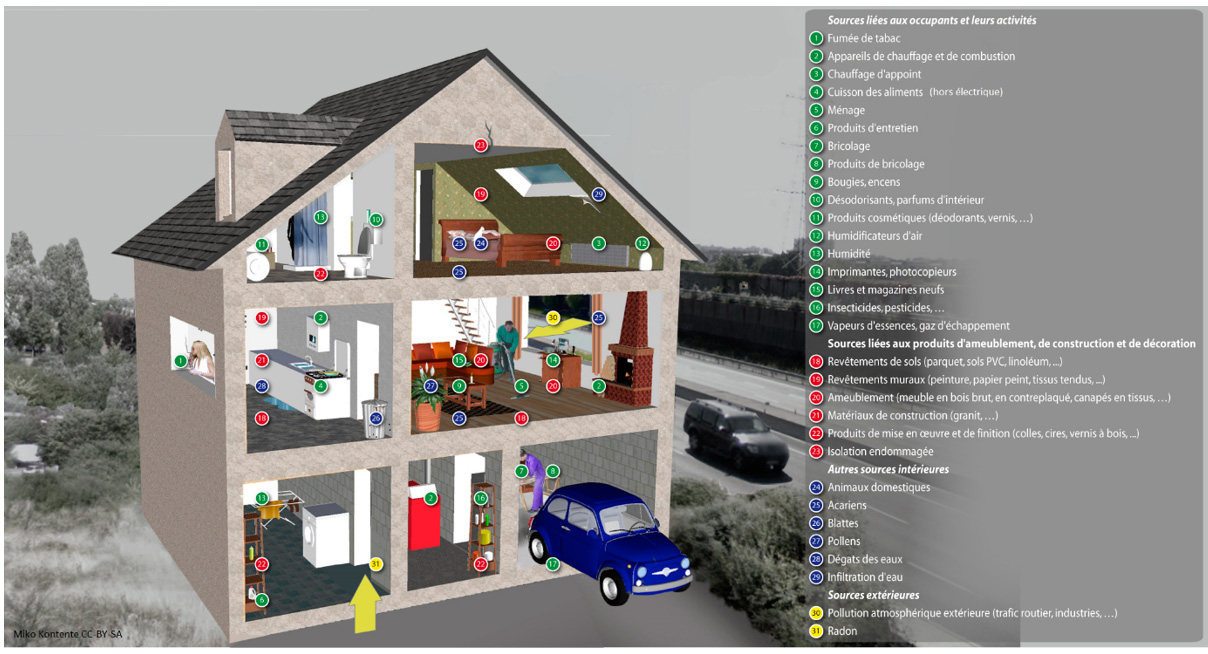
Similarly, other factors (noise, thermal comfort, lighting) are influenced by the indoor environment (human activities, light sources, etc.) as well as by the outdoor environment (temperature, passing vehicles, etc.). The building and its immediate surroundings play a significant role in determining indoor air quality.
Indoor air quality therefore depends on these various sources, as well as on building ventilation, which helps remove pollutants. Adequate air exchange within buildings is therefore essential to limit people’s exposure to a wide range of pollutants. It also helps maintain an optimal humidity level, which should be between 40% and 60% in buildings.












