


World AIDS Day: Testing Remains Essential in the Fight Against HIV
cp_VIH_2022_VF.pdf
Download (PDF - 574.41 KB)
Press Contacts
Santé publique France
presse@santepubliquefrance.fr
Stéphanie Champion: 01 41 79 67 48
Marie Delibéros: 01 41 79 69 61
Camille Le Hyaric: 01 41 79 68 64
To mark World AIDS Day on December 1, Santé publique France emphasizes the importance of testing for early HIV diagnosis and access to antiretroviral treatments, whose preventive effect has a direct impact on the course of the epidemic.
Surveillance data on HIV and bacterial sexually transmitted infections (STIs) in France released today show an increase in testing rates in 2021 compared to 2020, but HIV testing rates remain below pre-COVID-19 epidemic levels. To combat discrimination related to HIV status and thereby remove the main barriers to testing, Santé publique France is relaunching its campaign “Living with HIV means living first and foremost” to highlight the effectiveness of HIV treatments, which allow people living with HIV to live healthy lives and prevent transmission of the virus to their partners.
HIV testing rates remain insufficient
In 2021, 5.7 million HIV tests were performed by clinical laboratories. This figure, which had decreased by 13% between 2019 and 2020 due to the COVID-19 pandemic, is up 8% compared to 2020 (5.3 million), but remains lower than in 2019 (6.1 million).
The estimated number of new HIV diagnoses stabilized in 2021 at 5,013. This stabilization, observed regardless of the mode of transmission and the place of birth of those diagnosed, is difficult to interpret in terms of the epidemic’s dynamics, as it is not possible to determine whether the increase in testing in 2021 involved the populations most at risk for HIV.
Among these new HIV diagnoses, 51% were heterosexuals (36% born abroad, 15% born in France), 44% were men who have sex with men (MSM) (32% born in France and 12% born abroad), 2% were transgender individuals infected through sexual contact, and 1% were people who inject drugs.
In 2021, 29% of HIV infections were detected at an advanced stage of infection, which represents a missed opportunity for individualized care and a risk of HIV transmission to their partners before starting antiretroviral treatment.
An increase in screening rates for three bacterial STIs (chlamydia, gonorrhea, and syphilis) was also observed in 2021, exceeding 2019 levels. In 2021, 2.3 million people received at least one reimbursed screening for Chlamydia trachomatis infection (+9% vs. 2019), 2.7 million for reimbursed gonorrhea testing (+6%), and 2.8 million for reimbursed syphilis testing (+3%).
Between 2019 and 2021, the increase in the screening rate for bacterial STIs was more pronounced among those under 26 years of age, which can be explained in particular by the implementation of the 2018 HAS recommendations regarding screening for Chlamydia trachomatis infections. Women are proportionally more likely to be tested than men, particularly among women of childbearing age, and men aged 50 and older are more frequently tested for HIV infection and syphilis1.
Since the SARS-CoV-2 pandemic, healthcare professionals’ participation in various surveillance systems has declined, particularly regarding HIV screening and the diagnosis of HIV infection and bacterial STIs. Engaging all healthcare professionals and key populations is essential for HIV surveillance to adapt the response to the epidemic and support the implementation of the 2017–2030 National Sexual Health Strategy.
Screening is essential for better care
Insufficient testing rates lead to delays in HIV diagnosis and access to antiviral treatments. The preventive effect of these treatments—which allow people to live healthy lives with restored life expectancy, without developing AIDS and without the risk of transmitting the virus—has a direct impact on the dynamics of the epidemic. It is also important to screen for STIs, some of which are asymptomatic, in order to break the chains of transmission and curb the spread of these infections.
“Knowing your HIV status means being able to access antiretroviral treatments that allow you to live like everyone else. It remains essential today to emphasize the importance of testing, in order to ensure early diagnosis and appropriate care. The earlier HIV infection is diagnosed, the greater the benefits of treatment—both for individuals and for the community—thereby helping to combat HIV transmission.”
Florence LOT, Director of Infectious Diseases at Santé publique France.
Raising awareness about the preventive effects of HIV treatment and changing attitudes toward people living with HIV
In 2016, while 89% of the population supported getting tested for HIV at least once in their lifetime, 45% of men and 38% of women had never been tested.
There are many barriers to testing, including structural barriers (geographical or financial accessibility), organizational barriers (the need to make an appointment), and emotional barriers. Among the emotional barriers is the risk of stigma and discrimination in the event of a positive result.
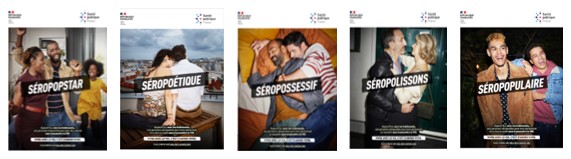
Addressing these barriers is essential. Santé publique France is relaunching its campaign “Living with HIV means living first and foremost” to raise awareness of the preventive effect of antiretroviral therapy (TasP) and combat discrimination related to HIV-positive status. By promoting a better understanding of the reality of living with HIV, this campaign also serves as an incentive for testing.
The initiative, which has been running since November 18, includes a print and online media campaign, billboard advertising, editorial partnerships, and a digital component, notably featuring the video “Letter to Myself” on Netflix. Short versions of this video will be shared on YouTube, Facebook, Instagram, and specialized websites.
Beyond this campaign, Santé publique France is committed year-round to promoting testing through, on the one hand, its regular information campaigns (on social media, radio programs, media partnerships, etc.) and, on the other hand, its financial support for organizations that enable long-term community-based initiatives to promote testing for HIV and other STIs and, more broadly, diverse prevention efforts.

bulletin national
28 November 2022
Public Health Bulletin on HIV and STIs. December 2022.

magazines/revues
28 November 2022
Weekly Epidemiological Bulletin, November 29, 2022, No. 24-25: Prevention and Screening for HIV and Sexually Transmitted Infections (World AIDS Day, December 1)
Dedicated information and prevention websites on HIV and STIs:
QUESTIONSEXUALITE is Santé publique France’s sexual health information website for the entire adult population.
SEXOSAFE is aimed at men who have sex with men (MSM) and offers information and tools for their sexual health.
ONSEXPRIME is an educational and fun website on sexuality-related issues for teenagers.
[1] Article in the Weekly Epidemiological Bulletin, 2022, No. 24-25, “Screening for HIV and Bacterial Sexually Transmitted Infections in France, 2014–2021,” by Cheick Haïballa Kounta, Nicolas Drewniak, Françoise Cazein, Émilie Chazelle, and Florence Lot, Santé publique France, Saint-Maurice
[2] Bruyand Mathias, Rahib Delphine, Gautier Arnaud, Cazein Françoise, Brouard Cécile, Lydié Nathalie, Lot Florence, Weekly Epidemiological Bulletin, 2019, No. 31-32, pp. 656-663
See also
Meeting of Organizations for World AIDS Day | Presentations:
Let's express ourselves
First experiences, puberty, romantic relationships, and safe sex—the Onsexprime website is dedicated to young people’s sexuality and everything related to it, offering educational...
Safe Sex
HIV and STI prevention, testing, and sexual orientation—the Sexosafe website addresses issues related to sexuality among men.
Sexuality
A website that provides answers to questions about sexuality, anatomy, sexual practices, pregnancy, STIs, and discrimination based on sexual orientation.

HIV/AIDS
thematic dossier
HIV, or Human Immunodeficiency Virus, is a sexually transmitted human retrovirus. It weakens the immune system, and if left untreated, leads to AIDS.
Our latest news

news
Seniors, pregnant women, and nursing home staff: What is the status of their...

news
Winter Illnesses: A Dynamic and Accessible Way to Track the Spread of...

news












